
Fish vision is built for a world where light is bent, filtered, and constantly changing. Water reshapes light as soon as it enters, scattering rays and reducing brightness. Distance compresses. Detail fades quickly.
Colors disappear in sequence, with reds going first, then orange and yellow, while green and blue penetrate deepest. In most freshwater systems, clear-water visibility tops out at roughly a boat length. In stained rivers or tannic lakes, it may be measured in inches. What remains isn’t fine detail, but contrast and motion.
Most gamefish have large eyes relative to body size, packed with rod cells that excel at detecting movement and contrast in low light, as we remember from Science 101. Cone cells, responsible for color and fine detail, are present but secondary, especially in species that feed at dawn, dusk, depth, or in turbid water.
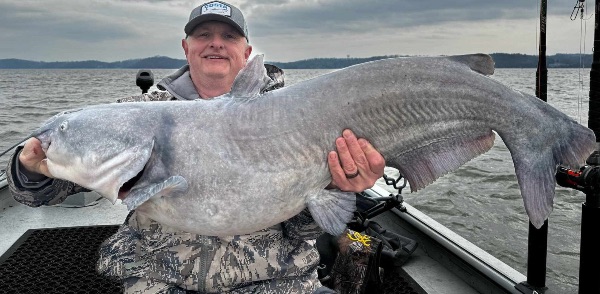
Catfish, which rely primarily on scent, have relatively small eyes. Cave-dwelling fish have none at all. Vision isn’t better or worse than ours—it’s tuned for what matters underwater.
That explains why so many lures work despite looking nothing like prey in your hand. To a fish, a lure isn’t necessarily an imitation. It’s a moving object, and movement suggests life. If it’s small enough to eat and doesn’t trigger alarm through shape or action, the fish often decides first and evaluates later.
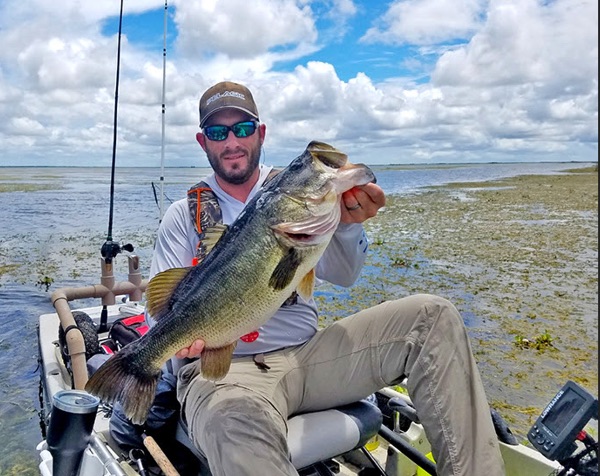
Largemouth bass are a good example. Their eyes sit on the sides of the head, giving them a wide field of view but limited binocular overlap straight ahead. They detect motion easily, but depth judgment tightens only at the last moment. Bass often track prey from the side and commit quickly once it enters a short strike window. That final decision is visual, even in stained water, and it’s usually based on silhouette and movement rather than detail.
This helps explain why dark baits consistently produce in muddy water and low light—not because black is “visible,” but because it throws the strongest silhouette against a lighter background.
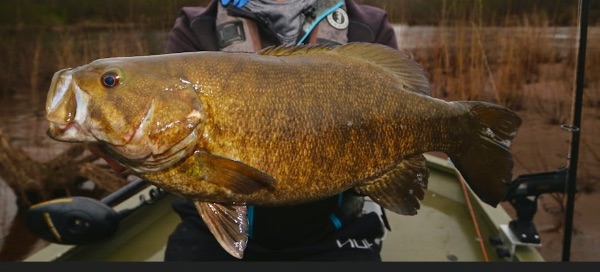
Smallmouth bass, which more often live in clearer water, are built a little differently. Their eyes face more forward, giving them better depth perception. They inspect longer and follow baits without committing, especially in bright conditions when contrast is reduced. In rivers and clear reservoirs, what anglers call “selectivity” is often a visibility problem. A lure that disappears against rock or gravel may stand out clearly against sand only a few feet away.
Walleye push low-light vision even further. Their eyes include a reflective layer that amplifies available light, making them efficient hunters at dawn, dusk, and night. The tradeoff is reduced reliance on color. Walleyes respond more to movement, flash, and contrast than precise pattern. In deep or stained water, they often strike lures they never fully “see” in a human sense. That’s also why walleyes frequently slide shallow under low light even when water temperatures suggest they shouldn’t—vision improves before comfort does.
Saltwater predators follow the same rules, scaled up. Snook live in some of the most visually complex environments fish encounter—clear flats, stained estuaries, shadowed mangroves. In clear water, they can track a lure from surprising distance, which is why sloppy retrieves or unnatural speed changes often kill a bite. In dirty water or heavy shade, contrast and predictable motion matter more than realism. An ambushing snook doesn’t always need a perfect imitation—just a clear, timely opportunity.
In open water, king mackerel represent the extreme. Built for speed and pursuit, their large, forward-tilted eyes are optimized for detecting movement against a uniform background. At trolling speeds, kings aren’t evaluating detail. They lock onto displacement, flash, and rhythm. That’s why lure size, speed, and contrast usually matter more than subtle color changes in clear Gulf water.
Across species, the pattern repeats. Bright, shallow, clear conditions let fish see everything—including your leader knots. Cloud cover, wind, and low sun angles reduce glare, sharpen silhouettes, and shorten reaction time. These conditions don’t change fish mood; they change what fish can see.
Color is usually secondary to action and silhouette. Speed controls how long a bait stays inside a fish’s visual strike window and whether it triggers a chase response. Angle matters too. Presentations that cross a fish’s field of view or quarter away from it draw more strikes than those coming straight at the fish. Minnows don’t attack predators head-on.
Modern live sonar reinforces this reality. Watching fish approach a lure, hesitate, and turn away at the last second makes it clear how visual the final decision really is. The lateral line may alert the fish that something is there, but vision confirms whether it’s worth committing.
Once you think in those terms, light, angle, contrast, and motion stop being background conditions and become tools—ones you can adjust as conditions change to catch more fish.
— Frank Sargeant
Frankmako1@gmail.com