
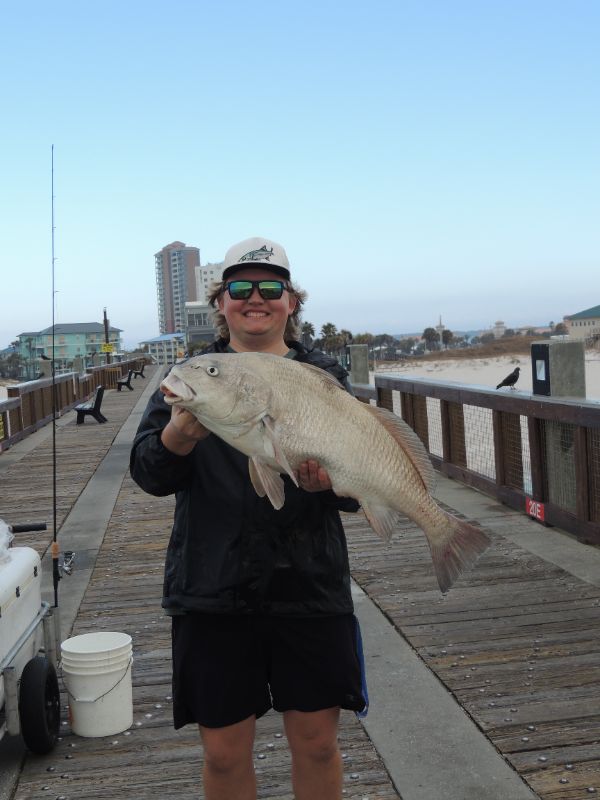
At first glance, a drum pulled from a freshwater river looks an awful lot like a black drum pulled from under a saltwater pier. Same blunt head. Same heavy shoulders. Same bottom-oriented mouth. Both even announce themselves with sound, grunting and drumming when they hit the deck. The resemblance is close enough that many people assume they’re brothers.
They aren’t. Freshwater drum and saltwater black drum evolved separately, in different systems, toward the same solution: a fish built to root along the bottom and crush whatever it finds there. What matters to anglers isn’t the family tree. It’s how those shared traits show up on the line—and on the plate.
Freshwater drum, gaspergou in Louisiana, have a body that’s deepest just ahead of the dorsal fin and then tapers toward a relatively narrow tail. Viewed from the side, the belly is almost flat, a shape that makes sense for a fish that feeds nose-down. The head is small, the eyes large, and the mouth angles downward, built to vacuum insects, crayfish, mussels, and anything else living in or on the bottom. The long single dorsal fin runs nearly the length of the back, and older fish darken noticeably, with fins shading toward charcoal.
Black drum share the same general look for the same reason. They’re also bottom feeders, built to cruise slowly and crush hard prey. The similarities are functional, not genetic. Both species rely less on speed than on leverage and pressure. Both are comfortable in current. Both feed by feel as much as sight. And both are more predictable than their reputations suggest.
In freshwater, small drum turn up everywhere—backwaters, reservoir edges, river margins—but the big ones tend to show themselves in moving water. Tailraces below dams are classic places to find them, especially when current concentrates food along seams and breaks. They spawn in open water from late spring into summer, and during that period males produce low-frequency drumming sounds that apparently bring in the females. Anglers don’t hear it, but the fish do, and that often results in a swarm of them tightly clustered. If you’re a sonar user, it looks like an impossibly large school of bass hugging bottom.
They respond to presentations that stay on the bottom and move naturally with current. Jigs tipped with soft plastics, nightcrawlers, crayfish tails, cut bait—anything that mimics or smells like what they already eat—will get picked up if it’s in the right place. The bite is often deliberate rather than sharp, more weight than thump, and anglers who expect a bass strike miss fish they never knew were there.
They also love flutter spoons, as I frequently prove when trying to catch largemouths here on Guntersville. Some days I catch 10 drum for every bass—and hey, if you’re not tournament fishing, any bite is a good bite.
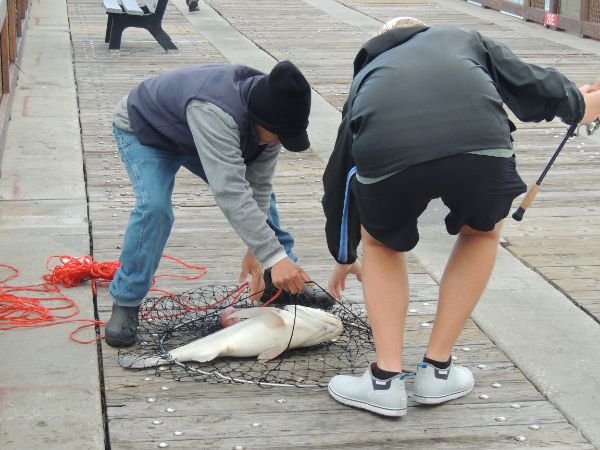
Black drum follow a similar script in salt water. They’re most reliable where current meets structure: passes, jetties, bridge pilings, oyster bars. Like freshwater drum, they’re happiest with firm bottom under them and food rolling past. When conditions line up, both species can stack in surprising numbers.
Right now is a particularly good time to chase black drum because the big ones are swarming near the beaches from North Florida to South Texas to spawn. In clear water, you can actually see the schools, a darker gray area in the green water, typically within a hundred yards or so of the beach—they’re frequent winter catches off the many big piers extending into the Gulf.
Like freshwater drum they don’t require finesse or flash. Shrimp, clams, crabs, cut bait, or jigs flavored with a sliver of shrimp or mullet worked tight to bottom draw strikes.
Where both species suffer is reputation. Freshwater drum get dismissed as trash fish, often because anglers don’t target them intentionally and don’t handle them well when they do catch them. Black drum get tarred as oversize, wormy and course-fleshed fish.
Neither deserves the bad rap.
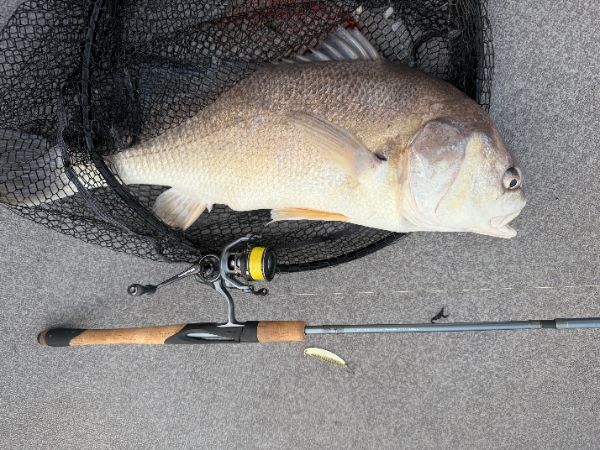
Freshwater drum flesh is firm and mild when the fish is bled and iced quickly. Smaller to mid-size fish are best, but even larger ones eat well if trimmed properly and cooked fresh. The key is not letting a bottom-feeding fish sit warm in a livewell or on a stringer. Treat it like a walleye or a catfish you plan to eat, and it holds up just fine.
Black drum follow the same rule. Younger fish are excellent table fare, especially when filleted clean and cooked simply. The rule is, if the fish still has stripes, it will be great eating. They lose their stripes at around two feet long, around age 5. Eat the larger ones at your own risk—they’re better for catch and release than for the table.
Freshwater drum and black drum look alike because water, current, and bottom feeding shape fish in predictable ways. Once you understand that, they stop being curiosities and start being targets. And once you clean and cook one properly, they stop being punchlines, too.
Frank Sargeant
Frankmako1@gmail.com