
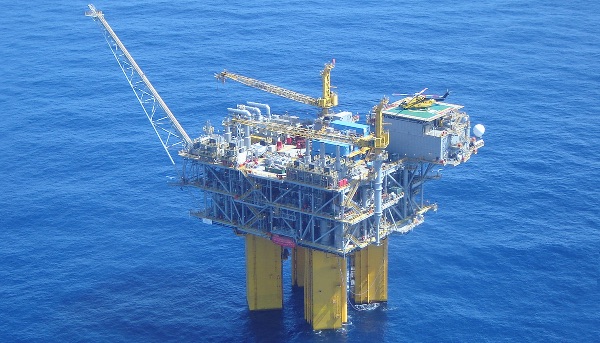
The numbers attached to the latest federal offshore oil-and-gas plan are big enough to make anyone along Florida’s coast uneasy.
The Gulf of America Outer Continental Shelf covers roughly 160 million acres, and federal estimates peg it at nearly 30 billion barrels of undiscovered, technically recoverable oil, along with more than 54 trillion cubic feet of natural gas. Add in the recent passage of the so-called “Big Beautiful Bill,” which mandates decades of future lease sales, and it’s easy to see why Florida anglers, charter captains, and beach towns are asking the same question:
How close is this coming to Florida shores, where there currently are zero oil wells in the Gulf?
So far, the answer remains reassuring—especially for Florida.
Despite the sweeping scale of the new leasing mandate, no new federal oil and gas leases are allowed anywhere near Florida’s Gulf shoreline, including the Panhandle. The same protective buffer that has been in place for years still applies, and it keeps drilling far offshore and well out of sight.
For all practical purposes, Florida’s Gulf coast remains protected by a roughly 125-mile offshore exclusion zone. That setback applies to the entire state—from the Keys north through Tampa Bay and all the way west to the Alabama line.
In federal leasing terms, Florida is treated as a single, continuous coastline. There is no special carve-out for the Panhandle and no exception for high-energy oil states nearby. Whether you’re fishing off Naples or walking the sand on Pensacola Beach, the same rule applies: no leaseable federal blocks inside that buffer.
That distance isn’t accidental. It reflects decades of political compromise, tourism economics, and environmental caution focused on protecting Florida’s beaches, fisheries, and coastal economy. The Eastern Gulf of Mexico—everything east of that line—has been repeatedly withdrawn from leasing under a series of congressional and presidential actions, including the September 8, 2020, withdrawal that still stands.
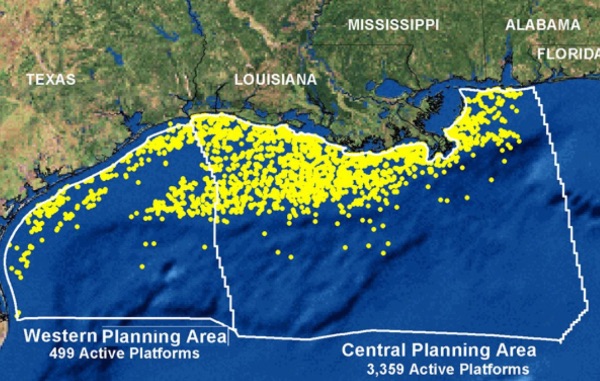
The new round of lease sales required under the “Big Beautiful Bill” does expand drilling opportunities elsewhere in the Gulf. But critically, it does not reopen Florida’s withdrawn areas.
The result is that Florida’s offshore waters remain entirely off-limits, regardless of how many lease sales are scheduled elsewhere.
Some of the newly proposed Gulf leases begin as close as 3 to 10 miles offshore—but those are off Texas, Louisiana, and parts of Alabama—all of which already have lots of wells. That’s why oil platforms can be visible from beaches west of the Florida line while Florida’s own Gulf horizon remains clear.
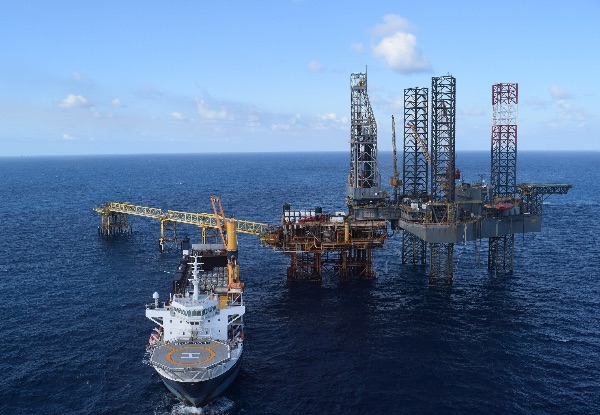
Some producing leases sit within single-digit miles of shore. And, it also has to be noted, these rigs provide astoundingly good fishing for everything from grouper and snapper to tuna, wahoo and even marlin—they function as artificial reefs, holding fish year around.
From a fisherman’s perspective, skepticism is healthy. Offshore drilling accidents don’t respect state lines, and currents don’t stop at political boundaries. The memory of Deepwater Horizon still looms large across the Gulf, including Florida waters that were affected despite being far from the wellhead.
But based on the lease maps released so far, the immediate fears don’t line up with the facts.
Nothing in the current lease notices brings drilling closer to Florida beaches. Nothing reopens the Eastern Gulf. And nothing suggests rigs creeping toward the Panhandle or central Gulf coast under this plan.
That doesn’t mean Floridians should tune it out. Presidential withdrawals can be reversed. Laws can be amended. Lease plans evolve. But as of now, the protections Florida has relied on for years remain firmly in place.
The Bottom Line
If you fish Florida’s Gulf waters, guide tourists, or simply care about clean beaches and healthy fisheries, here’s the clear takeaway:
The newest Gulf oil leases still stop far offshore from Florida—about 125 miles away—and that applies everywhere in the state, including the Panhandle.
The scale of the leasing program is real, and it’s wise to keep a close eye on it. But at this stage, the concern that Florida’s beaches or nearshore fisheries are about to be ringed by drilling rigs is not supported by the actual lease boundaries.
— Frank Sargeant