
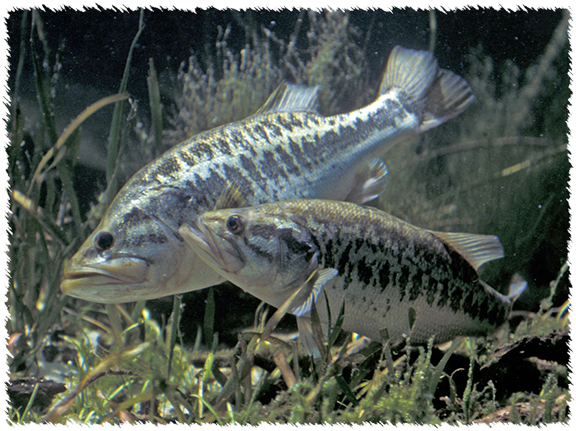
A new Florida study is taking direct aim at one of the most persistent questions in sportfishing biology—whether bass that have been repeatedly caught and released become harder to catch than fish with little or no exposure to anglers. More importantly, it asks whether stocking naïve bass—fish that have never encountered hooks—can measurably improve angler success in heavily pressured public waters.
(A few lucky anglers already knew the answer to this question, having fished some of the private phosphate pit ponds in central Florida, where casting into untouched fisheries produces astounding action—but this is the first scientific effort at proving that premise.)
The work is being led by the Florida Fish and Wildlife Conservation Commission, using an interesting experimental design. Instead of relying solely on hatchery fish, researchers are comparing three distinct groups: bass taken from heavily fished public waters, bass collected from unfished roadside ponds owned by the Florida Department of Transportation, and juvenile hatchery-reared bass with no angling exposure at all.
The underlying hypothesis is just this: experience matters. Bass that have been hooked, handled, and released may alter their behavior in ways that reduce vulnerability to anglers. Naïve bass—whether wild or hatchery-raised—should be easier to catch, at least initially.
Shock, Stock, and Tag
To test the idea, biologists are using a “shock and stock” approach. Adult bass are collected by electrofishing from both pressured public lakes and unfished DOT stormwater ponds, tagged for identification, and stocked into selected community ponds and fish management areas. Angling surveys and electrofishing are then used to track survival and catch rates.
In the first year of the study, only one pond received stocked adult fish, but the results were immediate and striking. Bass sourced from unfished ponds—true naïve fish—were caught at 1.7 times the rate of bass moved from waters already open to fishing.
Naïve bass struck lures more readily, were less selective, and showed none of the avoidance patterns often seen in heavily pressured fisheries. Pressured bass, despite being moved into the same environment, remained harder to fool.
For anglers, the takeaway is obvious: catchability isn’t just about how many bass are present. It’s about what those bass have learned. And also, maybe, about finding “secret spots” that other anglers have overlooked.
Hatchery Fish Enter the Equation
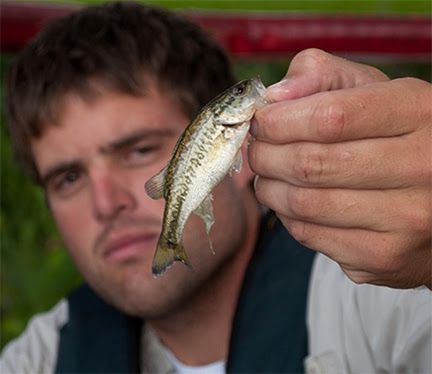
The second phase of the study widens the lens. Nine ponds are being stocked with juvenile hatchery-reared bass, all of them completely naïve to angling. After roughly 20 months—once those fish have experienced real-world fishing pressure—the same ponds will be stocked with adult wild bass collected from unfished waters.
By comparing angler catch rates before and after the adult stockings, researchers can tease apart two questions. First, do naïve hatchery bass provide higher catch rates than pressured wild fish as they grow? Second, does adding naïve adult bass produce a measurable, immediate increase in angler success that juvenile stockings cannot?
Electrofishing surveys will assess survival and integration into the population, while angler data will reveal what ultimately matters most to anglers: how often bass are caught.
The study also includes a cost-benefit analysis, recognizing that agencies operate under tight budgets. Hatchery fingerlings are relatively inexpensive per unit, but their payoff may be slow and uncertain. Moving adult fish is labor-intensive, but if it produces faster improvements in catch rates, the return on investment could be higher in heavily pressured systems.
Why Pressure Changes Everything
The idea that bass learn to avoid lures isn’t new. Controlled studies have shown that individual bass can associate specific lure shapes, sounds, or presentations with capture. In high-pressure waters—especially small community ponds—those lessons accumulate quickly.
Urban and suburban fisheries are ground zero for this effect. Limited acreage concentrates anglers, catch-and-release is common, and most bass may be hooked multiple times each year. Over time, the population may remain numerically healthy while becoming functionally “uncatchable” to all but the most skilled anglers.
That disconnect frustrates the public and creates a management dilemma. Traditional metrics say the fishery is fine. Anglers say it’s not.
By directly comparing naïve and experienced bass in the same waters, this Florida study bridges that gap between biology and perception.
What This Could Mean Going Forward
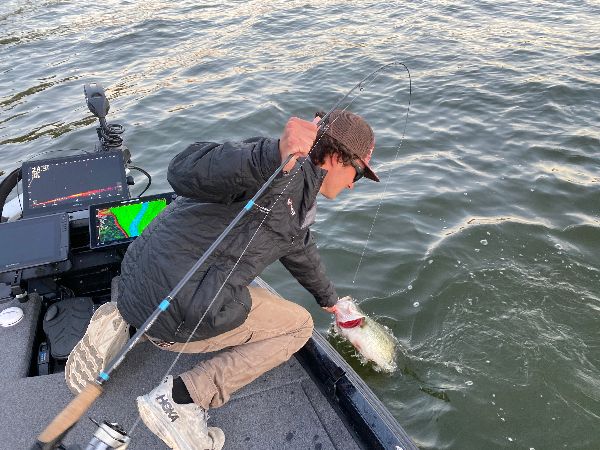
If results continue to show that angling experience sharply reduces catchability, fisheries managers may begin thinking differently about stocking goals. Instead of focusing solely on long-term population numbers, they may also consider behavioral freshness—periodically introducing naïve fish to reset catch rates in high-pressure systems.
Of course, maintaining water quality and good habitat for feeding and spawning remain essential. But it’s pretty clear that fishing pressure itself is a biological force, shaping bass behavior as surely as water temperature or food supply.
Managers may find new ways to improve community fisheries. But the study also confirms what many seasoned fishermen already suspect: in heavily pressured water, the bass haven’t disappeared. They’ve just learned to stay away from our lures.
– Frank Sargeant