
We had a couple inches of snow in north Alabama yesterday, a little final slap in the face from winter reminding us that, no, spring is not quite fully here yet.
It was actually the only morning, ever, that I’ve not seen a single boat trailer parked at any of the ramps around Lake Guntersville. (They were out there about five minutes after this last little joke from winter ended, though.)
But this reminded me that now is the time for those of us who have not been fishing and boating all winter—and I’m well aware that many never stopped throughout the southeast—that it’s time to make sure your trailer, your outboard and your boat’s systems are up to the job for the warm months ahead.
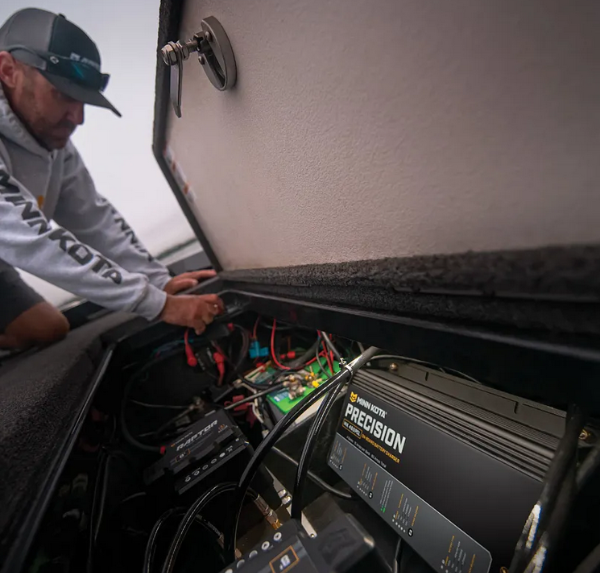
Start with the starting battery—put the charger on it and make sure it takes a full charge. Ditto for auxiliary batteries that power your trolling motor and electronics—without plenty of juice, you’re literally dead in the water.
Next, try the outboard—get a flushing muff to provide water to the pump, hook it up to a hose and make sure your motor will start and that it’s pulling water before you head to the lake.
If you haven’t had the water pump impeller replaced within the last two or three years, this would be a good time to do it, even if the pump appears to be working—it may give out mid-season. This is more wrench work than most of us want to do ourselves because you have to drop the lower unit, but it’s a must to avoid trouble down the road—have your local shop take care of it if you don’t want to try it on your own.
Fuel pumps also sometimes die over the winter. A couple seasons back the electric fuel pump on my Merc decided to freeze in place during the cold months. I almost spent a bundle on a new one before a mechanic buddy suggested I try soaking it in a pail of diesel fuel for a few days. I did, and it worked. That same pump is still running fine two years later.
Speaking of the fuel system, now is also the time to replace the element in your fuel filter—it’s a quick do-it-yourself, but make sure all the fittings are perfectly tight after the install. On older motors, make sure the fuel lines are not becoming brittle and crumbly—replace if they’re deteriorated at all.
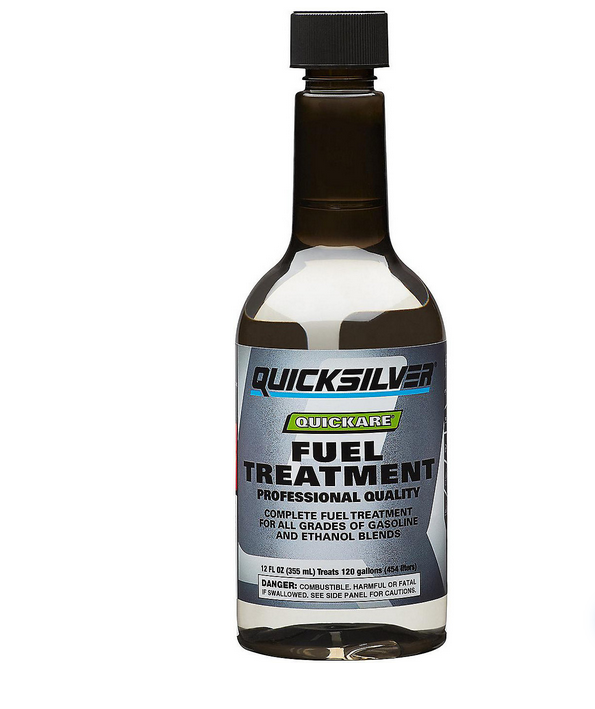
Hopefully you added fuel treatment to the tank last fall to make sure water condensation in the enclosure is minimized, but if not, add plenty now. Mercury Quickare is a good one. Also, if possible, find a station that supplies regular gas to fill your tank. Low-ethanol blends, while not lethal to outboards, frequently cause issues, particularly during storage when they can cause water condensation as well as deteriorating older fuel system components.
Take a quick look at the prop to make sure there’s no fishing line wrapped around the shaft. And this is also a good time to change the lower unit lube if you didn’t do it when you put the boat away in fall.
If your boat has a live well and you expect to use it, make sure the pump is functional and that there’s no debris over the intake. Ditto for the bilge pump and auto-float switch. Check your running lights, too, even if you don’t expect to be out at night—sometimes you come back later than you plan.
If you trailer your boat as most do, check the tires for cracking or other deterioration and make sure they’re fully inflated—trailer tires typically take 60 pounds or so, far more than passenger car tires. Don’t neglect proper inflation or your tires will overheat and blow out early. And of course you’ll need to grease the wheel bearings or check on the oil bath, depending on the design.
Make sure your hitch ball is tight and the draw pin is secured before attaching the trailer coupling. Check the safety chains or cables for corrosion. Cross them under the tongue and attach to the hitch.
Trailer taillights don’t give nearly as much issue as they did before LED’s, but make sure your stop and turn lights are working before you pull out of the driveway.
All of this definitely is not what most of us look forward to about spring boating and fishing, but if you take the time to get it done, you’ll have a much more enjoyable first launch as prime time arrives this year.
– Frank Sargeant
Frankmako1@gmail.com