
Fluorocarbon makes terrific leader material—most of us agree on that. It’s very low-viz, it’s abrasion and tooth resistant, holds knots pretty well and generally does what’s needed to make the perfect leader.
But as a running line, not so much.
Fluorocarbon on baitcasters has caused issues for many of us. Because most blends are stiffer than mono at a given diameter, many fluoro lines tend to create incredible snarls, even on the best reels with good casting technique. Softer mono doesn’t—so mono still rules for many of us, even though it lacks some of the advantages of fluoro. For heavier duty like froggin’ in thick cover, most now use braid of 50- to 65-pound test.
Fluorocarbon has very little stretch so it’s great for setting the hook as well as feeling what your lure is doing. And it sinks, as mono does not, so it's useful for getting jerkbaits and other slow-sink lures deeper quicker. And it has a lower visibility than most mono’s and all braids, so it’s less likely to alert fish in clear water.
But hey, if you’re throwing backlashes on every other cast, all of this does not matter. That’s why nobody uses light braid on baitcasters—anything under about 30 pound test digs into itself and causes incredible tangles due to the extremely fine diameters.
But, some recent fluorocarbon blends, combined with thoughtful handling, appear to have solved many of the issues of fluoro on baitcasters—if not on spinning tackle, where braid rules for most applications except UL. Softer fluorocarbons now are being produced specifically as casting lines, not leader material. And they’re priced more reasonably than many of the designated fluoro leader materials, too.
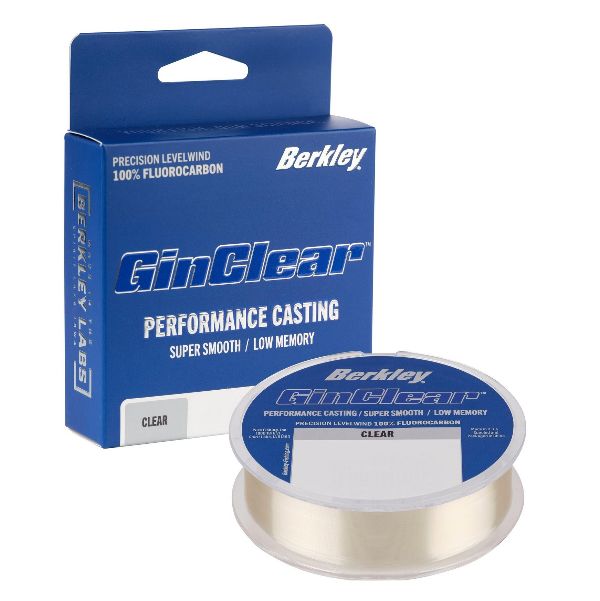
Berkley’s new GinClear Fluorocarbon is one of the better examples of that shift. It doesn’t feel like the fluorocarbon many of us consider the norm. It comes off the sales spool smoothly thanks to “parallel winding” and lays evenly under tension. It doesn’t appear to retain coils between casts in the 12 pound test I’ve been using. The line feels closer to a premium mono in hand but it’s got the density of fluoro so it sinks—good for the soft plastics most of us are throwing here on Guntersville now as the bass spawn merges into the shad spawn bite.
Memory is where the difference shows most. This iteration of fluoro doesn’t try to spring back into tight loops when there’s a bit of slack. That matters when pitching, skipping, or making long casts with lighter lures. The line stays manageable even after several hours of casting, which was rarely true of earlier fluorocarbons, particularly in anything above 15-pound-test.
Visibility remains low in clear water—for trout and smallmouth anglers this will be an important feature in many waters, as well as for those chasing bonefish, permit or other flats species.
Pricing is reasonable. A typical 200-yard spool usually falls in the mid-$20 range depending on pound test and retailer. Larger filler spools cost more upfront but are commonly used by anglers committing to fluorocarbon as a full-time baitcaster line. That puts GinClear roughly at about what many anglers already spend on premium line. It’s available in 4- to 25-pound-test.
Other manufacturers have followed similar paths.
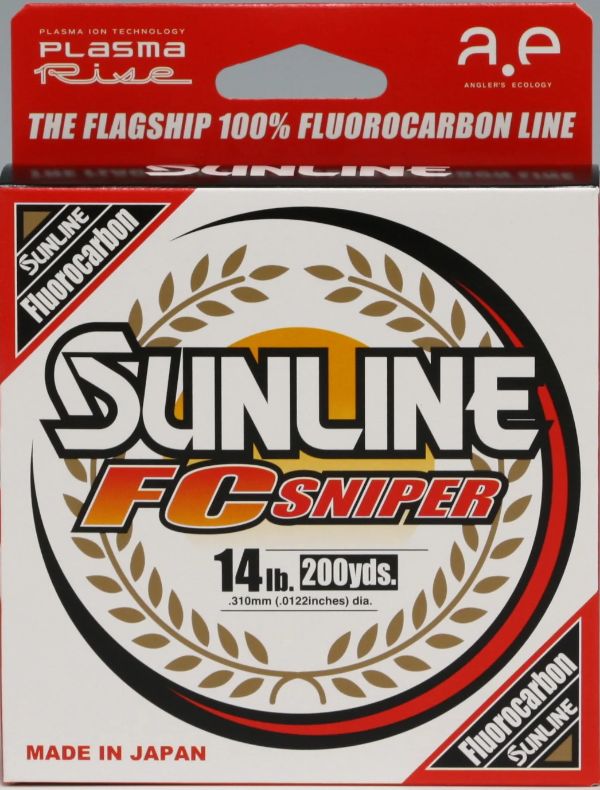
Sunline makes an impressive spread of over a dozen casting fluorocarbons, each tweaked for slightly different degrees of flex, hardness, castability and other features. Their flagship fluoro is the FC Sniper, unusual in that it’s available in 2, 3, 4, 5, 6, 7, and 8 pound tests for UL anglers as well as in many heavier tests up to 30, priced at around $30 for 200 yards.
Seaguar has been tweaking castable fluorocarbon for some time. Lines like InvizX and Red Label are commonly spooled straight onto baitcasters and even on spinning reels in lighter tests. InvizX is known for suppleness and consistent knot strength, while Red Label offers a slightly firmer feel at a lower price point. Costs typically run from the low $20s into the $30s for standard spool sizes.
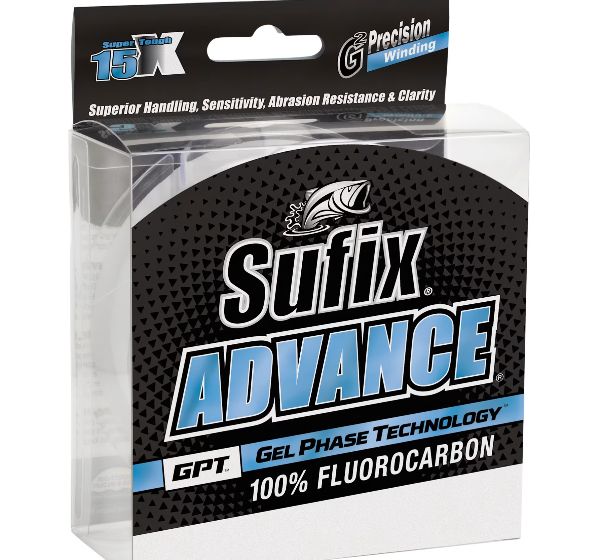
Sufix Advance Fluorocarbon targets the same price range. Advance is designed to be softer and more forgiving than traditional fluorocarbon while maintaining controlled stretch, per the company. Many anglers favor it for crankbaits and reaction lures where a little give helps keep fish pinned.
P-Line Fluorocarbon options also fit this category, particularly in lighter to mid-range pound tests. P-Line has long emphasized abrasion resistance and knot reliability, and their fluorocarbon reflects that approach. Costs vary widely by model but generally sit between budget and premium offerings.
Within Berkley’s own lineup, Vanish and FluoroShield remain part of the conversation. Vanish has evolved considerably from its early iterations and is widely available at lower prices, often under $20 per spool. FluoroShield, a fluorocarbon-coated hybrid, blends nylon handling with improved abrasion resistance and typically costs even less, making it a common choice for anglers who want to try fluoro as running line at a moderate investment.
What ever the line you use, it will benefit from firm, steady pressure during spooling, avoiding overfilling, and letting the line seat itself under load. Level winding and engineered formulas help, but you still have to follow good basics to avoid the dreaded “knotmares” that are every angler’s bane.
– Frank Sargeant
Frankmako1@gmail.com