
With tax deadline day now in the rearview mirror, it’s safe to say there’s not much most of us like about April 15.
Unless you happen to be a bass angler in the southeastern U.S.
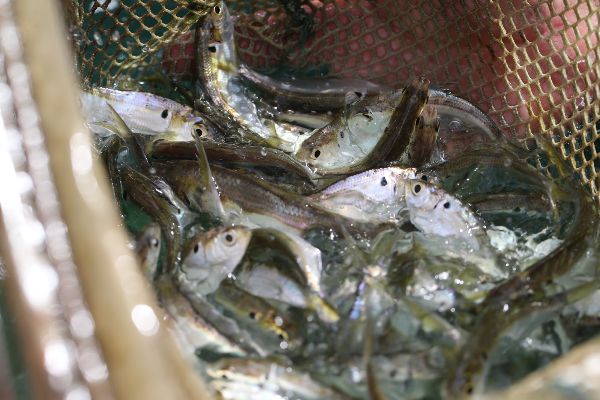
April 15 is just about dead center in those precious, magical weeks when both gizzard shad and threadfin shad head to the shallows to spawn—and bass go with them, as do other fish including white bass, crappies, catfish, stripers, drum and more.
The spawn kicks in when the water first reaches about 67 degrees, per Alabama DCNR biologists, and continues into the low 70’s—and that period typically falls close to April 15 in the mid-South.
The shad are predictable not only as to date, but also as to locations. They seek out hard bottom areas with shell, gravel or rocky bottoms, and often flutter at the surface over floating moss, weeds or small twigs. They spawn in the shallows, 1 to 4 feet deep or so, but usually near a sharp drop to deeper water rather than in broad, shallow bays or flats.
They like flowing creeks with gravel bottom, and also sometimes spawn on rip-rap causeways and bridges as well as around docks and piers.
The threadfin spawn typically takes place from first light to maybe an hour after sunrise—after that, the shad drop back to deeper water. So this is definitely a bite for early risers—if you’re not there when the bait is spawning, you won’t find the gamefish there either. They’re likely to have dropped back to the nearest deeper water, though, and you might find them there with a bit of sonar study or probing casts.
Gizzard shad mostly spawn at night, per the biologists, but they continue to hang around shallow grassy bays, laydowns and rock outcroppings through early light, so they can also attract gamefish into areas that are easy to target.
The trick is to rapidly cruise multiple areas during the prime early light period, looking for shad fluttering at the surface or flashing in the depths. Sometimes the gamefish will give you the tipoff by blowing several shad out of the water. Sometimes gulls or cormorants will pinpoint the action, or multiple herons may be high-stepping along the shore trying to spear a baitfish or two.
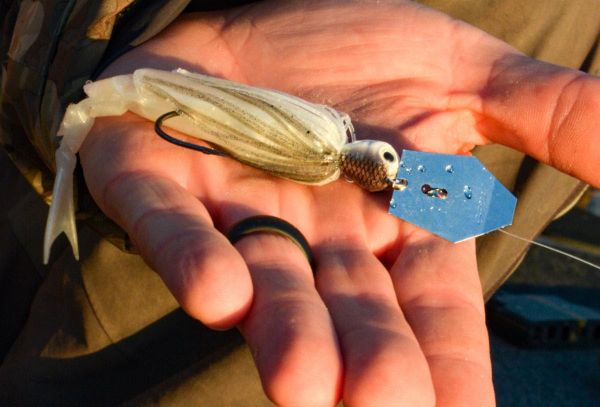
When the fish are feeding on spawning shad, they’ll hit anything that remotely resembles the baitfish. The easy way to go is to throw a Chatterbait-type bladed jig, either the original or Berkley’s Slobberknocker with a 4” soft plastic tail in shad shades of white or pearl—both a steady retrieve and the pull and drop can score. Spinnerbaits are also effective, as are shad imitating wake-baits like the Fish Labs BBZ-1.
I’ve also done really well this past week on Guntersville with the Berkley Krej 100 cranked on top, thanks to a tip from local guide Jessie Derosier (https://hydrillagorillaguideservice.com). The Krej is a tailweighted minnow plug that casts a mile, and is designed to sink tail-first for a pull-and-drop retrieve. But surprisingly, when cranked at just the right speed, it planes to the top and becomes a wakebait, which bass around shad simply can’t stand.
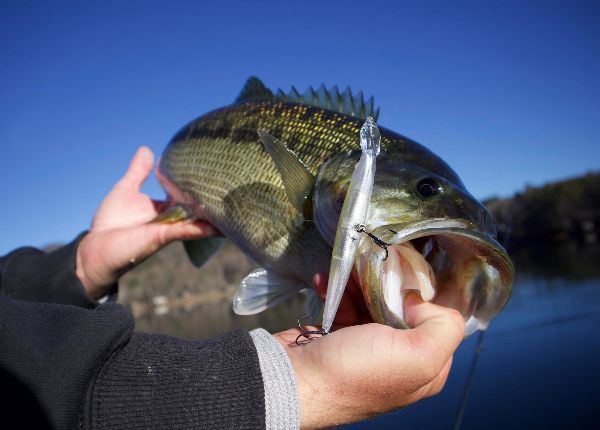
I’ve found the stock hooks to be a bit small—sometimes you get hit three or four times before one gets stuck—but the bass totally love this bait. Also, the Krej can’t be fished around floating weeds—even a small tag of weed ruins the action and the fish won’t touch it.
I upsized the front hook one size in 1x light steel, and the hookups have increased. I flatten the barbs on the rear hook so that the fish don’t get injured as much—the almost always hit the front of the lure, and that rear hook just foul-hooks them somewhere back on their head or body, or down the hatch.
The shad bite lasts only a few weeks, until around May 1 in my part of the country, but until then, it’s an amazing opportunity for even those of us who are not experts to catch way more bass than we usually do.
– Frank Sargeant
Frankmako1@gmail.com