
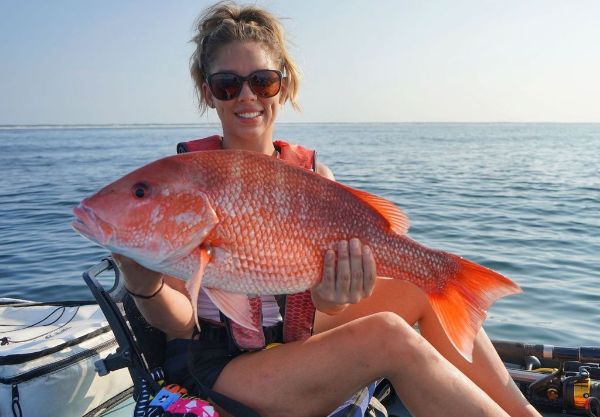
For more than a decade, NOAA Fisheries’ South Atlantic red snapper management has been a case study in how good intentions can curdle into bad policy.
The fish were definitely in trouble in the early 2000’s. Rapid advances in sonar and GPS as well as more anglers investing in bigger, faster offshore-capable boats along with commercial harvest was rapidly wiping out the population of adult snapper on the Atlantic coast from Florida to North Carolina. Fish numbers plummeted on most accessible reefs.
According to the assessments used at the time by NOAA Fisheries:
- Spawning stock biomass was estimated at roughly 10–15% of the unfished level
- Stocks were thought to be down about 85–90% from historical abundance before heavy fishing pressure
- Fishing mortality had been well above sustainable levels for decades, particularly from the 1970s through the early 2000s
Snapper are long-lived fish, and it takes a decade to produce a 20-pounder. Catch evidence as well as dive reports indicated that most fish were not surviving anywhere near that long due to fishing pressure.
The federal fishery managers did what was obviously necessary—they shut down the fishery completely.
Anglers accepted tough medicine. Seasons were closed in 2010, then reopened only in symbolic slivers — a day here, a weekend there.
Surprisingly, the stock rebounded faster than expected. By NOAA’s own benchmarks, South Atlantic red snapper was rebuilding nearly 20 years ahead of schedule. Soon, anglers were accidentally catching lots of big snapper while fishing for grouper and other reef species. In some areas it became tough to catch anything but keeper-sized red snapper.
And yet the restrictions stayed.
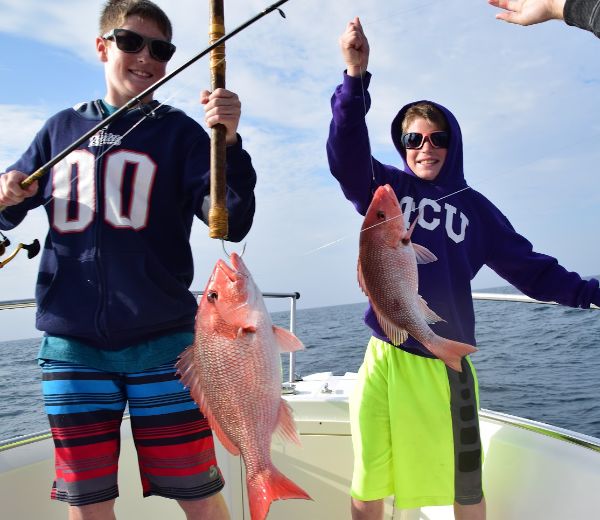
The reason wasn’t biology. It was data — or more precisely, the continued reliance on a federal recreational data system widely acknowledged to be too coarse, too slow, and too disconnected from real-world fishing effort to manage a fishery this localized and this valuable.
Also, fishery managers always tend to manage conservatively, because with restrictions that are too tight, the worst that can happen is you have a lot more fish than you expect. Manage to liberally and you have no fish—and you get fired.
Be that as it may, the federal logjam on Atlantic red snapper finally broke last week.
On May 1, the administration approved exempted fishing permits (EFPs) allowing Florida, Georgia, South Carolina, and North Carolina to manage South Atlantic red snapper recreational seasons in 2026 under state-run pilot programs. The decision marks a significant shift away from one-size-fits-all federal control toward cooperative management grounded in better, faster data.
It’s not radical. It’s corrective.
Florida will apply the same state-run reporting and management framework it already uses successfully on the Gulf Coast, opening a 39-day season from May 22 through June 20, with additional October weekends. Georgia, South Carolina, and North Carolina will coordinate a separate system using an angler reporting app, supporting a 62-day season from July 1 through August 31.
What matters isn’t the exact dates. It’s the principle.
For years, South Atlantic anglers were told that the seasons couldn’t expand because the data wouldn’t support it — and that the answer was more restrictions, not better information. At one point, federal managers openly discussed extending closures beyond snapper to all bottom fishing, a move that would have punished anglers targeting healthy stocks simply because they might encounter a rebuilt one.
The EFPs flip that logic. Instead of managing around uncertainty, the states are being allowed to reduce it — by collecting trip-level, near-real-time harvest data tied directly to permits, seasons, and actual fishing effort. It’s a model that aligns incentives: anglers want access, managers want accuracy, and conservation depends on both.
Support for the shift has been broad and bipartisan. Groups like the Center for Sportfishing Policy, Congressional Sportsmen’s Foundation, Coastal Conservation Association, the American Sportfishing Association, and the National Marine Manufacturers Association have all pushed for state-led alternatives to modernize the conservation process.
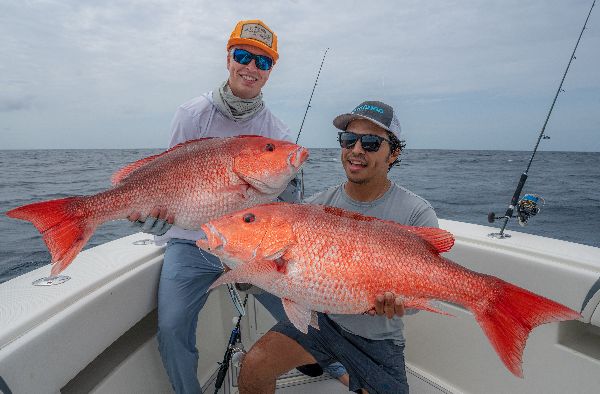
This isn’t a rollback of Magnuson-Stevens safeguards. It’s an attempt to make them work as intended — by matching management tools to the scale and behavior of the fishery.
Red snapper are reef-associated, relatively sedentary, and heavily concentrated near known structure. Treating their recreational harvest as if it were a diffuse, coast-wide phenomenon has never made much sense. States, with finer geographic resolution and direct relationships with anglers, are better positioned to manage that reality — especially when they’re willing to invest in reporting systems and enforcement.
If these pilot programs succeed, the payoff extends beyond snapper. They offer a template for how rebuilt stocks should be handled going forward: cautiously, based on real science, but with an eye to maximizing the reasonable use of the resource while maintaining it at maximum health.
– Frank Sargeant
Frankmako1@gmail.com