
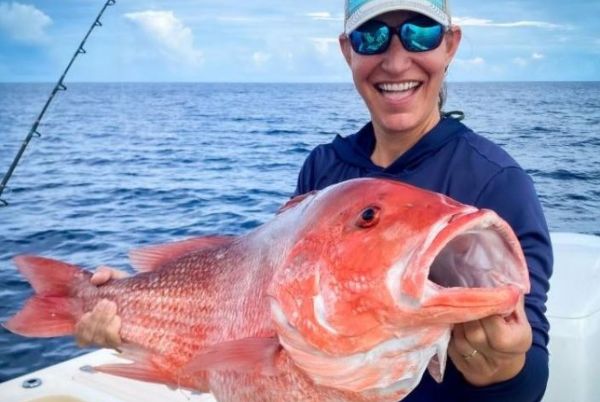
When a federal judge pressed pause on South Atlantic red snapper fishing last week—May 21, just one day before Florida’s long-awaited recreational season was set to open—it didn’t come out of nowhere. The injunction was the latest chapter in a long-running struggle over how this fishery is managed, who gets access to it, and whether the science driving those decisions matches what anglers and captains see on the water.
But it was totally mishandled by the courts, which created a hardship for the many anglers and guides who had made plans based on what they thought was to be a rare opportunity to fish the Atlantic red snapper population.
Many prospective anglers had already traveled to the coast from Florida to the Carolinas for their brief shot at these tasty reef fish, and many charterboat skippers were counting on a healthy though brief boost to their income.
It was not to be, with the last-minute shutdown blocking recreational angler harvest yet again to what, by most accounts, is a rapidly recovering fish population.
At the center of the dispute are Exempted Fishing Permits, or EFPs, issued by NOAA Fisheries to Florida, Georgia, South Carolina, and North Carolina. Those permits would have allowed each state to run its own recreational red snapper season in federal waters during 2026—and these could have been far longer than the ultra-short federal seasons anglers have endured for more than a decade.
The court’s order temporarily invalidated those permits, keeping the recreational fishery closed while a lawsuit moves forward. Commercial fishing, governed by a separate quota system, was unaffected.
Why the States Sought EFPs
For recreational anglers in the South Atlantic, red snapper management has long felt disconnected from reality. Federal recreational seasons have sometimes lasted only one or two days, despite widespread reports of abundant snapper on offshore reefs and hardbottom. The reason is rooted not in abundance alone, but in data.
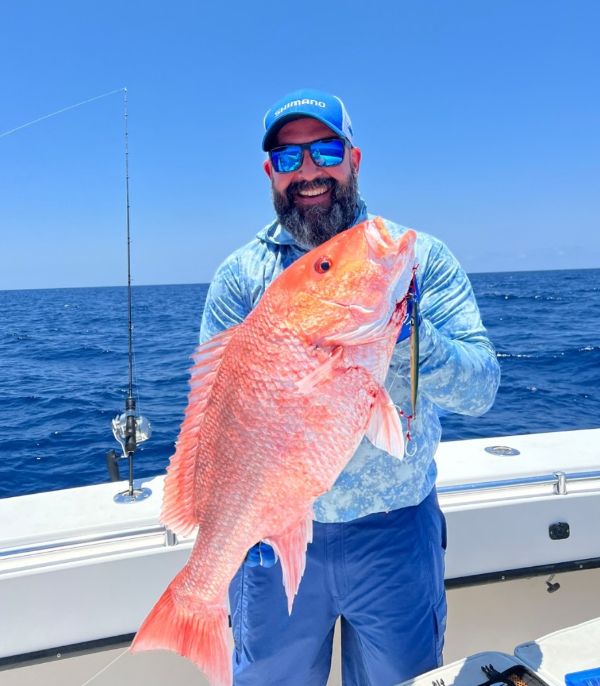
Federal managers rely heavily on the Marine Recreational Information Program (MRIP), a survey-based system that estimates catch after it happens. States have argued that MRIP is ill-suited for managing very small quotas, where even minor estimation error can shut down a season almost immediately.
The EFPs were intended to test an alternative. Under the permits, states would extend recreational seasons—Florida planned about 39 days, while Georgia, South Carolina, and North Carolina aimed for roughly 62 days—while collecting more detailed, state-run harvest data. The idea was not to abandon federal oversight, but to demonstrate that state-level monitoring could allow more access without exceeding conservation limits.
Gulf of Mexico states made a similar transition years ago, replacing chaotic federal seasons with longer, more predictable state-managed openings, and it has worked very well—the fisheries are thriving, coastal communities are again enjoying a bonanza during the red snapper season and anglers are happy. South Atlantic anglers and state managers hoped to follow that path.
The Lawsuit and the Injunction
Commercial fishing interests challenged the EFPs in federal court, arguing that NOAA had exceeded its authority and that the permits risked undermining the red snapper rebuilding plan required under the Magnuson-Stevens Act. On May 21, the judge agreed there were serious legal questions and granted a preliminary injunction, halting all fishing conducted under the EFPs.
The ruling did not decide the case on its merits. It simply froze the status quo while the lawsuit proceeds. The timing, however, was brutal: Florida’s season was scheduled to open the next morning.
Commercial vs. Recreational Catch Limits—Clearing Up the Numbers
Under the South Atlantic Snapper-Grouper Fishery Management Plan, the commercial annual catch limit is set at 102,951 pounds (whole weight). Commercial landings are tracked in pounds, and once that quota is reached, the fishery closes.
The recreational annual catch limit, by contrast, is set in numbers of fish, not pounds: 22,797 red snapper. NOAA uses fish numbers for recreational management because survey data are more reliable that way. When converted using the average fish weight assumed in the amendment, that recreational allocation equals roughly 263,000 pounds.
In other words, the recreational allocation is larger than the commercial allocation in terms of pounds, even though recreational seasons are often far shorter. That mismatch—more pounds on paper, fewer days on the water—is one of the drivers behind state frustration and the push for EFPs.
What the Science Actually Says
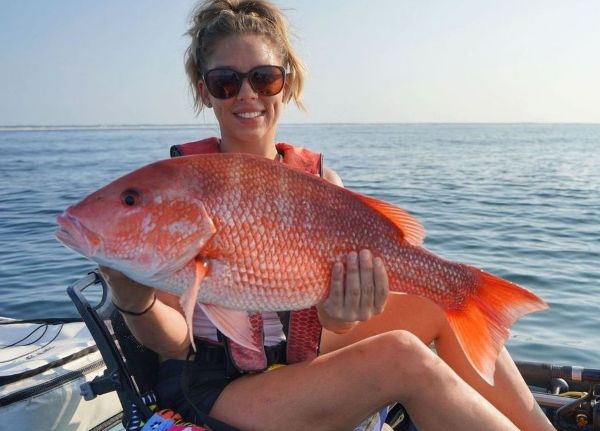
According to the most recent federal stock assessments, South Atlantic red snapper are still classified as overfished and undergoing overfishing, though conditions have improved from historic lows. The species is long-lived, slow-growing, and particularly vulnerable to overharvest of older fish, which produce a disproportionate share of eggs, per researchers.
At the same time, multiple fishery-independent surveys and ongoing research projects suggest red snapper may be far more abundant than earlier models estimated. That gap between modeled abundance and observed abundance is real—but it has not yet been fully resolved in a way that satisfies federal legal standards.
In management terms, the stock appears to be rebuilding slowly, but not fast enough—in the minds of federal fishery managers—to relax safeguards without legal risk. Too lax and they may get fired for ruining the fishery—so naturally they tend to err on the side of restrictions.
Was This Mishandled?
From the states’ perspective, the EFPs were a good-faith attempt to modernize recreational management, improve data quality, and provide meaningful access while staying within total catch limits.
From the plaintiffs’ perspective, NOAA moved too quickly, relying on experimental permits to make what amounted to major policy changes without sufficient analysis or safeguards.
What is clear is that the system failed anglers in the final hours. A season announced, planned, and booked was erased overnight—not because fish suddenly vanished, but because management and law collided.
– Frank Sargeant
frankmako1@gmail.com