
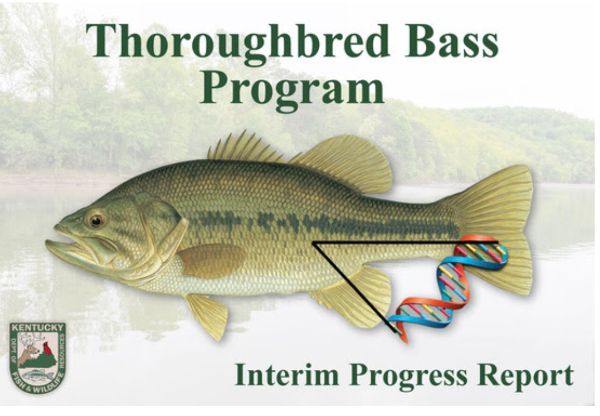
In March, the Kentucky Department of Fish and Wildlife Resources announced a breakthrough in genetics. Collaborating with the Center for Aquaculture Technologies, researchers with the agency’s Thoroughbred Bass Program have identified specific genetic markers linked to enhanced size potential in native largemouth bass. If it proves out, it could mean bigger largemouths across the northern half of the nation, where thus far the widely stocked Florida strain lunkers have not taken hold.
With these markers, biologists can now screen wild bass and selectively breed broodfish that carry the genetics associated with larger growth. The selectively bred fish could then be stocked into public waters, where they will interbreed with wild fish and gradually shift the population toward a higher trophy potential.
A Genetic Approach to Bigger Bass
Kentucky biologists have put in a lot of effort on the project. They collected fin clips from 300 largemouth bass from 30 lakes — half weighing more than five pounds, half under 3½ pounds. All fish were confirmed as pure native bass, and their genomes scanned for millions of genetic markers. The genetic signals that consistently separated the big fish from the small now form the foundation of a screening panel that hatcheries can use to choose broodfish with the best growth potential.
“This process is similar to traditional selective breeding in agriculture,” said Jeff Ross, assistant director of the Fisheries Division. “The only difference is we are using genetic markers to guide which fish to breed.”
The goal isn’t to replace native populations with exotic strains — something many northern states have previously avoided — but rather to enhance the existing gene pool from within, preserving local adaptations while boosting size potential.
Why This Matters — Especially North of the Mason-Dixon
In the southern United States, many fisheries have long used Florida largemouth bass genetics to increase size structure in lakes and reservoirs. The Florida strain (Micropterus salmoides floridanus) tends to grow faster and reach larger sizes in warmer waters than northern largemouth bass, which are native to much of the rest of the country.
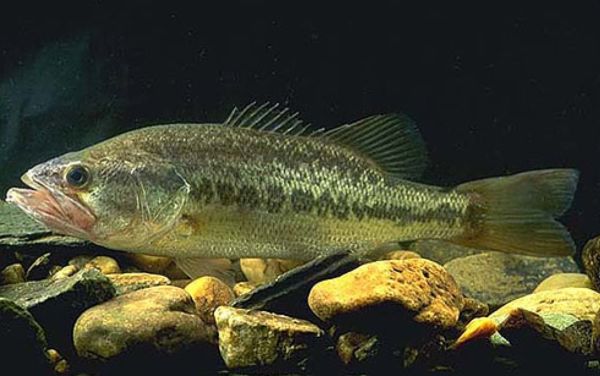
As a consequence, stocking Florida bass or hybrid crosses between Florida and northern strains has been a common management tool in many southern and mid-southern states for decades. Research from the Arkansas Game and Fish Commission showed that stocking Florida bass fingerlings into large reservoirs led to widespread hybridization with northern largemouth bass, even in waters outside the Florida bass’s native range—and the hybrids got bigger faster.
Virginia’s Department of Wildlife Resources also runs an F1 hybrid program, producing first-generation crosses between pure Florida bass and pure northern bass — sometimes called “tiger bass” — because those F1s often exhibit what managers call hybrid vigor, growing rapidly and performing well on the line. These fish are stocked in reservoirs like Lake Norman and B. Everett Jordan Reservoir as part of multi-year evaluation projects.
Other states, including Texas, actively raise both northern and Florida strain bass in hatcheries and stock accordingly, tailoring strain choice to local climate and management goals. For example, Florida bass production in Texas began in the early 1970s and contributed to the state’s reputation as a premier bass fishery, while northern strain fish are stocked where cold water tolerance is needed. Hundreds of anglers have contributed huge live bass to the state’s ShareLunker breeding program over the past 40 years, and the state has become famous as a destination for catching huge largemouths.
Despite these efforts, managers in cooler, northern climates have often steered clear of transplanting Florida genetics because of thermal tolerance issues and concerns about out-of-range subspecies disrupting locally adapted populations. Florida bass can struggle with rapid temperature fluctuations and longer, colder winters — traits that northern largemouth excel at due to their evolutionary history in temperate waters.
That’s where Kentucky’s approach is unique: by using genetics to improve trophy potential from within northern populations, biologists are circumventing many of the ecological and regulatory challenges that come with importing external strains.
In most parts of the northern United States, managers have had few options to increase bass size potential without risking ecological mismatches by moving fish outside their native range. Kentucky’s genetic markers could change that calculus.
“If we can select broodstock based on these markers, we can breed fish with a higher probability of reaching trophy size that are still native to our waters,” Martin said.
Beyond Size: Keeping Bass in the Net
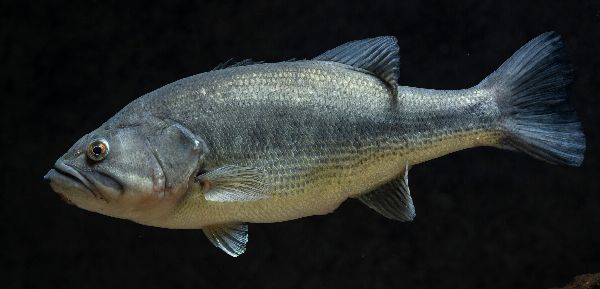
There’s another angle to this work as well. Angling pressure itself can influence fish genetics over time by selectively removing larger or more aggressive individuals. That can leave behind populations with lower average growth potential. By introducing selectively bred bass into wild waters, managers hope to replenish genetic traits that contribute to larger size and vigor, potentially offsetting the genetic effects of intense harvest pressure.
It’s not a silver bullet: spawning cycles mean that hatcheries get only one shot a year to select broodfish and produce fry for stocking, and initial implementation in 2026 may be delayed due to testing panel production. Still, biologists are collecting and testing hundreds of wild bass this season to ensure the program is ready for 2027.
A New Tool for Modern Fisheries Management?
Kentucky’s program represents an early but promising use of modern genomics in fisheries management. Rather than relying on subspecies transplants or hybrid stocking that must be repeated annually, genetics-based selection offers a sustainable, locally adapted path to trophies, especially in regions where traditional Florida genetics aren’t an ideal fit.
As other states follow the genomic era into fisheries science, programs like this could pave the way for more refined, population-specific enhancements — and give anglers in traditionally cooler climates the chance to chase bigger bass without risking the rise of “frankenfish” characteristics that might harm the overall fisheries.
– Frank Sargeant
Frankmako1@gmail.com