
If work behind Kentucky’s Thoroughbred Bass Program holds up—and early signs suggest it will—it could mark a turning point in how states think about building trophy bass fisheries north of the Florida-bass comfort zone.
For decades, the playbook for growing bigger bass was straightforward: stock Florida largemouth bass or Florida–northern hybrids and hope the climate cooperates. It worked in parts of Texas, California, Alabama, Georgia, and southern Tennessee. Push much farther north, and the results thinned out fast. Cold winters, shorter growing seasons, and local adaptation all conspired against imported genetics.
Kentucky’s approach is different. Instead of importing size, biologists are trying to uncover it.
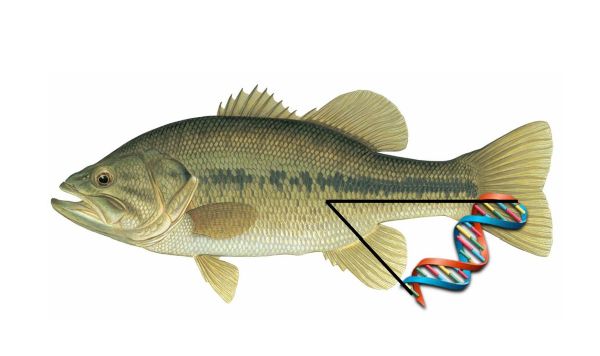
Using what they call “whole-genome sequencing” and a genome-wide association study, Kentucky researchers compared trophy-class bass with slow growers from the same lakes, identifying genetic markers common in the big fish and rare in the small ones. The aim is to selectively breed Kentucky-origin bass that already carry a higher probability of reaching large size, then let those genes integrate gradually into wild populations.
The fish are native, so local adaptation is hopefully preserved. Stocking is intended to complement existing populations. As these fast-growing fish are stocked into lakes with adequate food supply and water quality, they should theoretically grow larger bass, without introducing any “bad” genetics that won’t suit local climates.
Kentucky isn’t alone in trying to shape bass fisheries with science, though most other states have come at the problem from different angles.
Texas remains the heavyweight. Through the long-running Texas Parks and Wildlife Department “ShareLunker” program, Florida largemouth bass have been stocked widely for decades. The state’s ShareLunker effort—part genetics, part publicity—uses donated trophy bass for selective breeding and research, reinforcing trophy-bass traits in waters that can support them. It has produced undeniable results, but it depends heavily on warm climates and intensive management.
Florida itself, managed by the Florida Fish and Wildlife Conservation Commission, has leaned into genetics more cautiously. Programs such as TrophyCatch incentivize the release of large bass, protecting the fish that carry desirable growth traits. Florida also uses genetic testing to monitor the spread and purity of Florida bass strains, ensuring that stocking doesn’t dilute what already works. The emphasis is less on breeding breakthroughs than on protecting the genetics nature already perfected.
Alabama and Georgia have relied on Florida bass stockings and habitat improvements to drive size potential. Both states have seen gains, but like Texas, their success is tied closely to climate. Genetic management has largely meant choosing the right strain for the right reservoir, not identifying new size-linked markers within native fish.
Arkansas has recently started a Legacy Lunker Program, which follows a similar format to Kentucky, with native fish selected for maximum size used in breeding what will hopefully become “superfish.”
Farther north, most agencies have avoided genetics altogether, focusing instead on regulations—slot limits, catch-and-release seasons, and harvest restrictions—to let fish live longer. That approach can work, but it assumes the genetic potential for large size is already present and just needs time. Kentucky’s work challenges that assumption. What if some populations simply lack a high frequency of growth-associated genes? What if angling pressure has quietly selected against them?
That’s where the Thoroughbred Bass Program could ripple outward. If Kentucky can reliably identify and propagate size-linked genetics within cold-tolerant, locally adapted bass, it opens doors for states like Missouri, Ohio, Indiana, Illinois, and even parts of the Northeast. Instead of importing Florida bass and hoping they survive, agencies could look inward, identify their own high-growth individuals, and nudge populations over generations rather than seasons.
There are obvious caveats. Genetics is only one piece of the puzzle. Without habitat, forage, and sensible harvest regulations, no amount of selective breeding will create a trophy fishery. There are also philosophical questions. How far should managers go in shaping wild populations? When does selective breeding blur into domestication? And might this selection lead to “Frankenfish” with some undesirable or even fatal genetics?
Kentucky’s answer, so far, has been restraint. The goal isn’t record books; it’s restoring or amplifying a trait that may already exist but has been suppressed by pressure and chance. If it works, it’s possible that really big largemouths will become much more common in waters north of the Mason/Dixon line.
For now, the Thoroughbred Bass Programs outside the South remain mostly a promise, waiting on more science and more proven results. But the idea behind them—that genetics can be guided without being overwritten—may prove well worth pursuing. If it works in Kentucky, it won’t stay in Kentucky for long.
– Frank Sargeant, Editor, The Water Wire
Frankmako1@gmail.com