
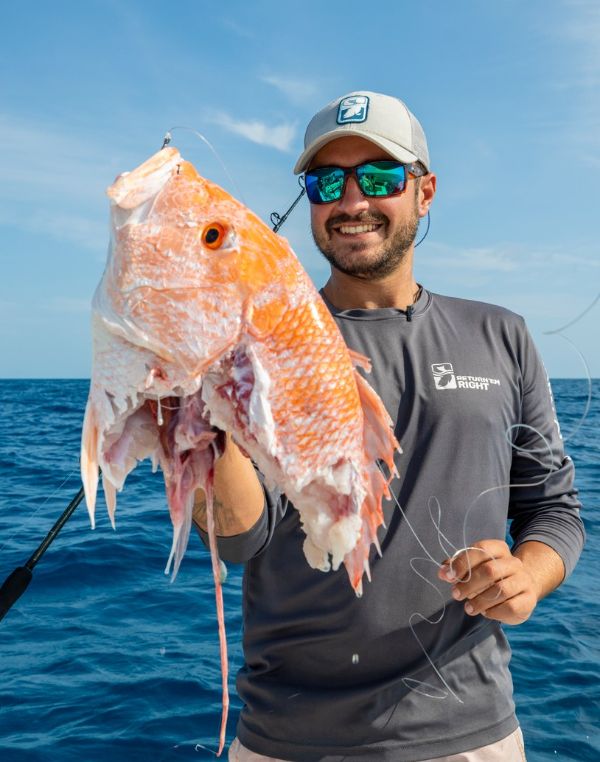
For many offshore anglers, the hardest fight of the day ends with half a fish.
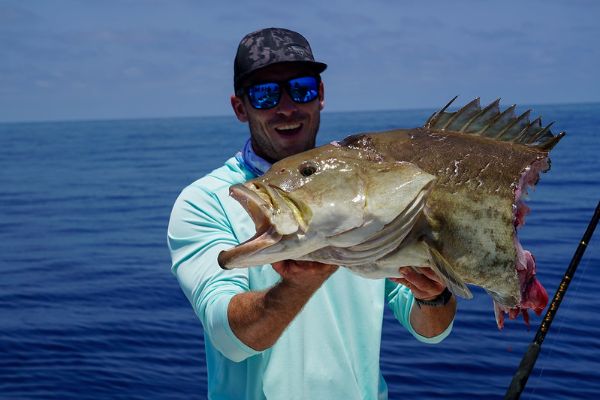
A heavy snapper or grouper comes steadily toward the surface, only to disappear in a violent strike halfway up. What's left at the boat is often little more than a head, the rest having been claimed by a shark.
The problem, known as shark depredation, has become one of the biggest frustrations in reef fishing. It costs anglers fish, tackle and time, while increasing mortality on fish that otherwise might have survived release. Charter captains say it can ruin a day's trip, and some fishermen now leave productive reefs after repeated shark attacks.
NOAA Fisheries has acknowledged the growing concern and is developing a national strategy to better understand what's causing the problem and what, if anything, can be done about it.
One question dominates dockside conversations: Are there simply more sharks?
The answer isn't straightforward.
Some shark populations have recovered under federal management. Atlantic blacktip sharks, for example, are considered rebuilt. Others have not. Dusky sharks remain under rebuilding plans, while the status of several species commonly blamed for depredation is still uncertain.
Among reef fishermen in the South Atlantic and Gulf, sandbar sharks and bull sharks are frequently mentioned as the primary offenders.
To determine whether changing abundance is contributing to increased depredation, NOAA began a new stock assessment of sandbar sharks in May. It is the first since 2018, with results expected in early 2027. Scientists will also evaluate new assessment methods that, if successful, could later be applied to bull sharks, whose stock status remains unknown.
Population size, however, may be only part of the story.
Researchers increasingly suspect that some sharks learn to associate fishing boats with an easy meal. The sound of engines, fish struggling on hooked lines, or the routine release of undersized fish may condition individual sharks to patrol popular fishing areas.
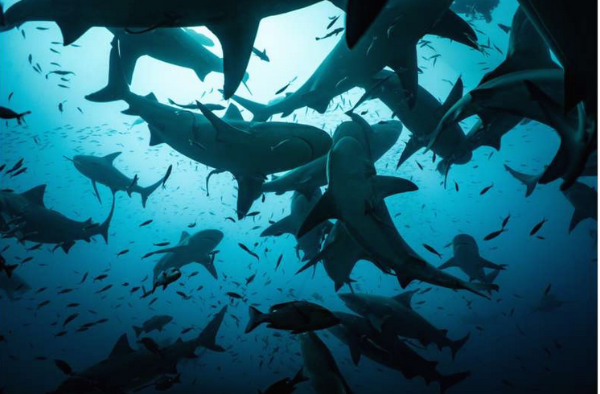
Most experienced bottom fishermen have seen something similar. A reef may produce several fish without incident before sharks suddenly arrive. After that, nearly every hooked fish is intercepted before reaching the boat.
NOAA hopes to learn whether those attacks are being carried out by a relatively small number of individual sharks that repeatedly visit fishing grounds or whether the behavior is widespread throughout local populations.
To find out, agency scientists are launching acoustic telemetry studies in several areas of the Gulf where depredation is especially common. Captured sharks will be fitted with acoustic transmitters, while underwater listening stations record their movements over the course of a year.
At the same time, charter captains and recreational anglers fishing those same areas will report their fishing activity and depredation events, allowing researchers to compare shark movements with reported losses.
Another focus is shark deterrents.
Over the years, anglers have experimented with everything from magnets to electromagnetic devices in hopes of discouraging sharks from attacking hooked fish. Results have been inconsistent.
NOAA is now working with state agencies, universities and private researchers to evaluate the available research. The review will examine not only whether various deterrents reduce depredation, but whether they're practical and affordable enough for widespread use. The agency says it also intends to continue supporting research into new deterrent technologies.
Regulations are also part of the discussion.
Commercial shark fishing effort has declined over the past decade, and most recreational shark anglers now release their catch. NOAA is considering additional regulatory changes for Atlantic and Gulf shark fisheries to keep harvest limits aligned with the latest stock assessments while providing greater flexibility for both commercial and recreational fishermen.
Whether those measures will have any measurable effect on depredation remains uncertain.
For anglers who target reef fish, the significance of NOAA's effort is that the agency is treating shark depredation as more than an isolated complaint. The issue affects recreational and commercial fishermen alike and raises questions about fisheries management, shark conservation and angler satisfaction.
None of the research underway is likely to produce immediate answers. Stock assessments, tagging studies and evaluations of deterrents all take time.
But for fishermen who have watched productive reefs become increasingly difficult to fish because of persistent shark attacks, the effort represents the most comprehensive attempt yet to separate perception from science—and, ultimately, to identify solutions that allow healthy shark populations and productive reef fisheries to coexist.
(To learn more about shark depredation and what you can do to decrease it, visit Return ‘Em Right here.)
– Frank Sargeant, Editor, The Water Wire