
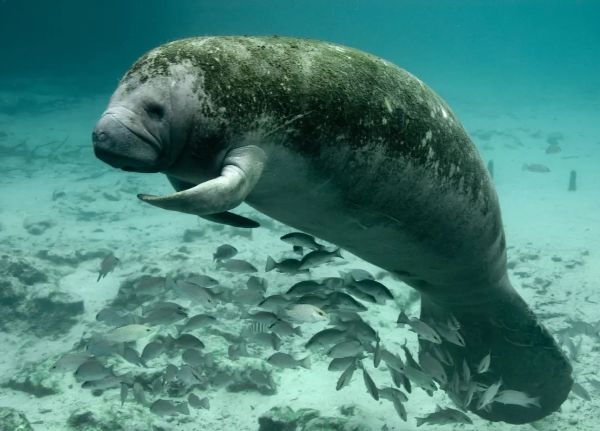
Lost in all the arguments over manatee speed zones and regulations is one remarkable fact: there are roughly ten times as many manatees in Florida today as there were when I started boating these waters in the early 1970s.
When I first began running boats around Florida in the early 1970s, wildlife officials estimated there were only about 800 to 1,200 manatees left in the state. Nobody knew the exact number because counting a slow-moving marine mammal that spends much of its time underwater isn't easy, but everyone agreed on one thing—they were in trouble. I saw one or two at Homosassa, where I lived then, but it was truly a rare occasion.
The issue, old watermen told me, was that some locals had followed the tradition of the Calusa’s and the Seminoles and continued to kill and eat every manatee they could despite a ban on hunting them that began in 1893. The sub rosa poachers continued until federal enforcement put a stop to them in the early 1970’s with the Marine Mammals Protection Act.
Unfortunately, just ending the hunts didn’t help much at first—the scattered remnant population took a long time to start spreading. And when they did, boat strikes became ever more common as Florida’s waters rapidly got busier and boats got bigger and faster.
Fast forward half a century of dedicated protection, including laws that slow boats in many manatee zones and ban them completely in others at certain times of year.
Today, the Florida Fish and Wildlife Commission best scientific estimate puts Florida's manatee population at nearly 10,000 animals.
When I lived on the eponymous Little Manatee River, it was a rare day when I didn’t see several go by my dock, and once we had a mating aggregation of eight there—don’t let anybody tell you manatees are always slow, lethargic—or tolerant of each other!
It's one of the greatest wildlife recovery stories in North America, and it didn't happen by accident.
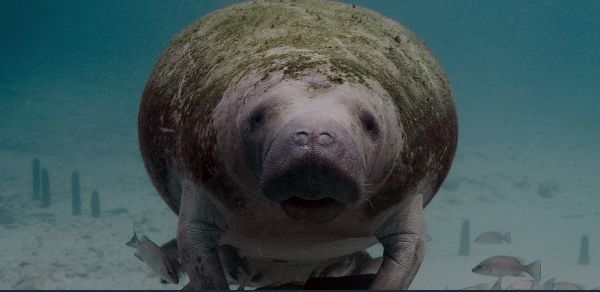
Protected areas were established. Boat-speed zones were created in critical habitat. Warm-water refuges were identified and protected. Rescue and rehabilitation programs expanded. Research improved our understanding of where manatees traveled and what they needed to survive.
Perhaps most importantly, ordinary Floridians changed.
When I first started guiding and writing about fishing, many boaters had never seen a manatee. Today, most Florida anglers can spot the telltale swirl, the broad gray back or the distinctive "footprint" left by a slowly swimming animal before they ever get close enough to be a danger.
That's not because somebody is standing on every shoreline with a ticket book. It’s because boaters and anglers now care—many of us are manatees biggest advocates, despite the occasional grumbling about go-slow zones designated to protect manatee travel routes.
The people who spend the most time on the water also spend the most time enjoying manatees.
We get to watch a mother teaching her calf to surface for air. We see them grazing on seagrass, rolling lazily beside the boat or poking their whiskered noses above the surface as though they have come over just to satisfy their curiosity.
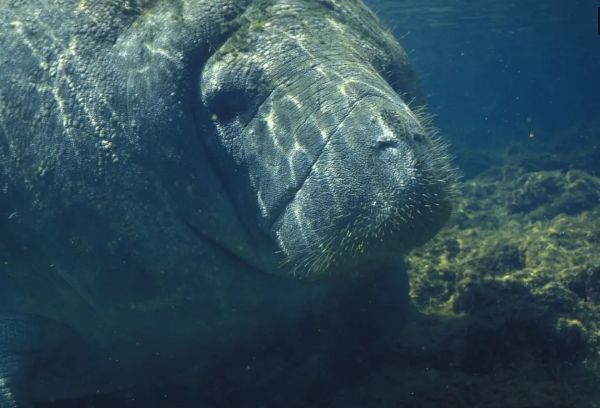
I've had them bump the hull while I was anchored over a trout flat, drift beneath the boat while waiting for tarpon to roll and quietly surface beside a dock as though asking what all the fuss was about.
Manatees still face serious challenges. The massive seagrass losses in the Indian River Lagoon a few years ago led to heartbreaking starvation deaths. Red tide continues to take a toll on Gulf Coast populations during severe blooms. Cold snaps remain dangerous, and boat strikes still occur every year. Recent development changes could make it easier to impinge on manatee habitat in some areas. And, there’s a natural limit on how many manatees the Florida grass flats can support.
Those problems deserve attention. But success deserves recognition, too.
And we have a stake in healthy estuaries because they're the same places that support snook, redfish, trout, tarpon—and manatees.
The next time one of those big gray vegetarians surfaces beside your boat, enjoy the moment.
You're looking at one of conservation's genuine success stories.
– Frank Sargeant, Editor of The Water Wire
Frankmako1@gmail.com