
Most boat owners rarely or never consider the possibility that their boat may someday sink. But it happens. Sea Tow alone reports some 800 calls a year for boats taking on water.
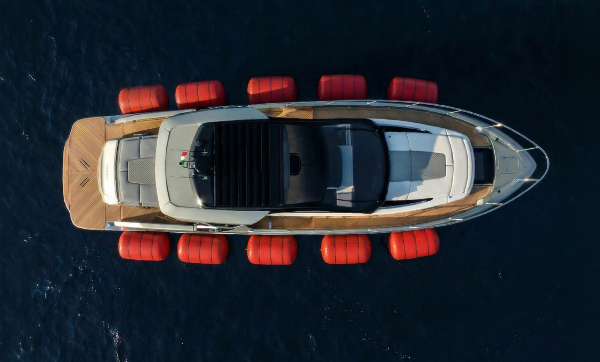
A new safety system from an Italian company could act as insurance against a boat ever going to the bottom. Sea Fend is developing a system of giant inflatable bags designed to keep a flooded boat on the surface long enough to get its crew to safety and, if possible, get the boat towed or motored back to port.
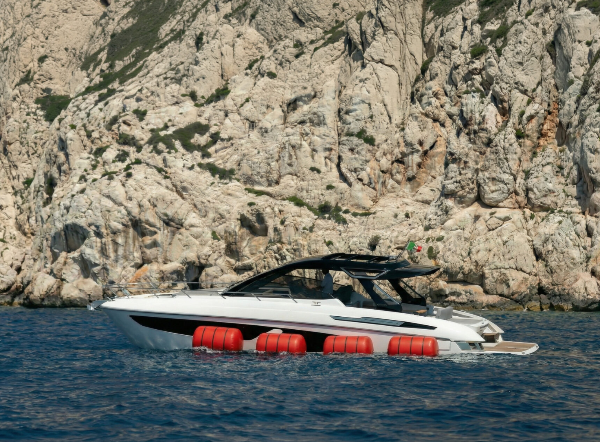
The concept is pretty simple. Multiple flotation bags are mounted around the hull, either hidden behind flush-fitting panels on a new boat or enclosed in streamlined external housings on a retrofit installation.
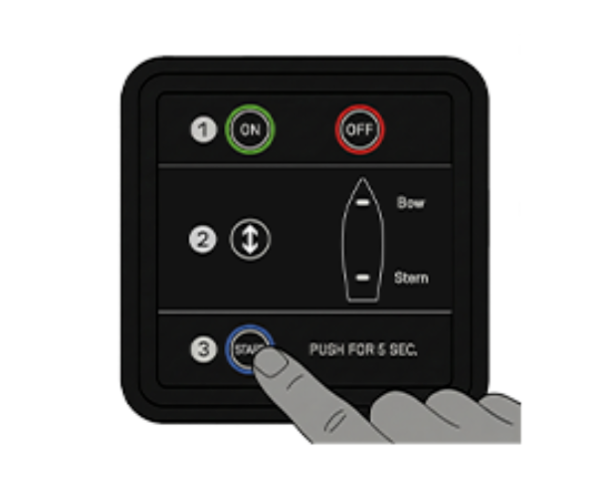
It’s not an automatic, instantaneous system like automotive air bags, however. If the hull suffers a serious breach, the skipper activates the system and electric pumps inflate the bags, adding enough buoyancy to keep the boat from going to the bottom.
Sea Fend says inflation takes five to 25 minutes, depending on the size of the system. The current version is designed for boats from about 30 to 65 feet and up to 45 tons, with the number and placement of bags customized to the vessel.
That could be useful in situations that don't necessarily involve a dramatic collision. A ruptured hose, failed through-hull fitting or other leak can put a boat on the bottom. A collision with a submerged object or floating debris can obviously create a much more immediate emergency.
But would the average recreational boater buy it?
Probably not.
Sea Fend estimates the system will cost roughly 3% to 5% of the boat's value. On a $50,000 boat, that's $1,500 to $2,500. On a $100,000 boat, you're looking at $3,000 to $5,000, and on a $200,000 boat, the flotation system could run $6,000 to $10,000.
That's a lot of money for something most boat owners think they'll never need. A fisherman running a 20-foot fiberglass boat on an inland lake is unlikely to spend several thousand dollars on a system designed to save his boat from a catastrophic sinking.
But the calculation changes when the boat is going somewhere that rescue and salvage are difficult—and accidents more likely.
Consider a 50-foot expedition boat working its way along the rocky Alaska coast, where a hull breach could leave the crew a long way from a repair facility. Or a cruising boat making an extended offshore passage where a collision with floating debris could turn into a survival situation. Commercial operators, research vessels and other boats working in remote waters have even more reason to consider the consequences of losing the vessel.
In those situations, the question isn't simply whether the airbags are worth 3% or 5% of the boat's value. It's whether they provide enough additional time to keep a damaged vessel afloat until help arrives.
There is an insurance angle, too. A sunken boat can become a total loss, with recovery costs adding substantially to the bill. If insurers eventually determine that a properly installed anti-sinking system reduces total losses, premium discounts could make the economics considerably more attractive. So far, however, there's no indication that insurance companies have established such discounts for Sea Fend.
Appearance could be another dividing line between new boats and retrofits. On a new boat, the flotation bags can be built into molded recesses behind flush-fitting panels, making them essentially invisible until deployed. Retrofit installations use external torpedo-shaped housings. They're designed to minimize drag and visual impact, but they're still obvious hardware attached to the outside of the boat.
That could make factory installation the more attractive route. A builder could engineer the mounting points, flotation capacity and balance into the boat from the beginning and hide the system behind the hull sides.
Sea Fend also provides remote monitoring and activation through an app, along with GPS information and system status. The company says the system can operate from a separate battery so it can continue functioning if flooding disables the boat's normal electrical system.
For the average lake boater, an anti-sinking system may be an expensive answer to a problem he doesn't expect to encounter.
For somebody heading into the wilderness along the Alaska coast, crossing an ocean or operating a valuable boat far from help, the question could look very different.
For details, the company can be contacted via https://seafend.it/en/home-2-english.
– Frank Sargeant, Editor, The Water Wire