
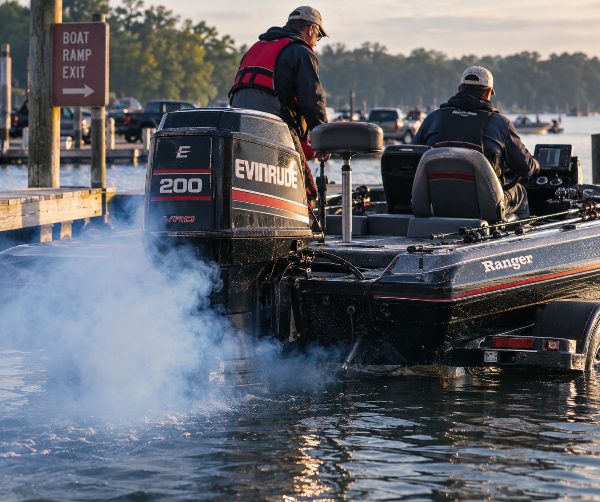
There was a time when mentioning a four-stroke outboard at a boat ramp could get you into an argument.
Two-stroke loyalists had plenty of ammunition. Their engines were light, powerful, mechanically simple and familiar. A good carbureted two-stroke would fire instantly, jump on plane and scream across the lake with a sound that every angler of a certain age still recognizes.
Some of us, including me, actually loved the smell of two-stroke oil smoke in the morning.
But the Environmental Protection Agency changed the rules.
In 1996, the EPA adopted the first federal emissions standards for gasoline marine engines, with the requirements phased in beginning with the 1998 model year and fully implemented by 2006. The goal was a 75 percent reduction in hydrocarbon emissions from new marine engines. Traditional carbureted two-strokes, which allowed some unburned fuel and oil to pass through the exhaust during the combustion cycle, suddenly had a serious problem.
The manufacturers initially didn't simply surrender to four-stroke technology. They tried to reinvent the two-stroke.
Mercury introduced the 200-horsepower OptiMax direct-injection two-stroke in 1996. OMC brought FICHT fuel injection to Evinrude and Johnson in 1997, while Yamaha developed its own high-pressure direct-injection HPDI system, introduced on larger engines around 1999-2000. The basic idea was on target: inject the fuel directly into the combustion chamber at precisely the right time, greatly reducing the amount of raw fuel escaping through the exhaust.
For a while, it looked as though the two-stroke might survive after all.
Then FICHT became one of the industry's great cautionary tales.
The early OMC FICHT engines suffered serious reliability problems. The 1999 and 2000 Evinrude FICHT 200- and 225-horsepower models were subject to a U.S. Coast Guard safety warning after reports of fires and explosions, and OMC was already in bankruptcy when Bombardier acquired the Evinrude and Johnson businesses. An International Trade Commission report later cited FICHT quality problems, recalls and warranty costs as significant contributors to OMC's financial problems.
Bombardier didn't give up on the basic concept. It reworked the direct-injection technology into E-TEC, producing a remarkably clean and efficient two-stroke. SAE technical work from Bombardier documented development of E-TEC specifically to meet California's stringent three-star emissions requirements.
Meanwhile, four-strokes were getting better.
Yamaha had been working on four-stroke outboards since the 1980s and introduced its first 9.9-horsepower four-stroke in 1984. The company moved into serious horsepower with the F100 in 1998, the fuel-injected F115 and then the 225-horsepower F225 in 2001.
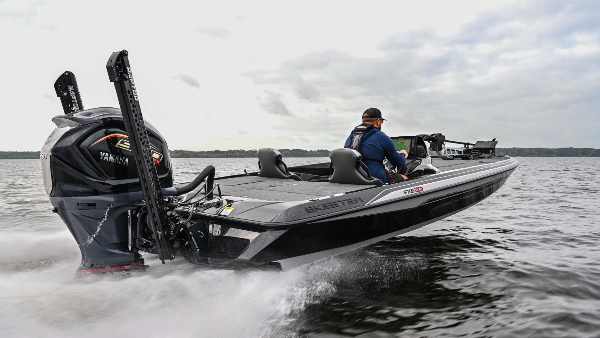
Suzuki was one of the manufacturers that saw the four-stroke future coming early. The company introduced its first four-stroke outboards, the 9.9- and 15-horsepower DF models, in 1994. By 1997, Suzuki had taken another significant step with the DF60 and DF70, the first Suzuki four-strokes equipped with electronic fuel injection. Those engines won an NMMA Innovation Award, and Suzuki continued expanding the technology while competitors were still heavily invested in two-stroke designs.
Suzuki really established itself as a four-stroke leader when it moved into the higher-horsepower market. In 2003, the company introduced the DF250, which Suzuki identifies as the industry's first 250-horsepower V6 four-stroke. Three years later came the 300-horsepower DF300, the industry's first V6 four-stroke at that output and the first production outboard with electronic remote control. Suzuki eventually built its entire lineup around four-stroke technology, collecting eight NMMA Innovation Awards for four-stroke outboards between 1997 and 2017.
Mercury already had a growing four-stroke lineup, but the real turning point came in 2004 when it introduced the supercharged 200-, 225-, 250- and 275-horsepower Verado. That was the point at which the argument that four-strokes were inherently slow, heavy and unsuitable for serious performance began to lose much of its force.
Yamaha followed with the 150-horsepower F150 in 2004, another landmark engine that put four-stroke power into the heart of the bass-boat and offshore markets.
The transition wasn't instantaneous. Mercury continued building OptiMax direct-injection two-strokes, Yamaha continued HPDI and Evinrude eventually produced some very good E-TEC engines. But the direction of the industry was becoming obvious.
Today, the difference is almost comical.
Start an old carbureted two-stroke beside a modern four-stroke and the first thing most people notice isn't the emissions. It's the noise.
The old engine barks. It rattles. It smokes. It announces its presence from halfway across the marina.
The four-stroke starts with a subdued mechanical hum. At idle, you can carry on a conversation beside it. At trolling speed, you can hear the lure rattling through the rod guides. Run one across a lake and the absence of that old two-stroke racket becomes almost as noticeable as the speed.
Then there's the smoke and smell. Anyone who spent years around carbureted two-strokes remembers the blue haze hanging behind the boat and the unmistakable odor of burned oil and gasoline. Modern four-strokes have largely eliminated that part of the boating experience.
Fuel economy is another difference that shows up directly in the wallet. EPA's analysis of the transition found that the newer technologies could substantially reduce fuel consumption as well as emissions.
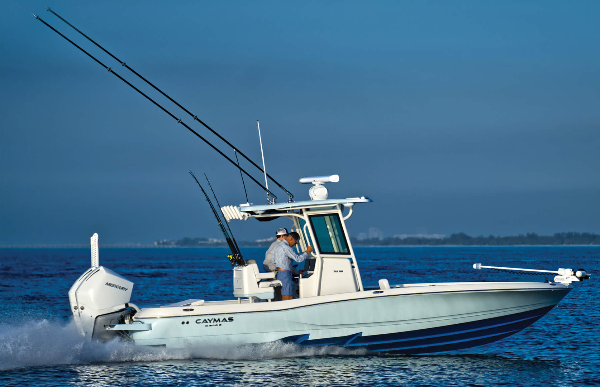
And then there's dependability.
Electronic fuel injection, computerized engine management, improved corrosion protection and vastly better diagnostics have turned starting a modern outboard into a largely unremarkable event. That's exactly what you want from an engine. Turn the key or push the button, and it starts.
That doesn't mean modern outboards never break. They do. Saltwater, bad fuel, neglected batteries and skipped maintenance remain equal-opportunity engine killers. But compared with the outboards many of us grew up with, today's engines are remarkably trouble-free.
Evinrude eventually became the last major holdout in the effort to keep a modern two-stroke alive. The E-TEC and later E-TEC G2 were sophisticated, clean-running engines, and they proved that direct-injection two-stroke technology could survive the emissions era.
But on May 27, 2020, BRP announced that it was ending production of Evinrude outboards. The company said the outboard business had been heavily affected by the COVID-19 crisis and that it was redirecting its marine strategy toward its boat brands and new technologies.
And that was essentially the end of the road.
The irony is that many of us who complained the loudest about being forced away from two-strokes now wouldn't willingly go back.
We didn't want four-strokes.
We didn't want the extra weight. We didn't want the unfamiliar technology. We didn't want somebody telling us that the engines we'd trusted for decades were suddenly obsolete.
But after two decades of living with the replacements, most of us have discovered something uncomfortable.
The government may have pushed the industry toward cleaner outboards, but the engineers eventually gave us engines that are quieter, cleaner, more fuel-efficient and considerably easier to live with.
– Frank Sargeant, Editor, The Water Wire