

I’ve worn retainer cords on my sunglasses for as long as I can remember. They are cheap insurance against losing a pair overboard, dropping them in the surf or simply not having them handy when I need them. As the years accumulated, I eventually put cords on my reading glasses, too. Sometimes I walk around with three pairs of glasses dangling from my neck. I sort of click and clatter as I walk—you don't care if people think you are odd after a certain age.
Ombraz takes the idea of a retainer cord and makes it the entire sunglasses frame.
There are no temple arms. Instead, an adjustable woven cord runs from one side of the frame around the back of your head. The result looks strange for about five minutes, until you start using the glasses. Then the concept begins to make sense for anyone who spends time around boats.
The first thing I noticed was what wasn't there: nothing pressing against my ears and nothing to catch on the arms of a fishing hat. The glasses sit securely on the bridge of the nose, with the cord providing the tension normally supplied by conventional temple pieces. In fact, you can leave the cord fairly loose because the frames are shaped to sit securely against your nose and cheeks. Tighten it when you're moving around in rough water, or loosen it and let the glasses hang around your neck when you don't need them. With Ombraz, the retention system is part of the glasses.
The company offers several frame designs, including models aimed specifically at outdoor and water use. The newer Azzurro is the most obviously marine-oriented, with a wraparound design, polarized Zeiss lenses and coatings intended to deal with water, sweat and sunscreen. The Teton and Dolomite models have integrated side shields that help block peripheral glare, a useful feature when you're staring across bright water for hours.
Polarization remains the big reason I wear sunglasses while fishing. It cuts reflected glare from the surface and makes it easier to see into the water, particularly when looking for fish, structure or changes in bottom composition. Ombraz offers polarized lenses in several colors. For general freshwater fishing, I found the contrast of a brown lens appealing; gray is a good choice for extremely bright conditions and offshore use.
The glasses are also easy to stow. There are no hinges to fold and no temple arms to snap, bend or break.
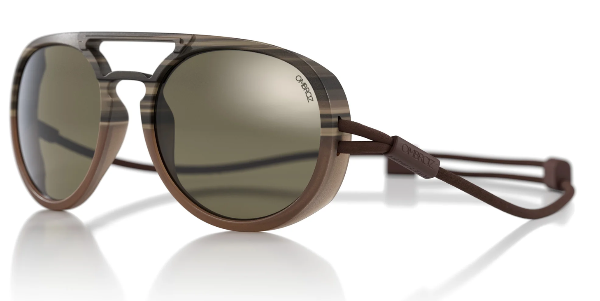
The company also offers vented side shields that clip on, a useful option for flats anglers looking for the telltale shadow of a redfish or bonefish gliding through shallow water. The vents help prevent the lenses from steaming up.
The design isn't perfect for every situation. The cord takes a little getting used to, and anybody accustomed to traditional sunglasses may initially wonder whether the things will stay put. They do, for the most part. And if they blow off at 60 mph, they aren't going over the side—the retainer is still doing its job.
I would also check the glasses against the particular electronics on a boat before choosing polarized lenses. Polarization can make some LCD displays difficult to read from certain angles. That's a characteristic of polarized eyewear rather than a flaw unique to Ombraz.
The biggest question is whether eliminating the temple arms provides enough advantage to justify paying roughly $160 for models such as the Teton and around $195 for the Azzurro. For somebody who rarely gets around water, probably not. Conventional sunglasses work fine, and you can put a cord on them.

Better lenses—like these from famed optics company Zeiss, can provide sharper optics, more consistent polarization and better coatings. But I've also bought $15 polarized sunglasses that did a surprisingly good job of cutting glare, and for many anglers they may be perfectly adequate. The difference becomes more noticeable in demanding conditions—long hours in bright sun, sight-fishing or situations where optical clarity really matters. Cheap doesn't automatically mean useless, just as expensive doesn't automatically mean better for every angler.
Ombraz is asking you to pay for more than the lenses, of course. Much of what you're buying is the unusual retention system and the convenience of having no arms to break, bend or lose. And of course, they do add a bit of style.
Glasses get dropped, stepped on, knocked off consoles and lost overboard. Hats complicate the fit. Retainer cords get tangled. Glasses are constantly being taken off and put back on while driving, fishing, tying knots, reading electronics and digging through tackle.
I've spent decades adding cords to sunglasses because I didn't want to lose them. Ombraz simply asks why the cord shouldn't be the part that holds the glasses on in the first place.
Details at www.ombraz.com.
– Frank Sargeant, Editor, The Water Wire