
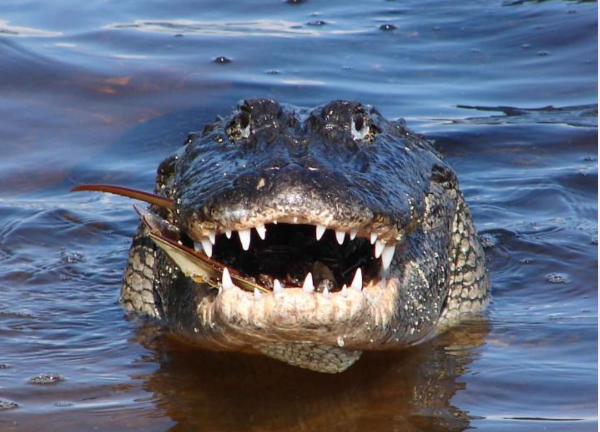
Seventy-one-year-old Steve Hamilton was fishing from shoreline of a pond connected to Lake Apopka, just west of Orlando, this past weekend when an alligator nearly 12 feet long attacked him and dragged him into the water. He did not survive.
Hamilton had reportedly just caught a nice bass and was holding it up for photos when the gator lunged out of the water, caught him by the leg and dragged him in.
Authorities later captured and killed an 11-foot, 8-inch alligator believed responsible. Other alligators in the water complicated efforts to recover the body, according to observers. The attack was Florida's second fatal alligator incident of 2026.
In June, 31-year-old Brittany Clark died after being attacked by a 13-foot alligator while swimming in the Econlockhatchee River area near Oviedo. In August, a South Carolina triathlete survived an attack while swimming in the Savannah River near North Augusta. In 2025, a 61-year-old Florida woman died after an alligator encounter tipped her canoe into the water near Lake Kissimmee.
Alligator attacks remain uncommon, but the animals are far more numerous today than they were a half-century ago. The U.S. Fish and Wildlife Service estimates that nearly 5 million alligators now inhabit the Southeast, including about 1.25 million in Florida. Louisiana's wild population has climbed from fewer than 100,000 alligators to more than 3 million in roughly 50 years, per USFWS estimates.
That recovery is one of North America's major wildlife conservation success stories. Decades of unrestricted hunting and habitat loss had driven alligators to dangerously low numbers in parts of their range in the 1960’s.
When I first moved to Florida in the early 1970’s, gators were scarce and the ones you saw where usually doing their best to get out of rifle range—many good ol’ boys still shot them on sight, even though it was illegal. And we routinely waded up to our chest in canals, lake shores and marshes to bass fish and hunt ducks.
I’d be more than a little nervous doing that in many lakes, rivers and bayous in Florida or Louisiana today.
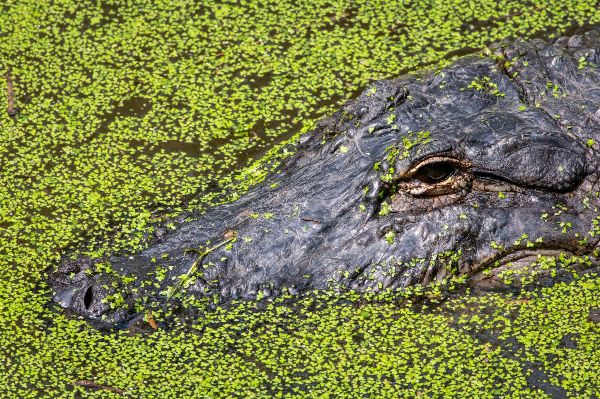
The huge increase in gator numbers—and the much larger average size of many due to decades of controlled harvest--means that it can be downright dangerous in some areas of the Southeast to get into fresh water rivers, ponds and lakes. Swimming or wade-fishing in waters where large alligators are around is very dangerous. And even a big gator can make a very stealthy approach under water. They can stay under water for over 30 minutes—the fact you don’t see them on the surface doesn’t mean they’re not there.
Hunting is one tool wildlife agencies use to manage recovered populations, alongside targeted removal of alligators that pose a threat to people, pets or property. Florida's annual recreational harvest operates under permits and quotas, while Louisiana has a long-running commercial harvest program. These programs are designed to maintain sustainable populations while reducing conflicts with people. Gators that have been hunted are also much less likely to view humans as an easy target.
Gators that have not been hunted can be particularly aggressive—there are places in Everglades National Park where you can’t put a live bait in the water without a gator grabbing it before a snook or redfish can find it. They’ll come literally to the side of the boat to snatch a fat mullet off your hook.
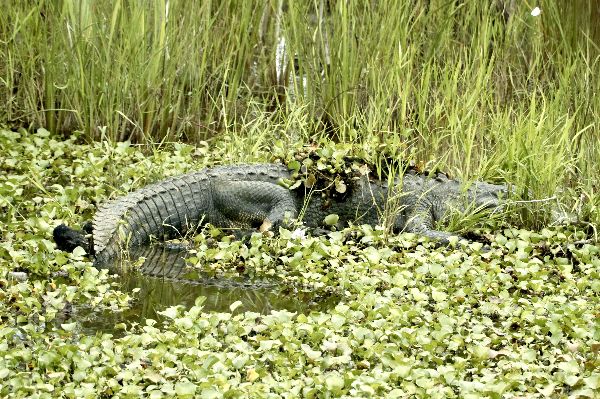
Alligators can rest entirely submerged beside a bank, under overhanging vegetation or in shallow water. It’s not safe to wade where visibility is poor, as it is in many southern waters due to tannin-stained “black water”. And of course wading out to grab a fish stuck on lily pads puts you in a precarious spot—a gator may be watching that fish, too.
Gators can cover a short distance with surprising speed, using their tails to sort of hit hyper-drive. Never approach an alligator for a photograph, attempt to feed it or assume it’s harmless because it appears accustomed to people—or asleep in the sun.
Particularly, keep dogs leashed and away from the water's edge; gators can spot a dog along the shoreline from hundreds of yards away, and they’ll come fast to try to surprise it. Even a big dog is defenseless—remember a large gator can readily take down a deer or a wild hog. A neighbor of mine in Ruskin lost a German shepherd to a Little Manatee River gator. (That gator, sad to report, wound up floating dead of unknown causes a few days later.)
Swimmers should choose carefully
Personally, I’m not much for swimming in fresh water anywhere in gator country—that’s why God made Pensacola Beach. Getting into the black water lakes and rivers of the southeast, especially at dawn, dusk or after dark, is asking for trouble these days. You might do it a hundred times with no problem—and you might do it once in the wrong spot.
If an alligator seems unusually interested in you, report it to the appropriate wildlife agency. In Florida, call the Nuisance Alligator Hotline at 866-392-4286. (Even though harvest is now legal for licensed hunters, you can’t capture, corner, harass or kill an alligator yourself without a permit.)
The Best Defense: Eat ‘Em
Nighttime gator hunts are exciting, fun and a bit dangerous, not something you want to try on your own. Permits are required. Lots of licensed gator guides can put you on them—most common technique now is to snatch hook them on shark tackle, pump them within bangstick range—no easy matter--and then turn them into gator steaks.
Alligator tail meat looks a lot like pork, though it’s definitely chewy. A meat hammer and a lot of spicy barbecue sauce makes it reasonably edible—and you get a great head and hide trophy from the hunt if you want it, plus you’re helping to keep the population within reasonable limits.
The return of the American alligator from the brink of regional extinction is a conservation achievement, and regulated hunting is part of keeping that success sustainable. But neither the animals' protected status nor their abundance should encourage complacency. Autumn fishing, duck hunting and boating offer some of the best days of the year, provided people remember that alligators remain part of the landscape—and that the water's edge is their habitat, too.
– Frank Sargeant, Editor, The Water Wire