
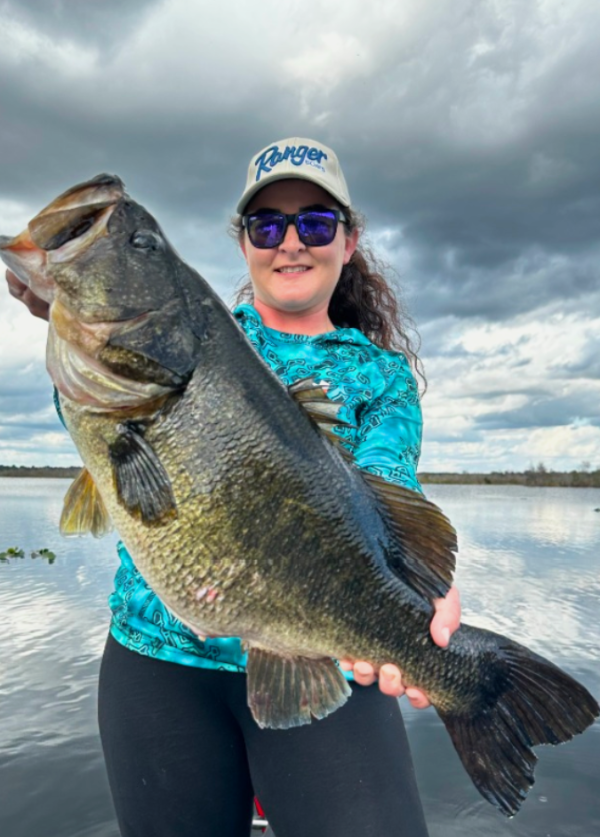
I caught a good number of 7- to 8-pound bass during my many years in Florida, but only two over 10 pounds. Part of the reason is that I rarely fished specifically for the giants—giant wild shiners and tarpon tackle are the way to go, though some are also caught on big plastic worms and frogs. But the primary reason is that there just aren’t that many 10-pound-plus largemouths in Florida waters.
However, they are there, and somebody is going to catch them, given the enormous fishing pressure in the Sunshine State. More than 677 trophy largemouth bass were approved during Season 14 of Florida’s FWC TrophyCatch program, with two of the state’s leading big-bass producers offering an interesting lesson in how Florida’s unusual waters can produce exceptional fisheries.
The 10,000-acre Fellsmere Water Management Area was acquired by the St. Johns River Water Management District for flood protection, water storage and treatment and to reduce harmful freshwater discharges into the Indian River Lagoon. Before the area was flooded beginning in 2015, FWC and the water district spent years preparing it for both wildlife and fish production. Biologists shaped the bottom with holes, trenches, drop-offs, humps and islands and created extensive aquatic habitat. After flooding, FWC stocked roughly 1 million Florida bass along with bluegill, redear sunfish and black crappie.
The result has been one of the most productive bass fisheries in the state. Fellsmere has produced hundreds of TrophyCatch entries since flooding, including bass exceeding 13 pounds, demonstrating how quickly a carefully designed wetland can become a trophy fishery.
Orange Lake is a very different kind of fishery. The roughly 12,900-acre natural lake in the Alachua County area has no conventional outlet, but water can disappear rapidly through a system of sinkholes when groundwater conditions allow it. Every few years, the lake can lose a substantial portion of its volume through those sinkholes before rainfall and runoff refill it.
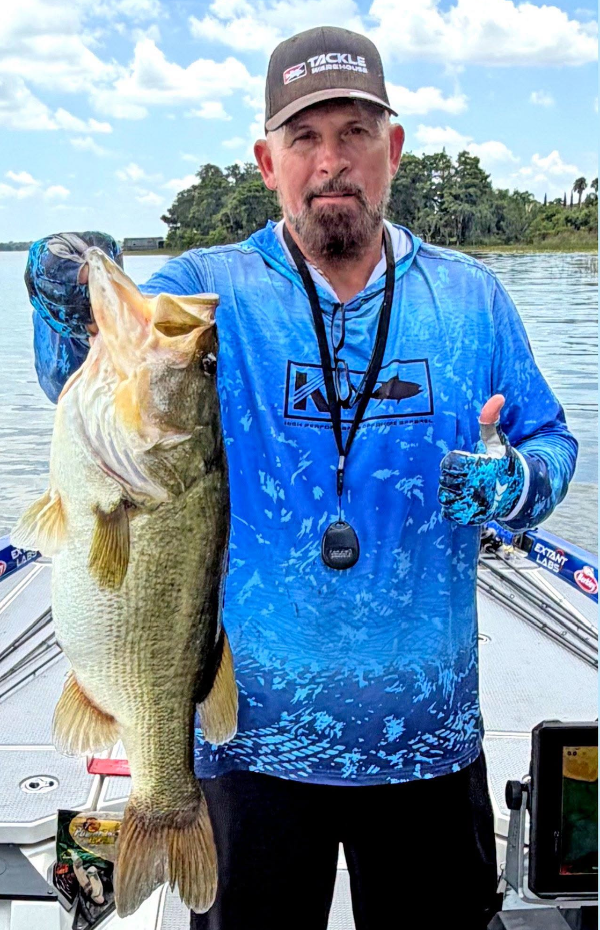
Those dramatic fluctuations actually help sustain the fishery. Falling water concentrates fish and exposes or concentrates aquatic vegetation, while refilling floods fresh habitat and provides new feeding opportunities. FWC has repeatedly documented strong bass populations in Orange Lake following these cycles. The lake’s unusual hydrology is a reminder that a productive bass fishery does not necessarily require stable water levels.
The Withlacoochee River and Lake Rousseau also rank among the leading TrophyCatch waters. Rousseau is itself a man-made impoundment with a complicated history. The lake was formed in 1909 when the Withlacoochee was dammed to generate electricity for the phosphate industry. Decades later, the area became part of the ill-fated Cross Florida Barge Canal project.
Today, Lake Rousseau’s flooded cypress, aquatic vegetation and river channel provide the kind of cover and structure that Florida bass favor.
Those waters also put another TrophyCatch statistic into perspective. The program has begun asking anglers whether they used forward-facing sonar when catching their submitted bass, and so far 82 percent of approved trophy fish have been caught without it.
That figure may be less surprising in Florida than it would be in many other states. Forward-facing sonar is particularly useful for locating bass suspended in open water, but many of Florida’s largest largemouth live in vegetation, pads, reeds, timber and other shallow-water cover. An angler pitching a worm into hydrilla or working a bait around shoreline cover has little need for sonar to tell him where the fish are.
The seasonal TrophyCatch data also continue to show a familiar pattern. Average trophy-bass weights are highest during the winter pre-spawn period, when large females are carrying eggs. Average weights decline after the spawn as those fish recover, then begin climbing again during late spring. (In south Florida, the spawn starts as early as December, while in the Panhandle it may not be in full bloom until April, so opportunities for big fish abound.)
Every verified TrophyCatch fish adds another piece to FWC’s picture of where big bass live, when they are caught and how they respond to changing conditions and management practices.
Season 15 began October 1 and marks the 15th anniversary of TrophyCatch. According to FWC, the first angler to have an approved bass weighing 15 pounds or more during Season 15 will earn a special prize package.
TrophyCatch will also award the first angler to reach 15 approved catches during the season with another special prize package.
The current TrophyCatch leaders show that Florida’s trophy-bass waters can be created and maintained in very different ways. Fellsmere was engineered as a modern restoration and water-management project. Orange Lake is an ancient natural system whose periodic draining through sinkholes appears to be part of its productivity. Rousseau is a century-old impoundment created for industrial power generation.
Different origins, different locations and different management histories, but the same result: Florida continues to produce some of the biggest largemouth bass in the country thanks to good genetics, a helpful year-around growing season and anglers who are willing to release big fish to grow even larger.
Get details on the program at TrophyCatch here.
– Frank Sargeant, Editor, The Water Wire