
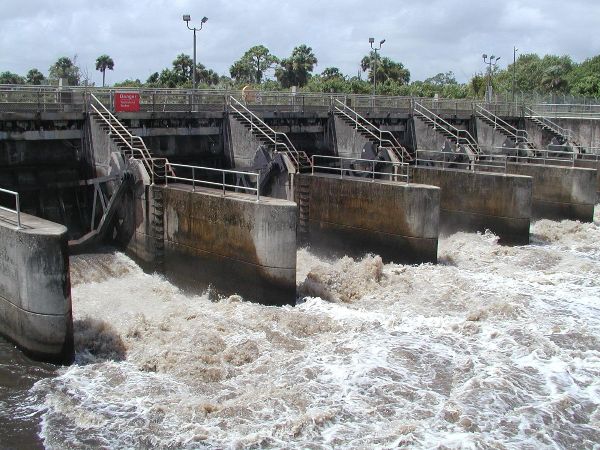
Southeast Florida's astoundingly heavy November rainfall has created widespread flooding woes, sent water managers into emergency operations and put enormous volumes of freshwater into the region's network of canals, rivers and estuaries. For residents dealing with flooded roads and property, the situation is anything but welcome, and getting things back to normal may take weeks—or months.
For anglers, however, the resulting flood-control operations may create an opportunity to find impressive concentrations of feeding snook and largemouth bass below water-control structures that are now working overtime to get rid of the excess water.
Some southeast areas received more than 10 inches of rain in 36 hours during the initial flooding, with additional rainfall prolonging drainage problems. The resulting water movement can displace small fish from flooded vegetation, drainage canals and backwater habitats, while strong currents carry them into downstream channels and estuaries. Shad, juvenile mullet, small bream and other edible critters come pouring through the water control structures, fish food on a conveyor belt.
Snook are particularly adept at taking advantage of current-created feeding opportunities, positioning themselves along the edges of fast-moving water to nail disoriented bait boiling through the gates.
Largemouths have similar instincts. Bass routinely position themselves below culverts, water-control structures and other obstructions where moving water delivers food. Anything small enough to fit into their mouths goes down the hatch.
Canal intersections, bridges, culverts and water-control structures are productive places to fish for largemouth bass in metropolitan southeast Florida.
One area to watch is the C-11 canal system in Broward County. The S-9 pump station moves water from the western basin of the C-11 system into Water Conservation Area 3A, while S-13, a combination pump and gated spillway structure, moves water from the eastern basin toward the Intracoastal Waterway. The S-13A gated structure also regulates water movement between the basins.
The Cypress Creek Canal (C-14), Hillsboro Canal and North New River Canal are other Broward County waterways worth investigating.
Palm Beach County offers additional opportunities in its extensive canal network, including the West Palm Beach Canal and Hillsboro Canal systems.
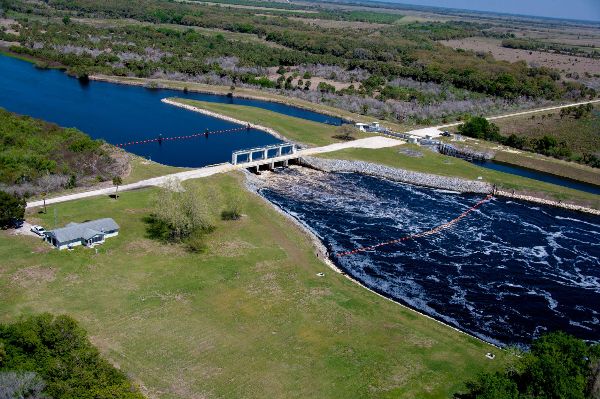
Farther north, the St. Lucie River and estuary deserve attention for snook. Freshwater from Lake Okeechobee enters through the C-44 Canal and S-80 control structure, creating a system where changes in discharge can influence fish distribution and salinity.
Farther south, Broward County's South New River Canal and Cypress Creek Canal systems also deserve attention for snook where their freshwater flows connect with brackish habitat. Palm Beach County's Hillsboro and West Palm Beach canal systems offer similar possibilities.
The fish sit on the edges of moving water rather than in the strong flows. Deeper holes below channel bends, eddies behind pilings, shoreline pockets and the boundaries between fast and slow water are all likely.
A 3- to 5-inch paddle-tail swimbait like those from Hogy or Z-Man, a shad-imitating soft plastic from DOA or a suspending minnow plug will appeal to bass and snook alike. Some anglers have also done well on large bass with big crankbaits.
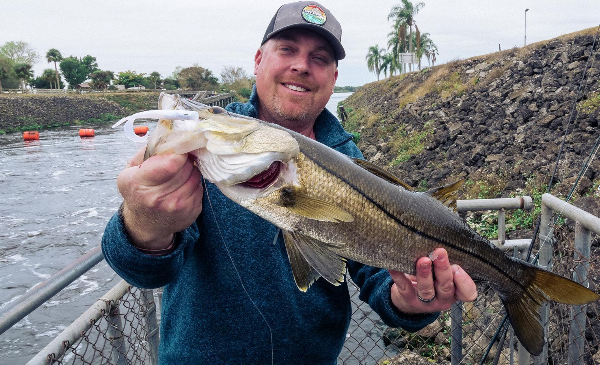
Live shiners are a proven choice for freshwater bass, while live finger mullet and shrimp are top options for snook. The deal is basically to keep the bait moving with the flow—cast up into the edge of the current and let it drift down, and keep repeating until you get bit.
Timing is important. The best opportunity could occur during the discharge period or in the first few days after major flows begin to subside. As the flow slows, displaced baitfish may remain concentrated in channels, bayous and downstream habitats—explore these areas and you may find a bonanza.
To be sure, all this murky fresh water flowing into sensitive estuaries like the Indian River are no good thing for seagrass or the many saltwater species that live there. But the floods will gradually subside, the flows will end, and after a time, hopefully, Florida will go back to its normal weather patterns. In the meantime, savvy anglers can enjoy a bit of a silver lining to this long period of black clouds in the Sunshine State.
– Frank Sargeant, Editor, The Water Wire