
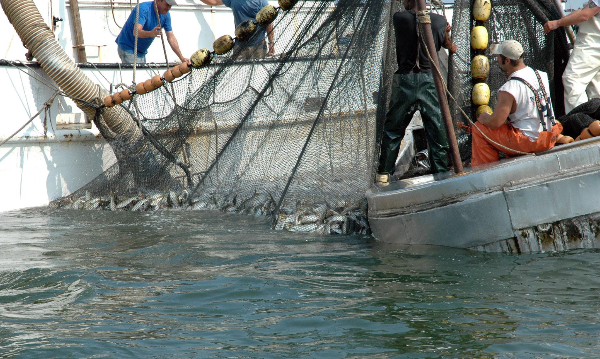
The Atlantic States Marine Fisheries Commission has once again reduced the amount of menhaden commercial fishermen are allowed to catch, but there's a rather large hole in the conservation argument: The industry wasn't catching its previous limit, either.
The push for the reduction came largely from striped bass anglers and other sport fishers, as well as osprey fans, all of whom say that menhaden are the primary food of these critters, and they’re being scooped up in unconscionable numbers by the massive commercial fish meal industry.
The commission's November 12 decision raises a legitimate question: Will the new restrictions actually leave more menhaden in the Atlantic, or will they simply lower a number on paper?
The Atlantic States Marine Fisheries Commission (ASMFC) approved a coastwide harvest limit of 170,000 metric tons for 2027, followed by another reduction to 155,000 metric tons in 2028. The 2027 limit represents a 9 percent reduction from the 2026 quota of 186,840 metric tons, while the 2028 limit will be about 17 percent below the 2026 level.
The commission also approved a substantial reduction in the Chesapeake Bay harvest cap, which will decline from 51,000 metric tons to 37,123 in 2027 and 33,847 in 2028.
Those reductions were welcomed by conservation organizations and recreational fishing advocates who have argued for years that too many menhaden are being removed from the water, particularly in the Chesapeake Bay. But the actual harvest figures suggest the new coastwide restrictions may accomplish considerably less than their proponents hope.
The Numbers Tell a Different Story
In 2025, commercial fishermen landed approximately 147,000 metric tons of menhaden along the Atlantic Coast, against an allowable catch of 233,550 metric tons. That means the fishery harvested only about 63 percent of its available quota. The 2025 quota was subsequently reduced by 20 percent for 2026, before the latest reductions were approved for 2027 and 2028.
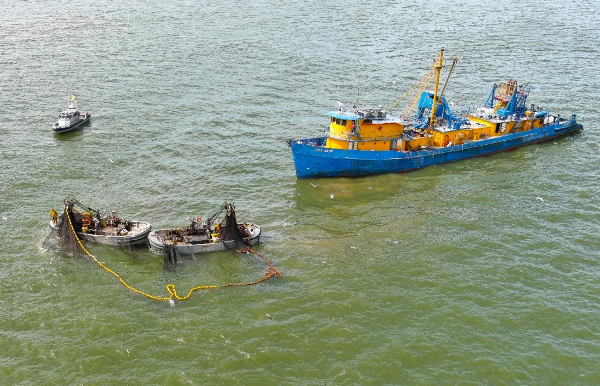
In the Chesapeake Bay, where the large-scale reduction fishery operates in Virginia waters, the industrial fleet landed fewer than 35,000 metric tons in 2025 against a cap of 51,000.
The Chesapeake Bay Foundation made this point in the days preceding the commission's vote, arguing that the coastwide industry had failed to catch enough fish to reach its existing limit. The organization questioned whether further reductions in the allowable harvest would have much effect on the actual number of menhaden remaining in the Atlantic.
The commercial industry has a different explanation. Its representatives contend that poor weather curtailed fishing opportunities during 2025, and point out that the Chesapeake Bay fleet harvested approximately 98 percent of its cap in 2024. Industry representatives also said they expected to harvest about 90 percent of the Bay cap in 2026. A good fishing season, they argue, could make the new limits painful for working fishermen, processing employees and the communities that depend on the industry.
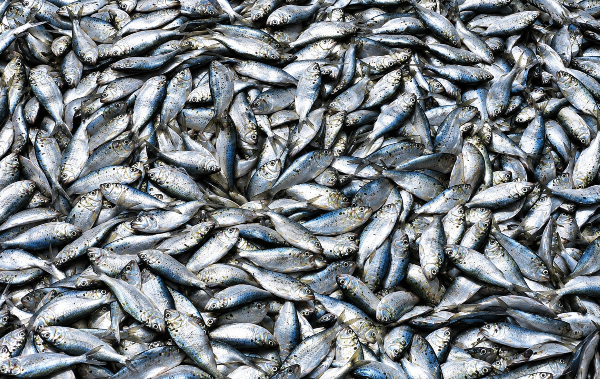
That's a legitimate economic concern, but it doesn't resolve the ecological question. Menhaden are among the most important forage fish on the Atlantic Coast, providing food for striped bass, bluefish, weakfish, tuna, sharks, whales, osprey and numerous other predators. They also filter enormous quantities of water as they feed on plankton. Their value to the marine ecosystem extends well beyond what they bring at the fish-processing plant.
The commission's own ecosystem-based management calculations suggest that the latest reductions are insufficient. Although the new quotas are projected to eliminate the possibility of overfishing under the traditional stock-management definition, they still carry a high probability of fishing mortality exceeding the commission's more conservative Ecological Reference Point (ERP) target.
That distinction is important. A fish population can be considered healthy under traditional stock-assessment standards while commercial fishing still removes too many individuals to adequately support the predators that depend on them. The ERP system was developed specifically to account for that relationship, using Atlantic striped bass as its focal predator.
Conservation organizations had sought a substantially larger coastwide reduction, approximately 39 percent, to bring fishing mortality closer to the ecosystem-based target. They also wanted a 50 percent reduction in the Chesapeake Bay cap, along with seasonal catch limits that would prevent the industrial fleet from removing large quantities of menhaden during particularly important periods for predators such as nesting osprey.
The commission approved neither the full coastwide reduction nor the seasonal restrictions. It did take an important step by linking the Chesapeake Bay cap to the coastwide quota, meaning future changes in the latter will automatically affect the former. The Bay cap will reach its lowest level in history under the new schedule.
The board received more than 48,000 public comments on the proposed changes, many from conservation and recreational fishing interests seeking stronger protections. The final decision reflected a compromise between those ecological concerns and the economic interests of the commercial industry.
The commission also says new research in the Chesapeake Bay, supported by state, federal and industry funding, should help resolve questions about menhaden abundance and their availability to predators. That research could provide valuable information, but the need for additional studies doesn't eliminate the need for precautionary management in the meantime.
The Chesapeake Bay reductions represent meaningful progress, but the coastwide decision is considerably less encouraging. The commission has lowered the numbers again, but the question is whether it has actually reduced the number of menhaden being removed from the Atlantic. Until the harvest figures demonstrate that it has, recreational fishermen and the predators they value have little reason to celebrate.
– Frank Sargeant, Editor, The Water Wire