
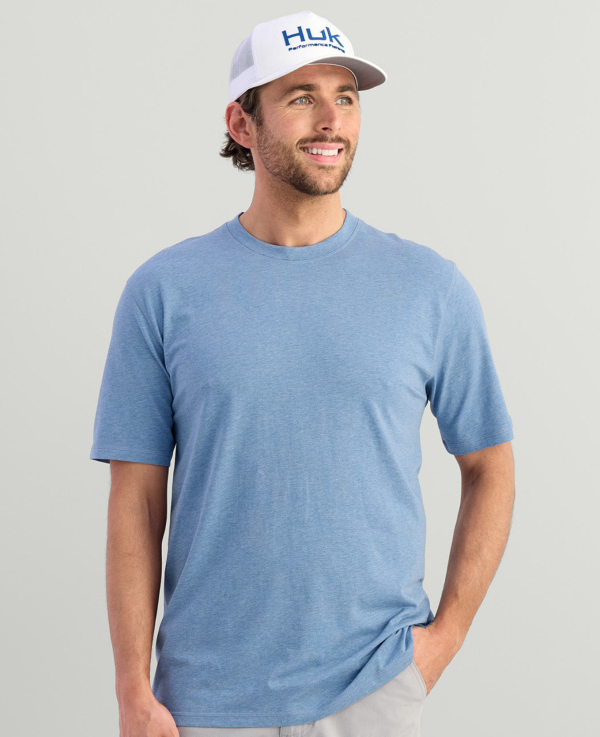
Bamboo is mostly thought of in the U.S. as something that patio furniture and cane fishing poles are made from, but new technology is turning it into a renewable, planet-friendly component of light-weight, super-soft fabric for clothing.
As anyone who lives in the Southeast knows, bamboo literally grows like a weed—you can hardly stop the stuff from growing into dense jungles, so it’s pretty much infinitely renewable anywhere there’s decent soil and adequate rain.
The process to turn the stiff bamboo fiber into a thread capable of being woven into comfortable clothing involves dissolving the cellulose in the bamboo, and then extruding it to form very thin, weaveable fibers. The process removes the natural stiff, brittle characteristics of the bamboo, rendering it identical to rayon from other cellulose sources.
Huk’s new “TASC” series is produced with this process and it delivers wearables that are lightweight, super stretchy, absorbent and very comfortable. The feel against the skin is comparable to silk. They also have a UPF factor of 50, pretty much total sunblock, and are treated with anti-odor molecules as well.
All this processing does not come cheap, and the price of the offerings thus far reflect that. Huk’s new TASC short-sleeved T-Shirt is pricey, at $48, but it’s comparable to other premium-fabric T’s now being marketed specifically to boaters and anglers and judging by the sample they sent us, super comfortable. Long-sleeve hoodies and sweatshirts are also available in the bamboo material.
See details at www.huk.com.
New Fillet Knives from Rapala
I’ve been a Rapala fan at least since Reagan was in the White house, and have been impressed with pretty much all their stuff since, though the original Rapala minnow is still in a class by itself among floater-divers for luring bass along weedy shorelines in spring.
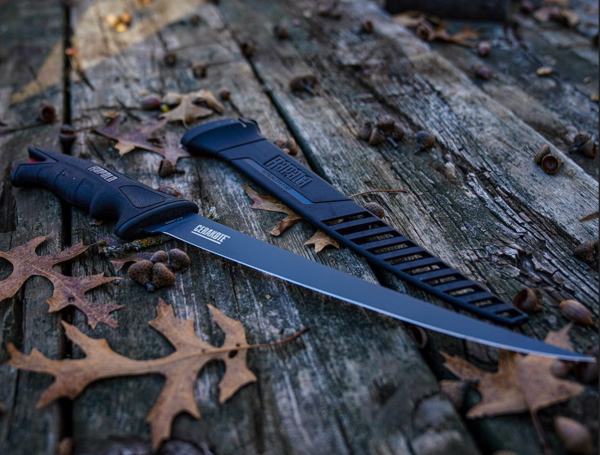
The company has branched out into all sorts of products other than fishing lures, the latest of which is a new line of filleting knives, the Stealth FXF series. If you prefer a conventional blade for cleaning fish—I do, even though electric fillet knives can be faster because I think you get more of the usable meat with a truly sharp flexible blade—then these knives are well worth your consideration.
They’re built on German steel blanks, though the production is in China. Either way, there may be tariff charges on later production, but for now they’re very reasonably priced considering their remarkable effectiveness.
These are full tang blades, which is to say the steel blank goes all the way through the handle—one of the marks of a good knife because you can be sure the handle won’t separate from the blade after a few years of rattling around on the boat console or the cleaning table.
The Stealth line is available in 6” 8” and 10” models. If you’re a crappie or bluegill angler, you’ll probably like the 6” best. For seatrout and redfish, I like the 8”, which has an extremely thin and flexible blade that’s really nice for getting rid of rib bones as well as sweeping the skin off the fillet. The sharpness out of the box is notable—truly razor like, but it seems to hold up pretty well so far at the cleaning table—we put it to use on a mess of pompano and trout at Pensacola Bay last week.
If you fish offshore for grouper, snapper, king mackerel, blackfins and the line, the big 10” FXF might be more the ticket. Even that large knife is economy priced at around $55. (Don’t buy more knife than you need, though—this knife is too big and doesn’t flex the way you will want it to if used on fish under about 5 pounds, plus all that extra blade sticking out can be risky if you’re not careful.)
The blades are finished in Cerakote, a proprietary ceramic that’s also used to prevent rust and corrosion in firearms and quality tools. The handles are a very grippy composite, with cutouts for both the index and the little finger—you’re very unlikely to lose your grip on this knife during heavy use. It also includes a well fitted composite sheath, with drain holes so that water doesn’t stay inside and cause corrosion.
Learn more at www.rapala.com.