
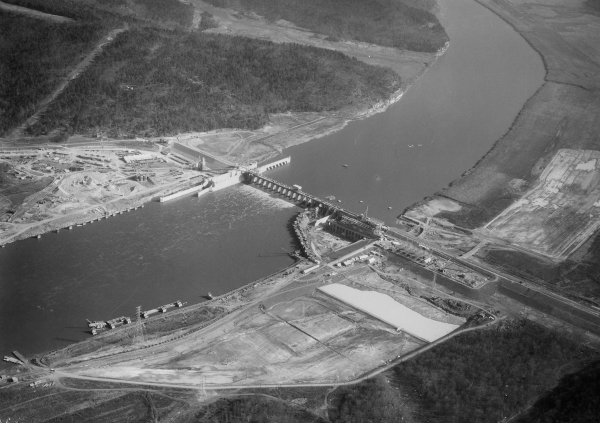
When the first surveyors walked the banks of the Tennessee River above the dirt-road country town of Guntersville in the mid-1930s, few could have imagined how radically the valley was about to change.
The nation was in the throes of the Great Depression, the Tennessee Valley Authority was newly created, and communities across the river basin still relied on kerosene lamps, mule farming, and flood-prone bottomland that could wipe out a season’s work overnight. In 1935, the federal government set in motion one of the most ambitious engineering efforts in Alabama’s history: the construction of Guntersville Dam.
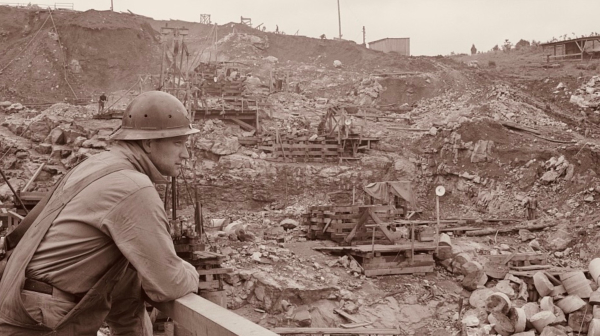
Work began in 1935 and continued into 1939, per TVA recoreds. It wasn’t merely a project of concrete and steel. TVA brought in thousands of laborers—engineers, carpenters, truck drivers, electricians, machinists. Camps sprang up along the riverbank, complete with mess halls, dormitories, machine shops, and warehouses. For a region struggling for employment, the dam was an economic lifeline long before the first generator ever turned.
But the progress didn’t come without sacrifice. To create the 75-mile reservoir that would later define the character of Guntersville, TVA purchased or condemned more than 100,000 acres of bottomland and farms. Entire communities—little river hamlets with names like Bellefonte, Langston (the old townsite), Georgia Mountain river farms, parts of South Sauty and Town Creek settlements—were relocated or abandoned as the water began to rise.
Roughly 1,100 families had to move. Many were small farmers whose families had worked the land for generations. Some homes were hauled up the ridges by mule teams; others were dismantled board by board. Cemeteries were moved to higher ground, sometimes with family members standing by as long-buried relatives were reinterred.
The filling of the reservoir in 1939 was a spectacle many older residents still describe with a catch in their voice. Barns and chimneys slowly disappeared under the rising water. Ferry landings and river shoals vanished. Roads and bridges were left to become fish attractors.
For many residents, it meant saying goodbye not just to a home but to a way of life. Some still carry generational resentment towards TVA as a result.
Yet almost as soon as the lake reached full pool, the benefits began to unfold. The dam provided dependable flood control for the entire mid-Tennessee Valley, ending the seasonal fear of watching fields and homes wash away. Electricity—cheap, steady, abundant—flowed into homes and businesses that had never before enjoyed it. What had been a rural agricultural county abruptly entered the electric age.
Guntersville, perched on a peninsula surrounded by the new lake, found itself blessed with one of the South’s most scenic shorelines. Tourism arrived almost instantly. Fishermen discovered the plentiful bass fishery. A generation later, when hydrilla and milfoil spread, the lake became a national hotspot for bass tournaments—events that today pump millions into the local economy each year. Marinas, motels, tackle shops, and waterfront restaurants grew where bean fields and river shoals once lay.
Industry followed the power. Manufacturers came to the region because TVA power was cheap and reliable. New schools, paved roads, and medical facilities soon appeared. The once-sleepy farming town became a regional hub for jobs and recreation, drawing residents from across Alabama and beyond.
The transformation wasn’t merely economic. The lake became the cultural heart of the community—where families built piers and weekend cabins, where teenagers learned to ski, where generations have fished crappie each spring, and where early mornings still shimmer with fog rising off the coves.
Today, it’s easy to see the dam simply as part of the landscape, as permanent as the river itself. But the changes came at a cost—lost farms, moved graves, uprooted families. Their stories remain woven into the history of the lake.
And yet, the legacy of Guntersville Dam is undeniable. It brought power, prosperity, flood protection, and a vast recreational resource that continues to shape the identity of Marshall County. The town of Guntersville grew because of it, prospered because of it, and today thrives on the shoreline created when the river was stilled and transformed nearly 90 years ago.
The Tennessee Valley changed forever when the concrete walls closed and the reservoir began to rise. For the people of Guntersville, it marked the end of one era—and the beginning of a brighter, more prosperous one that continues to ripple across generations.
— Frank Sargeant
Frankmako1@gmail.com