
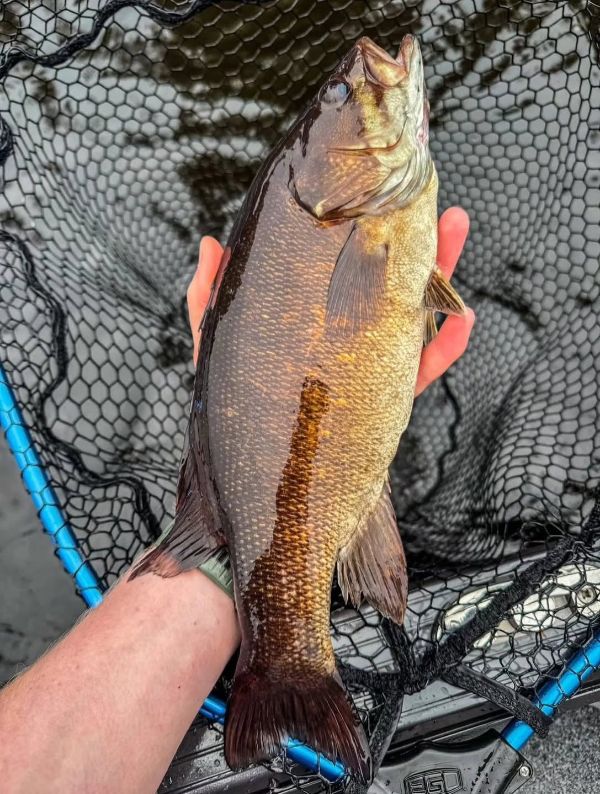
Photo courtesy of Josh Legacy Outdoors

Hot Weather. Cool Handling.
EGO® Fishing on why summer's warmest water makes proper landing and release techniques a matter of survival, not style
Caldwell, ID – A fish caught in July isn't fighting the same fight as one caught in April. Warmer water holds less dissolved oxygen, a fish's metabolism runs hotter, and lactic acid builds in its system faster during the fight. Meaning, the margin between a healthy release and a slow, delayed-mortality death shrinks dramatically once surface temps climb into the 70s and 80s. The fish looks fine swimming off. Too often, it isn't.
"Summer is when good intentions aren't enough," said Grant Corbett, President of EGO Fishing. "A fish that would've bounced back easily in cooler water can die hours or even days later from stress it never visibly showed. The handling window gets a lot less forgiving."
The EGO S2 Slider was built to shrink that window of stress to begin with, but even the best net can't undo a slow, careless finish. The following summer-specific protocols are designed to get a fish landed, assessed, and released — or kept — with the smallest possible physiological toll.
Shorten the Fight, Not the Story
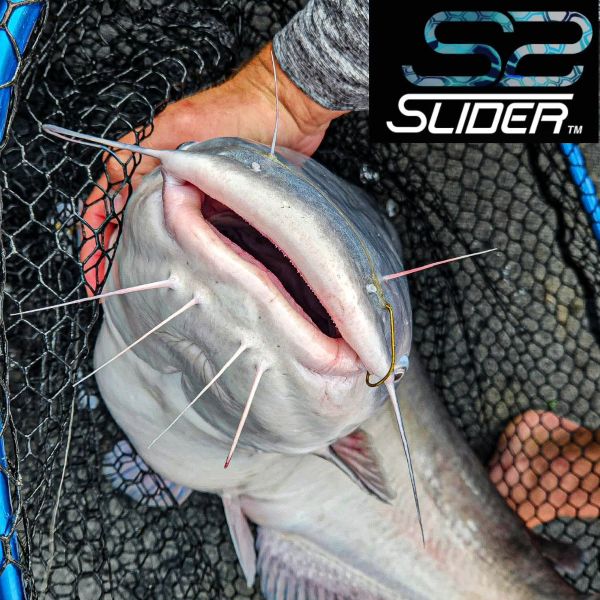
In warm water, a prolonged fight is doing more damage than it looks like from the boat. Use appropriate tackle to land fish decisively rather than playing them to exhaustion. A fish arriving at the net already oxygen-depleted has far less reserve left to recover from, no matter how gently it's handled afterward.
Net Early, Net Wet
Get the fish into the water-filled bag of the S2 Slider as soon as it's within range rather than working it boat-side longer than necessary. Keeping the net submerged and the fish oxygenated the moment it's netted buys back some of what the fight cost it. Every extra second spent posturing for position is a second the fish isn't recovering.
Minimize Air Time
Air exposure that's a minor inconvenience in cool water becomes far more consequential in summer heat. Keep the fish in or over the net and in the water as much as possible and treat any out-of-water handling — hook removal, photos, measurement — as a race against a much shorter clock than it would be in spring or fall.
Choose the Net Wisely
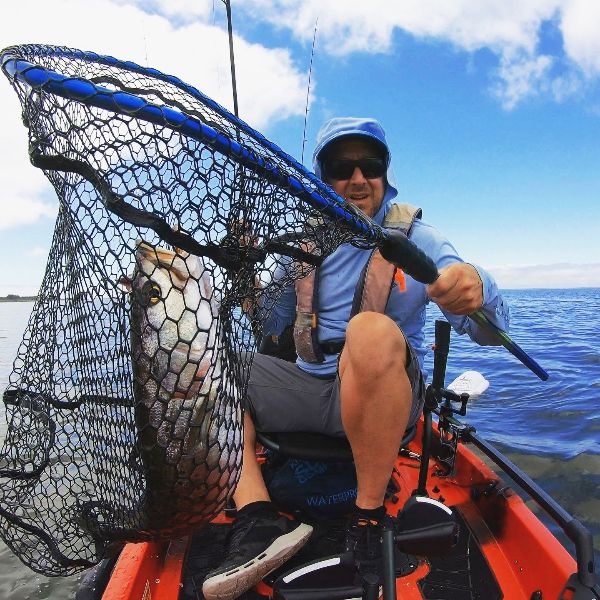
Not all mesh is created equal, especially when a fish is already fighting thermal stress. Rubber or knotless mesh — like the netting available for the EGO S2 Slider — causes far less abrasion to skin, fins, and the protective slime coat than traditional knotted mesh. That difference matters more in summer, when a compromised slime coat is a faster gateway to bacterial and fungal infection in warm water than it would be in cooler conditions.
Rethink the Hook
For anglers fishing bait rather than artificials, circle hooks are one of the simplest summer upgrades available. They dramatically reduce deep-hooking and gut-hooking compared to traditional J-hooks, and a gut-hooked fish combined with summer thermal stress is a far worse mortality combination than either factor alone. A fish that's hooked cleanly in the jaw has a real shot at a fast, low-stress release. One that's gut-hooked in 85-degree water often doesn't.
The Science Behind the Urgency
The connection between summer heat and delayed mortality isn't guesswork, it's been measured. Research on largemouth bass held under tournament-style conditions found that fish survived at essentially 100% when water stayed at 84°F or cooler, but survival dropped sharply once temperatures pushed past that threshold. At 91°F combined with low dissolved oxygen, most fish died either immediately or within hours of release. Other field studies on angler-released bass have shown mortality rates climbing several-fold once surface temperatures move from the 50s into summer's warmer range, driven largely by the same oxygen-and-metabolism squeeze. Warmer water simply can't supply what an exhausted fish's body is demanding.
The takeaway for summer anglers is straightforward: 84°F isn't just a number on a graph, it's close to a real biological cliff edge. Every one of the practices above — shorter fights, minimal air exposure, gentle netting, careful hook placement — matters more as water temperature climbs toward and past that line.
Skip the Livewell Marathon
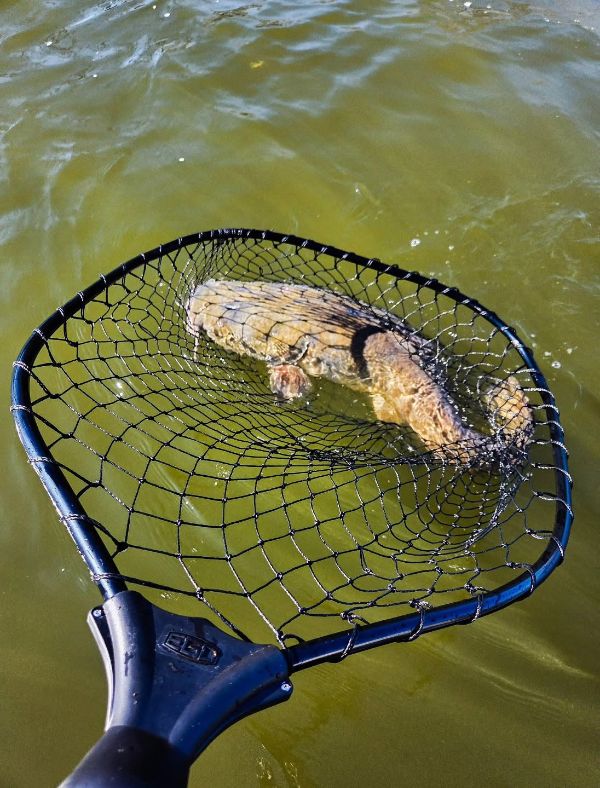
A crowded, sun-warmed livewell can be more stressful than no livewell at all. If fish are being kept for a photo or a short period, ensure adequate aeration and avoid overcrowding. Warm water's lower oxygen ceiling means a livewell that worked fine in May can quietly become a low-oxygen holding tank in July.
Revive Before You Release
Don't treat the release as instantaneous. Hold the fish upright in the net or by hand in the water, allowing water to move across the gills until it kicks with real strength on its own. A fish let go too early, still winded from a summer-water fight, may swim off and never fully recover.
"The fish that swims away isn't always the fish that survives," Corbett added. "Summer is when that gap matters most, and it's exactly when anglers tend to be least careful about it."
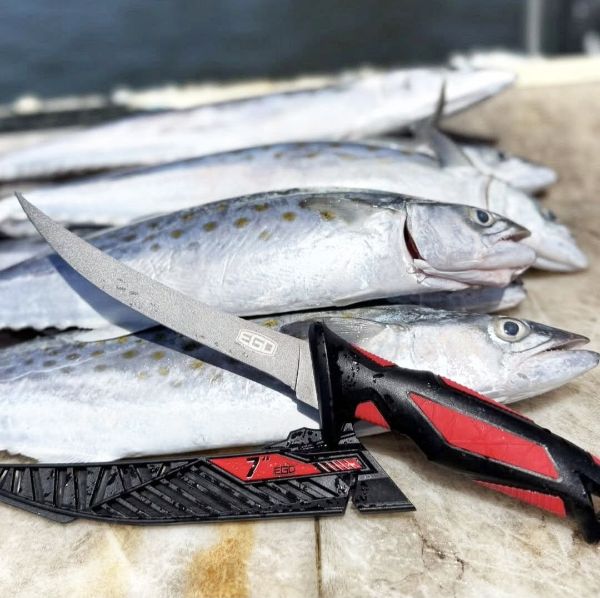
Contained in all four of EGO's new Fishing Tool Kits is the signature 7-inch fillet knife with titanium coated blade and non-slip handle.
Managing the Keepers
Summer heat is just as unforgiving on fish you intend to eat as it is on fish you intend to release, as the same warm-water conditions that stress a released fish's physiology start degrading flesh quality the moment a kept fish stops swimming. Get it on ice immediately rather than letting it sit in a warm livewell or on a stringer for hours. A fish held in 85-degree water for an afternoon is losing quality with every passing minute, regardless of how it was caught.
The case for icing fast is stronger than most anglers realize. A fish that dies stressed burns through muscle glycogen quickly, which brings on rigor mortis sooner and more intensely. And fish that hit rigor fast tend to cook up tougher and less desirable than fish chilled quickly after being dispatched.
A livewell isn't rest, either. A fish bouncing around in warm water all day is functionally re-fighting the catch over and over, with the same stress hormones and lactic acid buildup compounding hour after hour. Add to that a bacterial clock that starts the moment a fish is caught — a healthy, swimming fish keeps that in check, but a stressed or dying fish in warm water loses that defense fast — and hours in a hot livewell amounts to hours of head start for spoilage before the fish ever reaches ice. The old logic of "keep it alive to keep it fresh" made more sense before reliable ice and slurry setups were standard gear. Against real ice, a stressed live fish loses on texture, safety, and flavor every time.
The Ice Slurry
An ice slurry — a cooler loaded with ice and just enough water to submerge the fish — chills faster and more evenly than ice alone, since direct contact with ice can freeze and damage flesh in spots while leaving other areas warm. Bleeding and gutting fish promptly, where regulations allow, also slows spoilage significantly compared to holding a fish whole. Bacteria multiply fastest in the gut cavity, and summer heat only accelerates that clock.
Keep the cooler out of direct sun and drain melted water periodically if it's not a slurry setup. Standing warm water defeats the purpose of the ice in the first place. The goal is the same whether a fish is going back in the water or into the cooler: minimize the time it spends in conditions its body isn't built to handle.
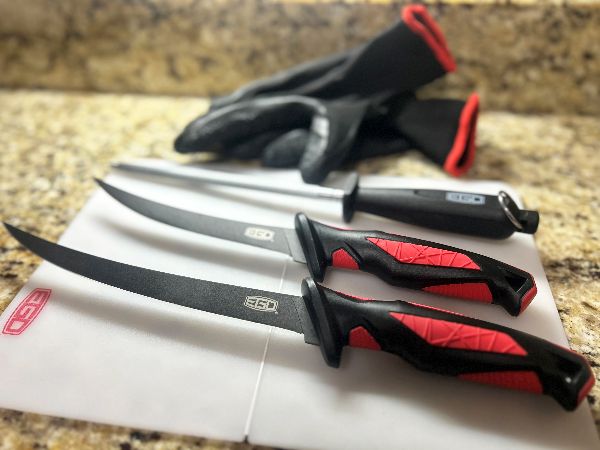
EGO's BAYWATER Fishing Tool Kit was designed for the harvest, including 7- and 9-inch fillet knives with sheaths, filleting gloves, blade sharpener, folding cutting surface, and carrying case.
Parting Words
None of this is about slowing down the fun — it's about matching technique to the season. Summer's warmest water raises the stakes on every step between hookset and release, whether the fish goes back in the water or into the cooler, and the tools and habits that get it there quickly, calmly, and with minimal stress are what separate a good story from a fish that never made it through the night. Respect the season, trust the gear, and give summer fish the shortened, careful handling the heat demands.
ABOUT EGO Fishing
Fourteen years ago, we set out on a simple mission – to develop a better fishing landing net solution that addressed the many functional and performance problems that existed with the traditional products. What started out as a small landing net company has now grown into the innovation leader in the fishing net and accessories category of the sport fishing industry. EGO products are sold at most major sporting goods retail chains and are carried by a large network of distributors and independent dealers in the United States. Distribution has also grown internationally to include countries such as Canada, Russia, South Africa, South Korea and Japan.