
Flounder Around the Corner
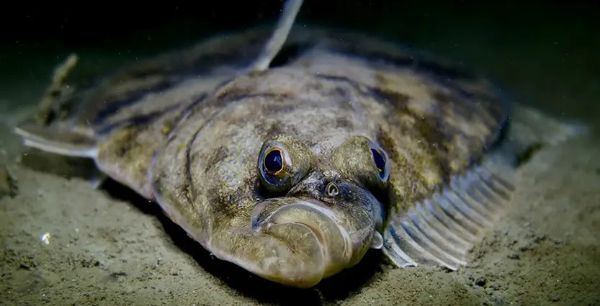
Few fish undergo a transformation as remarkable as that of a flounder. They begin life swimming upright with an eye on each side of their head, much like any other young fish. But as they grow, one eye slowly migrates across the skull, allowing the fish to lie flat against the bottom, nearly invisible beneath the sand while watching for prey above. It is one of nature's most unusual adaptations, belonging to one of North Carolina's most recognizable coastal fish.
That familiar fish returns to anglers' lines, if only briefly, on September 1 when North Carolina's 2026 recreational flounder harvest season opens. The season runs through September 14 across all jurisdictional waters, matching last year's framework. Regulations remain unchanged with a one-fish daily bag limit, a 15-inch minimum size, and harvest limited to hook and line or gig. Anglers who keep a flounder are required to report their catch through the Division of Marine Fisheries' online reporting system or mobile app.
Most of the flounder landed during those two weeks will be southern flounder, a species closely tied to North Carolina's estuaries. Juveniles spend their early lives in shallow nursery waters before migrating offshore as adults to spawn during the fall and winter. Females grow much larger than males, making the larger fish especially important for stock rebuilding.
The two-week season is also a reminder of how much the fishery has changed. Recreational flounder seasons once remained open year-round, supporting not only anglers, but also tackle shops, charter captains, waterfront restaurants, and other coastal businesses. Today, harvest opportunities are far more limited while fisheries managers work to recover a stock that has been classified as depleted for years. The objective is to restore the population to a point where longer seasons, healthier fisheries, and the economic benefits they support are viable once again.
For a fish that literally changes the way it sees the world, perhaps it's fitting that rebuilding this species requires us to look at it differently. Behind every season announcement lies a much larger story of biology, science, and the stewardship needed to bring this coastal favorite back to full abundance.