
As winter weather sweeps across the eastern United States, North Carolina's coastal fisheries, especially speckled trout (also known as spotted seatrout), are on the front lines of potential cold stun events. Cold stuns occur when water temperatures drop to levels that fish cannot tolerate, causing them to become lethargic, lose equilibrium, and stop feeding. If frigid conditions persist or arrive suddenly, these events are often fatal.
Speckled Trout Thermal Tolerances
Speckled trout are especially vulnerable to cold stuns because they overwinter in shallow coastal bays, estuaries, creeks, and sounds. Trout typically begin showing signs of cold stress when water temperatures fall below 45°F. As temperatures decline into the low 40s, the risk of mortality increases substantially. During rapid cold snaps or prolonged cold periods, trout can become trapped in deeper holes and sloughs and are unable to move to warmer refuge areas, a defining feature of cold stun events. The Division of Marine Fisheries recognizes cold stun mortality as a major factor influencing year-to-year trout abundance. An established set of protocols is used to evaluate the severity and duration of cold water events and determine when temporary harvest closures may be warranted.
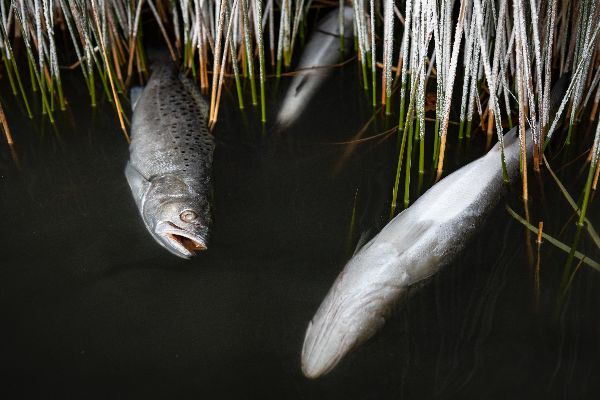
Photo Credit: North Carolina Division of Marine Fisheries
How Other Species Compare
Other important coastal species respond differently to winter cold. Adult red drum avoid the coldest estuarine waters by migrating offshore, where temperatures are more stable. Juveniles that remain in estuaries may be affected, but red drum tend to tolerate colder water better than trout. They often become lethargic and stop feeding below 50°F, yet some individuals can survive brief exposure to near freezing conditions.
Southern flounder juveniles perform best in moderate temperatures, from the upper 50s to the lower 70s. Cold-related stress increases when temperatures fall below 50°F in low salinity waters and below 45°F in saltwater, with smaller and younger flounder being most vulnerable.
Weather and Cold Stun Likelihood
A strong winter storm this weekend is expected to introduce colder air and a mixed bag of freezing precipitation. National Weather Service forecasts for eastern North Carolina communities such as New Bern and Belhaven indicate that air temperatures next week will range from highs in the 30s and 40s to nighttime lows dipping well below freezing. These conditions can rapidly cool shallow estuarine waters. While typical late January water temperatures in Pamlico Sound and nearby rivers are usually in the upper 40s, sharp Arctic air intrusions can quickly push water temperatures into the cold stress range for speckled trout.
Given this forecast, the likelihood of cold stun events affecting speckled trout in shallow waters over the next two weeks is elevated, particularly if frigid air remains locked in place after the storm system passes.
What You Can Do
If you observe stunned or dead speckled trout, the Division of Marine Fisheries encourages public reporting. Contact Marine Patrol at 800-682-2632, or biologist Lucas Pensinger at 252-515-5638 or lucas.pensinger@ncdenr.gov.
Understanding cold stuns and their connection to winter weather helps anglers and coastal communities anticipate fisheries impacts while contributing valuable information to management efforts. To learn more about speckled trout, visit our FINDEX profile.