The Mid-Atlantic Fishery Management Council and Atlantic States Marine Fisheries Commission approved a 20% increase in black sea bass harvest limits for 2026-2027, the first liberalization since 2012. Black sea bass biomass has reached its highest level since 1990 and continues to trend upward.
Fisheries
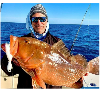
The Gulf Council will hold three in-person hearings and one webinar to gather public comments on Draft Reef Fish Amendment 58A regarding shallow-water grouper management. The amendment proposes splitting the Other Shallow-Water Grouper complex and adjusting catch limits for scamp and Yellowmouth Grouper based on new stock assessments.
The Gulf Council will hold three in-person and one webinar public hearings to gather public comments on Draft Reef Fish Amendment 58A: Modifications to Shallow-Water Grouper Management Measures.
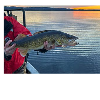
Captain Bryan DeHart hosted a red drum satellite-tagging trip where his daughter Joy and her classmate Bella Huntingford caught fish for tagging. One satellite tag was later stolen by another drum caught by angler Shawn Ganslein with Captain Chris McDonald, eventually ending up on a third fish named Wilbur caught by Carolina All Out host Chris Douglas.
Florida's Apalachicola Bay has reopened to limited oyster harvest for the first time since 2020 after an extensive $38 million FWC restoration and management effort.
Stocking remains a crucial tool for supporting or rebuilding striped bass populations across coastal river systems where natural reproduction is not adequate to maintain stocks of this popular gamefish.
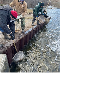
Scientists at William & Mary's Batten School and VIMS are studying how invasive blue catfish, introduced in the 1970s, are damaging native species and blue crab populations in Virginia waters. Researchers led by Professor Mary Fabrizio and Marine Business Specialist Shelby White are exploring commercial harvesting and consumer marketing strategies while coordinating with state agencies and interstate working groups to address the ecological crisis.