
Across Idaho and the broader Mountain West, this winter has fallen short in a way that is becoming increasingly familiar. Snowpack levels, the natural water storage system our rivers depend on, are concerningly well below average across the state. We monitor the snowpack like a vital pulse, because we know that the health of our rivers, our fish, and our recreation communities depend heavily on that watery bank account. While winter storms did arrive intermittently, they were often warmer and less productive, leaving much of the landscape with a thinner and more fragile snowpack than we would hope to see heading into the boating season.
Snowpack is more than just a seasonal marker. It is the foundation of our water system. A strong snow year builds a slow-release reservoir that feeds rivers, recharges groundwater, and sustains cold, clean flows well into the summer months. This year, that foundation is dramatically weaker. While we will cross our fingers for some colder-than-average April storms, especially in the high country, it is certainly shaping up to be a low-water year in Idaho.
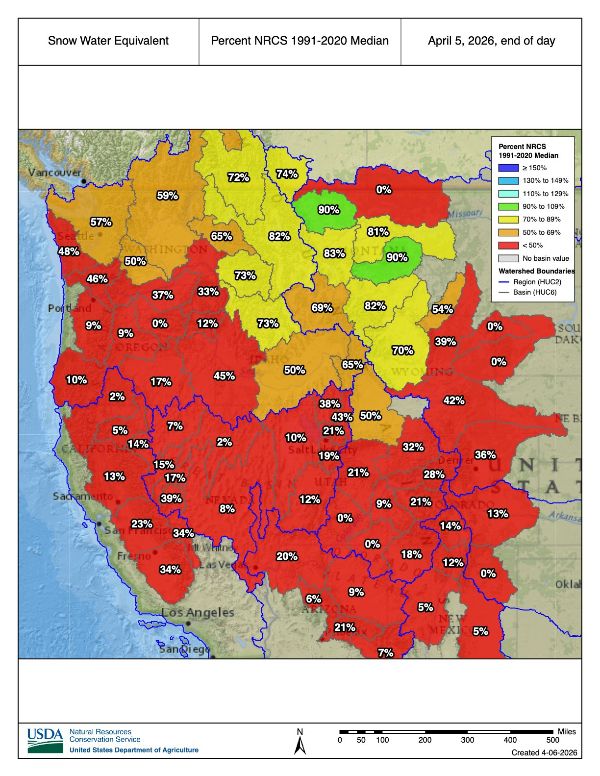
Snow Water Equivalent percentages
As we move into spring, early indicators suggest runoff will arrive sooner than normal. Warmer conditions and a reduced snowpack mean that what snow we do have will melt earlier and faster. Instead of a gradual, sustained release of water, we are likely to see an earlier peak in flows followed by a quicker drop-off. In practical terms, that means rivers may look healthy in the short term, but could decline rapidly as summer progresses. Be ready for some technical boating if you have an August Middle Fork permit…
On top of that, it's becoming likely that we will see an El Niño pattern through at least the end of the year.