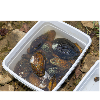
The Atlantic States Marine Fisheries Commission released a new report on shell recycling programs that support oyster reef restoration and coastal resilience. The report, developed with state and regional partners, provides practical guidance on program models, curing standards, permitting frameworks, and performance metrics for expanding shell recycling initiatives along the US Atlantic coast.
Conservation
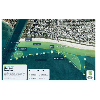
NOAA's Damage Assessment, Remediation, and Restoration Program restores habitats and recreational access after environmental disasters. Projects in Charleston, Delaware, and New Jersey have rebuilt fishing piers, boat ramps, and trails while restoring marshes and oyster beds through partnerships with the National Fish and Wildlife Foundation and Charleston County Parks and Recreation Commission.
The Utah Division of Wildlife Resources and Utah Trout Unlimited selected five conservation projects funded by the Utah Cutthroat Slam fishing challenge, including eDNA sampling, beaver relocations, aquatic monitoring, and habitat restoration efforts to support native cutthroat trout populations across Utah.
The Minnesota DNR and U.S. Army Corps of Engineers have begun designing the underwater Acoustic Deterrent System (uADS) at Lock and Dam 5. Project coordinator Carli Wagner confirmed the $12 million project remains on track for completion by June 30, 2029, though the design deadline may extend beyond June 30, 2026.
Bonefish & Tarpon Trust partnered with Florida International University to assess a January 30-February 3 cold snap's impact on South Florida fisheries. Though less severe than the catastrophic 2010 event, the cold spell caused notable goliath grouper and barracuda mortalities, while bonefish and snook populations showed resilience with minimal losses.
Mote Marine Laboratory researchers published findings showing that an electronic pulse device called Shark Guard, manufactured by FiskTek Marine, effectively deters sharks from taking fish off fishing lines. The study found bonnethead sharks were 45 times less likely to consume bait when exposed to the active device, offering a non-lethal solution to reduce shark depredation while supporting conservation efforts.
Brook Oliva, President and COO of Foundation Outdoor Group, has been appointed to Coastal Conservation Association Florida's Management Committee. Oliva will continue supporting CCA Florida's conservation initiatives, including the East Coast Redfish Restocking Program and youth scholarship programs, while maintaining his role as CCA Orlando Chapter President.
The Wyoming Game and Fish Department and National Museum of Wildlife Art in Jackson will host a live YouTube tutorial on Feb. 5 featuring arctic grayling drawing for the 2027 Conservation Stamp Art Contest. Professional entries are accepted Jan. 2-March 31, 2026, while student submissions close April 10, 2026, with prizes up to $150.
The AFTCO x B.A.S.S. Nation Conservation Grant Program continues in 2026, supporting freshwater bass conservation projects proposed by B.A.S.S. Nation clubs. Since 2018, AFTCO has contributed over $177,000 to fund habitat enhancements, bass stocking, and youth-oriented conservation efforts coordinated with local agencies and volunteers.
Lake Apopka in central Florida is rebounding after nearly 40 years of restoration work led by the St. Johns River Water Management District and partners including the Florida Fish and Wildlife Conservation Commission and Florida Department of Environmental Protection. Phosphorus levels have declined 67 percent, water clarity improved 66 percent, and the lake now supports over 370 bird species while generating economic benefits for surrounding communities.
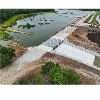
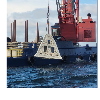
The New York State Department of Environmental Conservation completed an innovative high-velocity jetting project on Brocton Shoal in Lake Erie to restore lake trout spawning habitat degraded by invasive zebra and quagga mussels. The project, developed with Seaway Marine Group, the U.S. Fish and Wildlife Service, and The Nature Conservancy, successfully cleaned rock piles and shows promise for future habitat restoration efforts.
The Vermont Fish and Wildlife Department, in partnership with Wildlife Forever, is accepting entries for the 2026 Vermont Student Fish Art Contest for grades K-12. Students submit illustrations and creative essays on Vermont fish species, with winners selected in four grade categories and artwork featured in the 2027 Fishing Guide and Regulations publication. Entries are due by February 28, 2026.
The Washington Department of Fish and Wildlife and Tri-State Steelheaders will distribute over 1,500 salmon carcasses from Lyons Ferry Fish Hatchery into the Tucannon River on January 24 to enhance nutrients and support the food web for juvenile salmon, steelhead, and other wildlife species.
Montana's Fish, Wildlife & Parks inspected over 120,000 watercraft in 2025, identifying 38 mussel-fouled boats and 570 transporting aquatic weeds. Partners including Trout Unlimited, Walleyes Unlimited, and conservation districts operate inspection stations to prevent invasive species introduction to Montana waters.
The Association of Fish & Wildlife Agencies praised the U.S. Department of the Interior for issuing Secretarial Order 3447, which expands hunting and fishing access on federal lands. Association President Paul Johansen testified to Congress on the importance of public access and state-led conservation partnerships in wildlife management decisions.
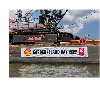
CCA Florida, Visit Destin-Fort Walton Beach, and Okaloosa Board of County Commissioners inspected the S.S. United States, a 990-foot former ocean liner that will become the world's largest artificial reef when deployed this spring. CCA Florida is contributing $500,000 toward this conservation effort, with the vessel to be placed southwest of Destin.
The Senate passed the Modernizing Access to Our Public Waters Act (H.R. 187), which directs federal agencies to digitize recreational access information on federal waterways. The bipartisan legislation helps anglers, hunters, and boaters safely and legally access public waters.
From 2005 to 2025, AFTCO and the Shedd family have contributed over $9.05 million to conservation through their 10% Pledge, donating more than $600,000 in 2025 alone. The family-owned company supports organizations including Hubbs-SeaWorld Research Institute, Coastal Conservation Association, IGFA, and the Center for Sportfishing Policy to advance fisheries, habitat, and ocean access initiatives.
Canaveral Marshes Conservation Area along the St. Johns River protects one of Florida's most important floodplains, connected to Tosohatchee State Reserve, Seminole Ranch Conservation Area, St. Johns National Wildlife Refuge, and River Lakes Conservation Area. Visitors can enjoy fishing, hiking, canoeing, boating, and wildlife viewing while spotting alligators, herons, egrets, and other species.
To commemorate that period of discovery of this early adventurer, the ADCNR is teaming up with Auburn University to highlight Bartramβs travels through Alabama with a traveling display being showcased at 12 Alabama State Parks.