
LDWF Biologists Work to Restore Critical Fish Habitat on Toledo Bend
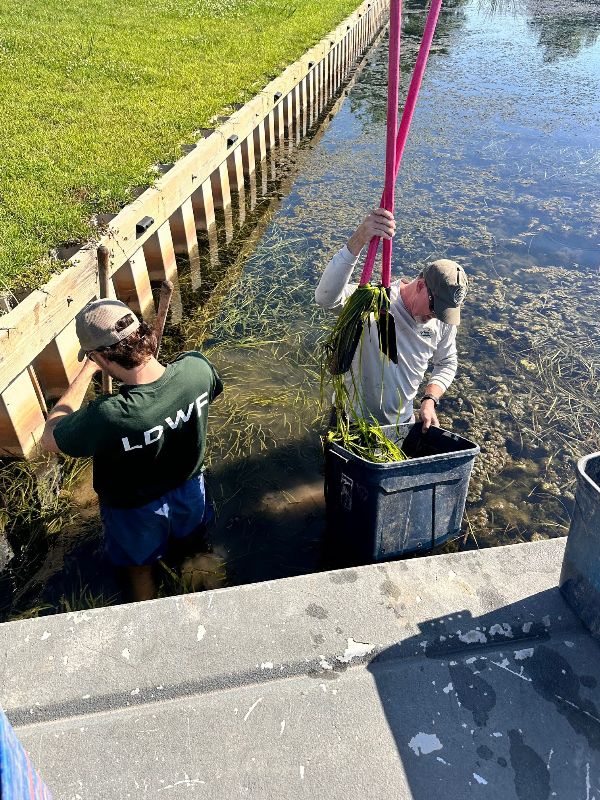
Louisiana Department of Wildlife and Fisheries (LDWF) Inland Fisheries biologists are working to restore critical fish habitat on Toledo Bend Reservoir by planting native submersed aquatic vegetation in strategic locations.
Over the past two weeks, LDWF crews have stocked 110 containers of native eelgrass (Vallisneriaspp.) totaling 220 square feet of habitat. Plantings have focused on areas that provide the best opportunity for long-term establishment – near Negreet Creek and North Toledo Bend State Park.
These plants are important to the Toledo Bend Reservoir, as they provide critical habitat for juvenile fish, forage species, and invertebrates – while also improving water quality.
Restoration efforts began after two consecutive years of high, muddy water in 2016 and 2017 caused the lake's native vegetation to decline. In response, biologists began exploring habitat restoration methods that have worked in reservoirs across other southern states.
Some early attempts to plant eelgrass in past years did not succeed because of several challenges, including strong wave action, muddy water, changing water levels, and animals feeding on the plants. However, by testing different approaches and choosing more sheltered planting areas, biologists are now seeing patches of eelgrass successfully growing in several parts of the reservoir.
Additional weekly plantings of approximately 100 square feet each are planned throughout the next month.
LDWF biologists remain committed to improving and expanding fish habitat to help sustain the world-class fishery anglers enjoy on Toledo Bend.
For additional information regarding Toledo Bend, contact Villis Dowden, LDWF Biologist Manager, at vdowden@wlf.la.gov or (318) 357-3214.