
It's a curious word: "redd," both a noun and verb. Young brook trout in the Appalachian chain from Georgia northward through the Carolinas and Virginia, that juts on up to Maine will emerge from their natal redd in spring to begin life in the colder blue lines that vein off the mountainsides at higher elevations.
Redd comes from old English, usually expressed as to "redd up" something, such as "to redd up the house for company." It means to make ready.
Female brook trout redd up pebbly creek bottoms for their fertilized eggs in late fall, vigorously fanning out sediment from small gravels where cold oxygenated water percolates through the little gold and orange orbs, incubating while nestled, protected between clean stones.
When autumn hardwoods go dormant for the winter and falling leaves are burnished the colors of death, the skin of ripe brook trout mirror the crimson and olives and creams that litter the forest floor or thickly congest the surface at the tails of little pools. In a complete antithesis, the trout are brightened the colors of life.
Their eggs incubate the winter long. Those tiny black dots in a brook trout egg will be in a couple of seasons the eyes that detect the dimple of a dry fly landing on a glassy glide or the glint of a sixteenth-ounce silver spinner dressed with a squirrel tail skirt pulled through a pool.
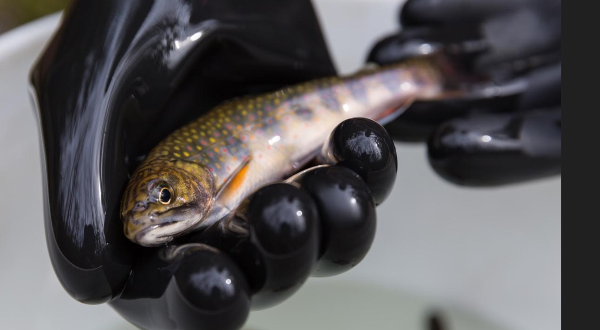
The opportunities for brook trout anglers to do just that are growing. Thanks to federal excise taxes paid by the manufacturers of fishing tackle and on motorboat fuels, a brook trout conservation endeavor in North Carolina and Tennessee expanded the population of brook trout, or specks, as they call them in the southern Appalachians.
"Watersheds holding brook trout span many states and we work cooperatively across state lines as needed," said Jacob Rash, a biologist with the North Carolina Wildlife Resources Commission. He is also the chair of the Eastern Brook Trout Joint Venture, an enterprise that facilitates data sharing among citizens, scientists, and agencies from 17 states for the betterment of the brookie—helping to ensure healthy, fishable brook trout populations.
"Sport Fish Restoration dollars buy the gear and expertise needed by the state wildlife agencies to make well-informed decisions for the fish," Rash adds. "The funds are essential to manage the fisheries and expand populations as chances arise—to turn out more opportunities for the people who love brook trout so much."
A chance availed itself when biologists from the Tennessee Wildlife Resources Agency found during its periodic fisheries surveys that a small stream near the state line was devoid of brook trout.
"The habitat was suitable," said Sally Petre, a biologist with the Tennessee WRA, "but it needed fish genetically appropriate, so we looked to adjacent small streams in North Carolina."
After disease and genetic testing, biologists from the two state agencies collected live trout from two North Carolina creeks, 76 brook trout of various ages and sizes, bagged them in cold water with oxygen, drove two hours and backpacked the fish more than a mile to their new home in Phillips Hollow Creek.
The fish survived. A few years later, surveys showed the brook trout spawned young, with multiple ages of trout in the stream showing up in monitoring surveys. Tennessee biologists collected adult brook trout from the newly established population and spawned them in captivity at the Tennessee Aquarium Conservation Institute, the effort also funded by Sport Fish Restoration dollars. Those offspring went to the nearby troutless Right Prong of Rock Creek, yielding yet more opportunity for brook trout anglers.
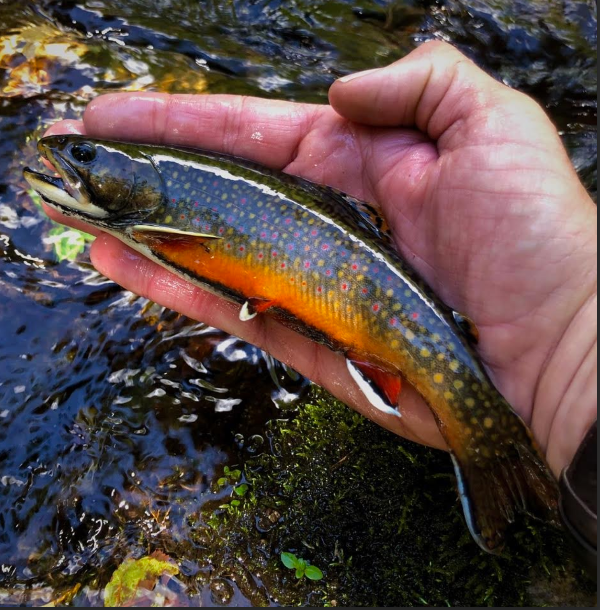
"We do it for the people," said Petre. "It's a sport fish and we want to be sure they are available to anglers on public lands."
Brook trout matter to the citizenry, and this is some measure so—it's the official state fish in eight eastern states. In the little blue lines on maps that mark the capillary streams, a 10-inch brook trout is a trophy, a finny spectacle to behold. Angling wild fish in wild places is a reward unto itself. Biologists from Georgia to Maine will continue to redd up more waters for brook trout and the people who hold them dear.
—Craig Springer, for the USFWS