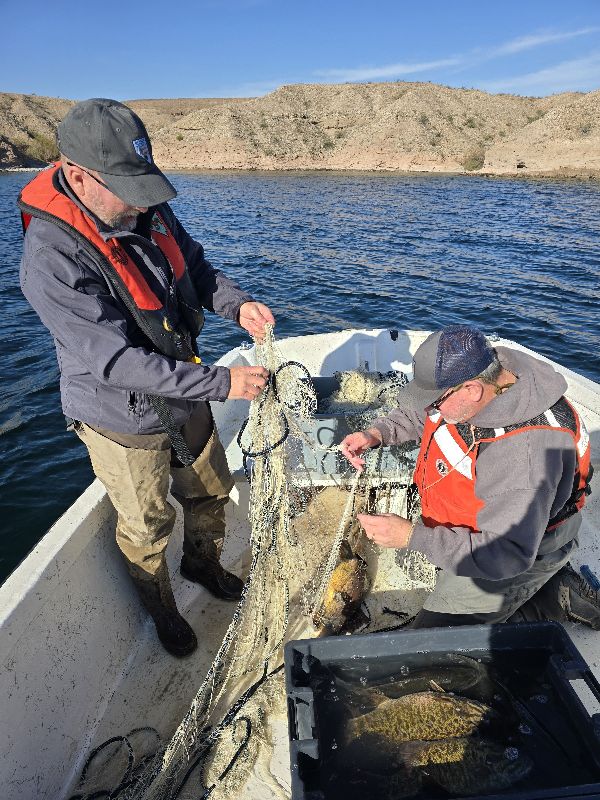
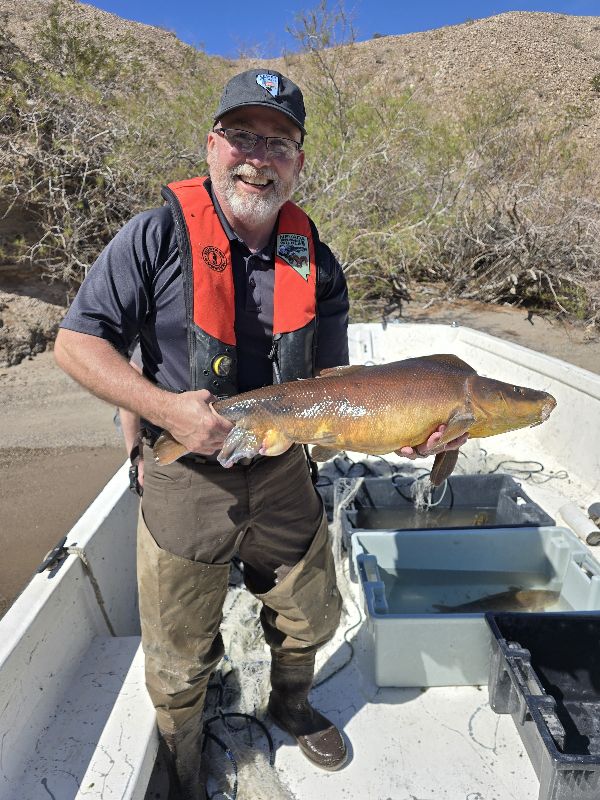
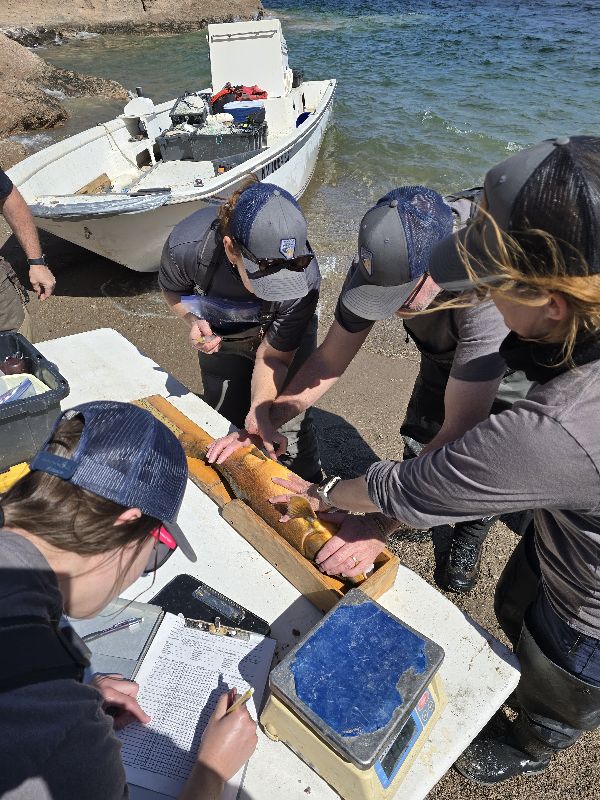
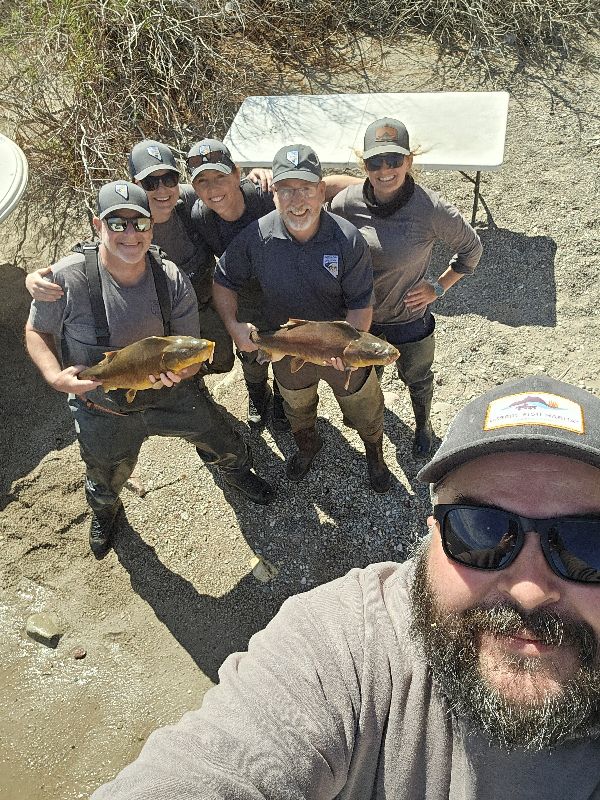
Each year the Nevada Department of Wildlife (NDOW) gathers a team of people led by Fisheries Division staff to help conduct Razorback Sucker surveys at Lake Mohave and lovingly refer to this project as the "Razorback Roundup". This annual survey helps the Department assess how razorbacks are doing at Lake Mohave. All fish that are caught are weighed and measured (striped bass (striper), smallmouth bass, largemouth bass, razorback suckers). Razorback suckers that are caught are weighed and measured and are also given PIT (Passive Integrated Transponder) tag if they don't already have one. These are small, uniquely identifiable microchips that are used across the country to help biologists monitor fish movement, assess population size and identify individual fish.
Razorback suckers are huge suckerfish with a unique "humpback" and built to survive and thrive in the Colorado River system. This is a species that many agencies including NDOW have been working to help recover for decades. Significant population declines began decades ago, largely due to the construction of dams on the Colorado River system, changing typical river habitat into a lake environment and the addition of predatory fish species that were new to the river, i.e. the razorbacks evolved to be perfectly suited for a raging river environment with fewer natural predators.