
MAYER, Ariz.– Hundreds of Gila trout are back to swimming in their natural mountain stream habitats, as the Arizona Game and Fish Department (AZGFD) continues conservation efforts to stock the threatened species throughout their historic range this fall.
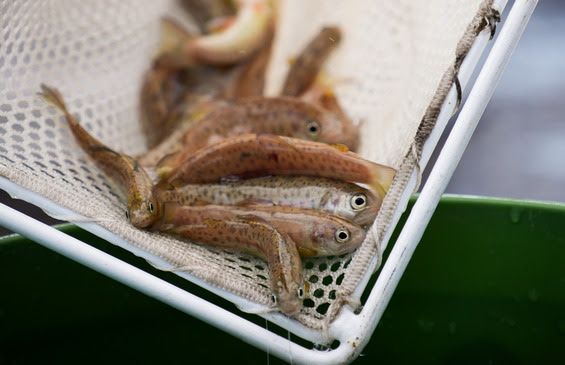
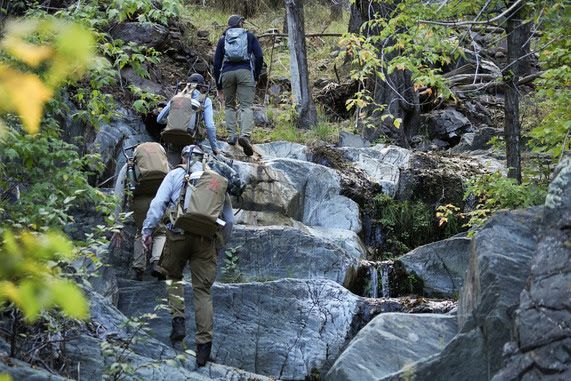
On October 8, AZGFD personnel, including the Director Tom Finley and Deputy Director Joshua Hurst, trekked to a remote area of the Bradshaw Mountains carrying buckets filled with 350 hatchery-reared Gila trout. The fish were released into Grapevine Creek, which has supported a recovery population of Gila trout since 2009.
AZGFD staff also stocked Chase Creek and Bonita Creek along Arizona's Mogollon Rim in October.
The fish were supplied by the Mora National Fish Hatchery in New Mexico, operated by the U.S. Fish and Wildlife Service, which has been breeding and raising Gila trout since 1999.
Each individual trout was measured and implanted with a microchip tag before release so AZGFD biologists can track how the fish grow, survive and disperse throughout the watershed over time. The information can then be used to better manage recovery populations across the landscape.
"Stocking hatchery-raised Gila trout is really important for conservation, and for these recovery efforts to be successful, we need to better understand how they are adapting to wild environments," said Emily Keister, AZGFD native trout and chub specialist senior.
"I think that one of the struggles for conserving Gila trout is that many people just don't know about them," said Keister. "Knowledge is everything and these recovery stockings are a great opportunity for us to engage with the public and get them excited about conserving our native species."
The Gila trout is one of Arizona's two native trout species and is listed as threatened under the Endangered Species Act. Major threats to the species include hybridization, drought and wildfires. In 2017, the Goodwin Fire burned more than 25,000 acres in the Bradshaw Mountains, including Grapevine Creek, severely reducing the native trout population.
"In Arizona, we have unique, vulnerable fish species that are adapted for the extremes of the desert and are found nowhere else. For example, the Gila trout is only found in Arizona and New Mexico, and the Apache trout is only found here in Arizona," said Alex Loubere, AZGFD native trout and chub coordinator. "Both of our native trout species have come a long way since they were first listed, but we still have a lot of work ahead of us to ensure they are still around for generations to come."
Similar stocking efforts proved successful in recovering Arizona's other native trout species, the Apache trout, which was officially removed from the federal Endangered Species List in 2024.
Volunteers and partner organizations play a critical role in releasing native fish back onto the landscape, which can involve hiking miles through the backcountry carrying heavy buckets filled with thousands of the juvenile fish.
"These efforts don't belong to any one person, organization or agency, but rather the partnerships and collaborations across these groups to achieve our common goals. It's pretty incredible how many people will take time off work to show up and hike a 40-pound pack into a canyon because they love the fish and support the work we do," said Loubere.
As Gila trout recovery streams are established and meet necessary population criteria to withstand limited angling use, they may be opened to angling for the public in the future.
Currently, two Gila trout recovery streams in Arizona, Dude and Grapevine Creeks, are open to seasonal catch-and-release only angling regulations. In addition to these two recovery populations, AZGFD stocks Gila trout into a number of other lakes and streams for recreational angling opportunity. A map of those waters can be found at both the Arizona Trout Challenge webpage and the Fish & Boat AZ application.
For anglers targeting Apache and Gila Trout in Arizona, AZGFD asks that they please take the time to fill out a survey form after each fishing trip targeting either species. The form collects information on when and where anglers fished for Apache and Gila Trout, the type of fishing gear they used, and how many fish they caught.
Links to the surveys and more information about the Arizona Trout Challenge can be found at www.azgfd.gov/troutchallenge.
Information on fishing licenses and regulations can be found on the Arizona Game and Fish website.
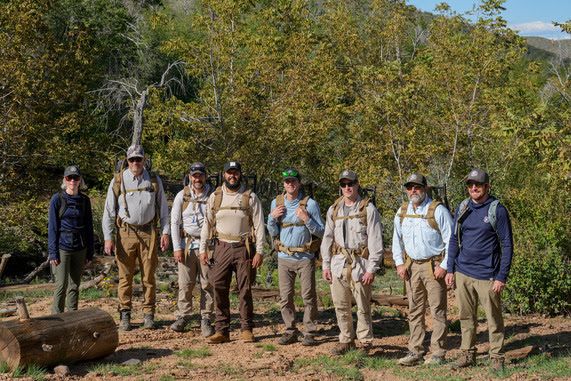
AZGFD and USFWS personnel pose for a photo before stocking Gila trout in Grapevine Creek.