
Colorado was once home to a healthy population of native greenback cutthroat trout, but over the years, human disturbance and non-native fish have overtaken their habitat, bringing Colorado's state fish close to the brink of extinction. Now, aquatic biologists are joining forces to restore Colorado's legacy, one trout at a time.
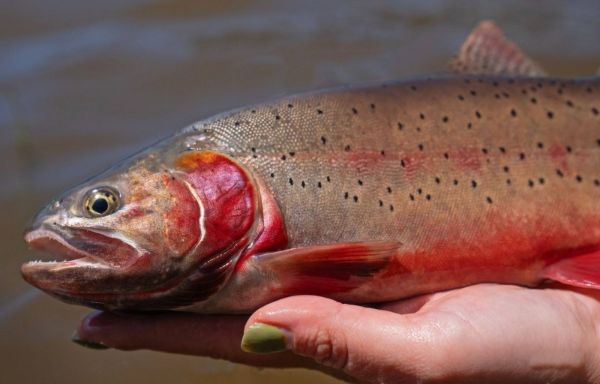
The vibrant cutthroat trout gets its name from the red slash under its jaw. The cutthroat's mix of colors and spots makes it one of the most cherished fish among Colorado anglers. Colorado is home to three subspecies of native cutthroat: the Rio Grande, Colorado River and the renowned greenback. But, for decades, cutthroat trout populations have declined throughout the western United States.
In an ambitious effort to bring back a native species to the state, Colorado Parks and Wildlife (CPW) worked with partners to complete the second phase of the Poudre Headwaters Project.
The mission before them — remove all the non-native fish that controlled the river ecosystem in more than 14 miles of streams of the Cache La Poudre River within Rocky Mountain National Park. Young greenbacks require food, space and protection from predators and competitors, such as brook trout, which outcompete them. Once these threats are removed, native greenback cutthroat trout can be reintroduced into their native range in the headwaters.
"Restoring Colorado's greenback cutthroat trout is about more than bringing back a native fish — it's about restoring healthy streams, reconnecting people to their natural heritage, and ensuring future generations can experience this remarkable piece of Colorado's legacy," said U.S. Forest Service (USFS) District Ranger Brian Sugg.
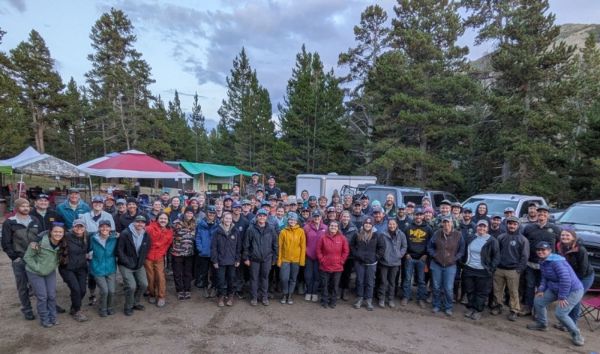
Who are the guardians of the greenbacks?
Over 80 staff from CPW, USFS, Rocky Mountain National Park (RMNP), the U.S. Fish and Wildlife Service, the Bureau of Land Management, Trout Unlimited and the Rocky Mountain Conservancy all joined forces and resources to complete this critical phase of the Poudre Headwaters Project so native trout can find their way home.
Staff with diverse backgrounds, including aquatic research scientists, hatchery technicians, field biologists, toxicologists and hydrologists, worked together to combine their expertise. This incredible team contained expertise in biological sciences, native fishes, aquatic data management and analysis, ecological sciences, water pollution studies, stream habitat restoration, river ecology, and population genetics.
Not all superheroes wear capes; some wear waders.
So what do these heroes of the high country have to do in the field to save Colorado's state fish? Well, a whole lot of planning, cross-agency collaboration, data collection and analysis, 12-hour days of hiking along the river, and sleeping in the backcountry for a week. Regardless of torrential rainstorms, hail, heatwaves, no cell service and moose encounters, the staff's strong dedication to keeping greenbacks off the endangered species list and maintaining biodiverse ecosystems was the driving force behind their hard work.
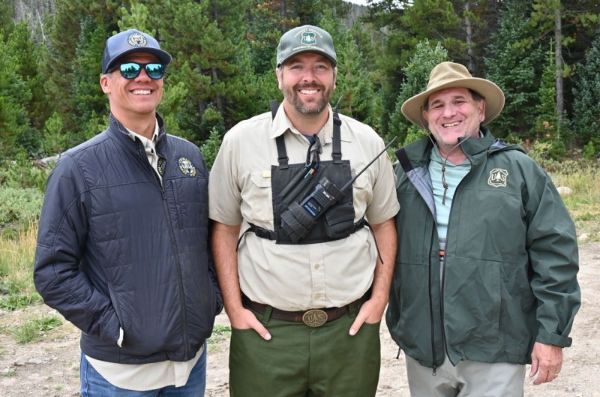
"This project showcases the great work that can be accomplished when diverse perspectives and skillsets join forces to tackle a complex challenge," said CPW's Native Aquatic Species Coordinator Boyd Wright. "Our teams worked exceptionally well together planning the project in the months leading up to implementation. In the final weeks leading up to the fieldwork, everyone rallied and did an outstanding job of collecting and cataloging essential data, including measuring streamflow at over 20 locations across multiple sampling events, characterizing water movement through the systems with many painstaking hours of dye-tracing studies, and mapping hundreds of hydrological complexities. The week of implementation was an exercise in coordinating over 80 people to surgically carry out the rotenone application based on the data the team collected."
Restoring Habitat to Rebuild Populations
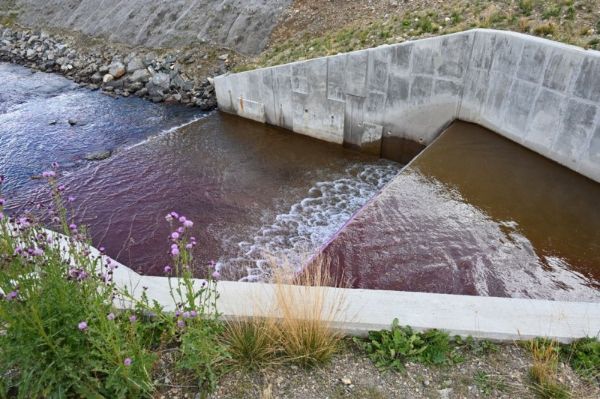
To remove the non-native fish from the water, aquatic biologists applied an EPA-approved, natural toxin (rotenone) to 20 miles of 16 freshwater streams within the Grand River Ditch. This carefully controlled application is designed to target invasive fish while minimizing risks to other aquatic life, ensuring the safety of the ecosystem and public health.
After rotenone was released into the water, aquatic experts monitored its concentration and applied an oxidizer, potassium permanganate (purple water), to prevent it from killing aquatic organisms outside the treatment area.
This treatment of the river ecosystem helps restore healthy habitat for greenbacks who prefer cold, clear headwater streams and mountain lakes. These types of habitats provide an abundant food supply of aquatic and terrestrial invertebrates, such as freshwater shrimp and small fish.
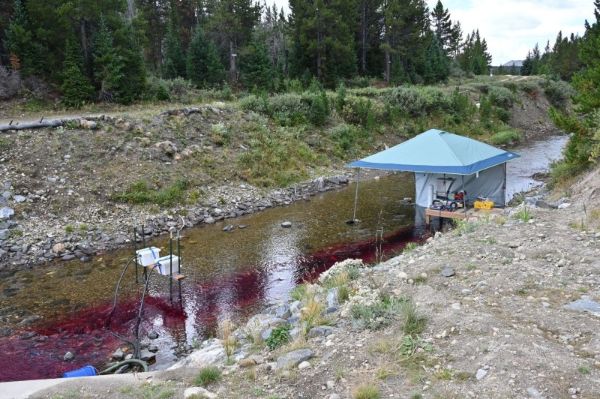
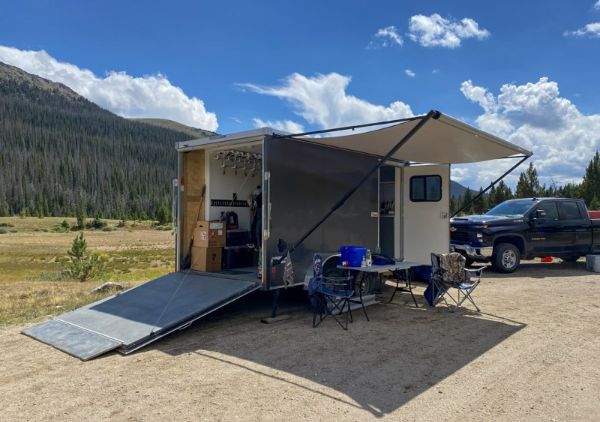
As part of CPW's commitment to scientific data-based management, Aquatic Researcher and Toxicologist Dr. Tawni Firestone used a mobile laboratory to conduct real-time water sample analysis for rotenone concentrations throughout the project. To achieve successful results while safeguarding downstream waters, biologists aim to maintain precise rotenone concentrations throughout the treatment section. Using a mobile laboratory, Dr. Tawni Firestone runs water samples from the project treatment area directly through a High-Performance Liquid Chromatography (HPLC) instrument.
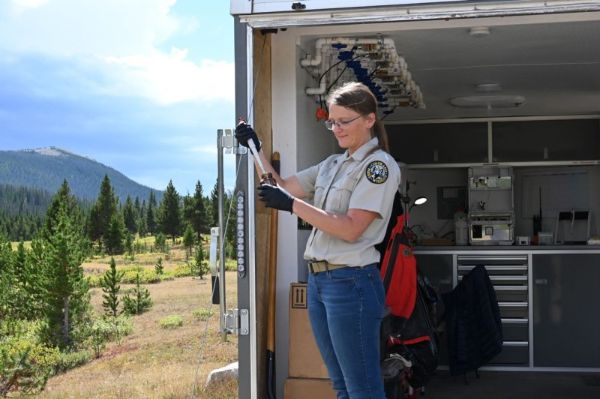
This HPLC method is universally recognized as the gold standard for detecting rotenone. Within minutes, the HPLC measures exact parts-per-billion concentrations of rotenone, allowing biologists to fine-tune treatment or neutralization rates right in the stream.
In Colorado, bringing this laboratory method directly to the field allows real-time, on-site testing, eliminates logistical delays by not shipping samples out, and ensures that our management operates with precision, accuracy and efficiency.
Rotenone is effective against gill-breathing organisms at very low concentrations. Yet mammals can drink the water and feed on dead fish without negative consequences.
"Using the best available science in the field is true conservation in action," said Dr. Firestone. "We are restoring these waters to leave our landscapes better than we found them and ensure a lasting home for our native species."
Cutting Edge Technology in the Fish World
A key element of cutthroat trout conservation involves the ability to take fertilized eggs from wild populations. This is why creating a healthy habitat for greenback cutthroat trout is essential before populations can be reintroduced. Then, eggs from those reintroduced populations can be collected, fertilized and raised for additional reintroductions.
Genetic research led by University of Colorado scientists has produced several fascinating discoveries about Colorado's native cutthroat trout — including the location of the last surviving population. Researchers analyzed DNA extracted from wild trout and museum specimens collected at sites across Colorado and New Mexico, dating back to 1856, and then used that genetic data as a baseline.
CPW and the U.S. Fish and Wildlife Service are culturing these fish in hatcheries and have since reintroduced them into their native habitat, with several more reintroductions to follow.
Continuing the Fight for Native Fish
The Poudre Headwaters Project will ultimately have four to six phases to complete the entire project. Stocking the streams with greenback cutthroat trout could begin as early as fall 2027. Surveys will occur in summer 2027 to confirm the absence of non-native trout species to ensure no further treatments are necessary before fish are stocked.
"It's going to be a game-changer when it's done and will contribute to possibly delisting greenback cutthroat trout from the endangered species list, which is ultimately the goal of all of the agencies," said Wright.
This year, CPW identified greenback cutthroat trout as a critical species to prioritize in the agency's new 2026-2036 Strategic Plan, which sets overarching goals and actions that guide CPW's work. Greenbacks are also listed in CPW's State Wildlife Action Plan, which identifies species and habitats that are eligible for funding to ensure conservation work continues.
So even though native greenback cutthroat trout were presumed extinct in 1937, the momentum to conserve these native jewels continues today. As technology and research advance, Colorado aquatic experts remain committed to this important conservation work and do their part to ensure the legacy of Colorado's state fish lives on, so future generations can see it in the wild and take pride in its resilience.
Written by Bridget O'Rourke, CPW Statewide Public Information Officer.