
More than 90% of the striped bass in the Tar, Neuse, and Cape Fear rivers are hatchery-origin fish, according to years of genetic sampling. That finding framed this week's visit to the Lake Gaston Striper Club in Henrico, Virginia, at the invitation of club president Jim Nold. Formed in 1999, the club brings together anglers with an interest in striped bass and various angling pursuits. We shared updates on the Foundation's partnerships supporting stocking in North Carolina's coastal rivers and evaluating the results.
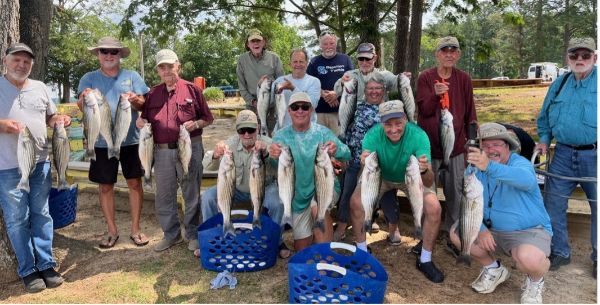
A group of Lake Gaston Striper Club members after a successful striper outing.
Much of the discussion centered on the Roanoke River and the major stocking initiative conducted from 2023 through 2025. Genetic evaluation of the different stocking treatments, including fry, juveniles, and subadults, is now underway. It is too early to draw conclusions, but the research is designed to show biologists which approaches contribute most effectively to the fishery.
Timing matters, too. Male striped bass typically return to the Roanoke's spawning grounds near Weldon at age three, while females generally make their first spawning migration at age four. Ongoing surveys will help biologists track changes in abundance as fish from recent stockings begin contributing to the spawning population.
As of this writing, anglers should not expect a striped bass harvest season on the Roanoke River or in Albemarle Sound this coming spring as the population continues to recover from recent years of lower abundance.
The group's conversation extended to stocking and management in the Tar, Neuse, and Cape Fear rivers. Earlier this year, nearly 500,000 striped bass fingerlings raised at the Watha State Fish Hatchery were released into the Tar River, marking the first stocking there in several years. The broodstock came from the Roanoke River, the first time in more than a decade that Roanoke-origin fish had been used for Tar River stocking.
Later this fall, attention turns to the Neuse River, where the Edenton National Fish Hatchery is scheduled to release stripers measuring five to nine inches. Our Foundation has been purchasing fish feed this year to support that effort.
We appreciate Jim's invitation and the thoughtful questions from the Lake Gaston Striper Club. Over the next few springs, Roanoke fish from the recent stocking events are likely to make their first spawning runs to Weldon. What those fish tell us will guide the next steps in stewardship of this fishery.