CANYON LAKE, Ariz. – The Arizona Game and Fish Department (AZGFD) is taking advantage of the rare drawdown of Canyon Lake to implement an aquatic habitat improvement project that aims to improve angling opportunities for years to come.
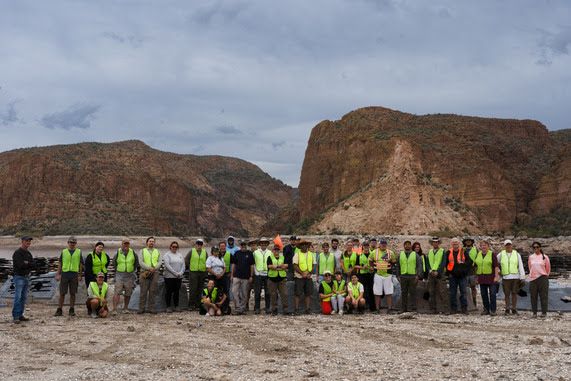
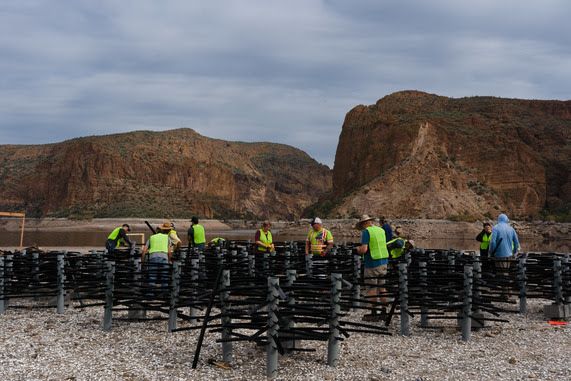
On Nov. 13, AZGFD staff and 31 volunteers worked with the Aquatic Habitat Program to install approximately 350 aquatic habitat structures on the temporarily exposed lake bed at Canyon Lake in the Tonto National Forest. The habitat types installed were Mossback structures and artificial boulders.
The Mossback artificial habitats are UV-resistant and made of recycled plastic, and they are expected to last for at least 20-30 years. The branches of the structure are designed to foster periphyton (algae) growth, provide refuge shelter and protection for juvenile fish and ambush opportunities for larger species.
AZGFD manages Canyon Lake as a trophy largemouth bass fishery. Other species found in the reservoir include smallmouth bass, yellow bass, channel catfish, flathead catfish, black crappie, sunfish species, and walleye. Common carp and tilapia are also present.
"Canyon Lake lacks suitable habitat for sportfish because it was impounded just over 100 years ago and any natural habitat has either deteriorated or been covered by sediment. The goal of adding these habitat structures is not only to congregate sportfish at sites accessible for shoreline and boat anglers alike, but also to provide essential cover to support healthy fish populations," said Nathan Bailey, AZGFD aquatic habitat specialist. The addition of habitat will benefit multiple sportfish populations and should help meet management plan goals.
"This project was funded in part through a $30,000 grant received from the Reservoirs Fish Habitat Partnership, with funding provided by the Bass Pro Shops Outdoor Fund. We are very grateful for their support," said Bailey.
Canyon Lake is a man-made reservoir located in the Superstition Mountains that is a popular destination for outdoor recreationists and wildlife. Every 20 years, Salt River Project (SRP) and the U.S. Bureau of Reclamation lower Canyon Lake for critical dam safety inspections and maintenance–the same work was conducted in 2007 and in 1987.
AZGFD's aquatic habitat project at Canyon Lake was specially permitted through the U.S. Forest Service, and public access to the lake remains closed until the planned maintenance is completed.
The next phase of the project will occur in early January, when the department will add approximately 1,000 to 1,500 recycled Christmas trees and about 40 concrete reef balls. The donated trees will further improve the fish habitat at the manmade lake with natural material.
"Volunteers are a vital part of projects like this. They increase our capacity to do meaningful habitat work in our reservoirs." said Curt Gill, AZGFD statewide aquatic habitat program manager. "We are also thankful to Tonto National Forest for their partnership and coordination on this project."
To learn more about AZGFD volunteer opportunities, visit volunteer.azgfd.gov