The American Museum of Fly Fishing announced that Jack Nicklaus will receive the 2027 Heritage Award on March 9, 2027, in North Palm Beach, Florida. Nicklaus, an avid angler and conservationist, has served on the boards of The Everglades Foundation and Fly Fishers International, and founded the Nicklaus Children's Health Care Foundation.
eFormed Ventures has acquired Outdoor Life from Recurrent Ventures, integrating the 130-year-old brand with an AI-native marketplace powered by Resonance 2.0 technology. The platform will connect readers with engaging content and products from top retailers and brands while retaining all existing editorial and operations staff.
Major League Fishing's Starlink Team Series Toyota Heritage Cup streams live on MyOutdoorTV from Manchester, Tennessee, October 18-23, 2026, featuring 12 two-man teams competing for $560,000 in prize money. The event is hosted by Experience Tennessee in partnership with Manchester, Winchester, Franklin County Chamber of Commerce, Bill Dance Signature Lakes, and Fish Tennessee.
Ewing Minor, 24, earned the Pro-Guide Batteries Bassmaster Kayak Series Angler of the Year title with 995 points, becoming the youngest angler to achieve this honor. Minor won the championship at Lake Murray and finished the season with multiple first-place finishes across the Kissimmee Chain, Santee Cooper, and Susquehanna River events.
NOAA's Office of Habitat Conservation awarded the Maryland Department of Natural Resources $10 million to create over 70 acres of oyster reef habitat at Hooper Strait Oyster Sanctuary in the Chesapeake Bay. Murtech, a local veteran-owned marine contractor, is laying the stone foundation to support oyster larvae settlement and reproduction as part of the Chesapeake Bay Program's goal to restore 2,000 additional acres by 2040.
The FWC's annual Lionfish Challenge concluded with record-breaking results, with 533 participants removing 36,187 invasive lionfish across 1,468 dive trips. Winners included Hunter Ledbetter as Lionfish King, Helen Rodney as Lionfish Queen, and David Garrett as Commercial Champion, demonstrating Florida's commitment to protecting marine ecosystems.
The American Sportfishing Association, AFTCO, Rapala VMC USA, and Temple Fork Outfitters joined 127 industry companies supporting Colorado Amendment 83, which would establish a constitutional right to hunt and fish while preserving state wildlife management authority. Colorado anglers spent over $2 billion in 2022, supporting 15,000 jobs.
Alabama State Parks celebrated the dedication of the new 32-room Lodge at Cheaha State Park on October 16. The $28 million facility features mass timber construction with Alabama-sourced southern yellow pine and offers panoramic views of Talladega National Forest. Reservations open in late November.
The Fish Ageing Network (FAN) installed its first fish rack drop-off freezer at Captree State Park near Captree Bait & Tackle. The Fishery Dependent Sampling Team seeks angler donations of fish bones, heads, and tails to study otoliths for aging fish species including Weakfish, Striped Bass, and Tautog to monitor Long Island fisheries.
Maryland's Department of Natural Resources recorded a juvenile striped bass index of 5.5 in 2026, the highest since 2018 but still below the long-term average of 10.8. Director Michael Luisi noted improvements while cautioning that ongoing low recruitment will impact coastwide population rebuilding efforts and inform future Atlantic States Marine Fisheries Commission management measures.
The West Virginia Division of Natural Resources will stock approximately 40,000 pounds of trout at nearly 40 lakes and streams during October 19 and 26. Anglers can participate in the Governor's Tagging Contest for a chance to win a lifetime fishing license.
The Montana Fish and Wildlife Commission approved 2027-2028 fishing regulations with updates to harvest limits, season dates, and gear restrictions. The commission also approved a conservation easement on Hannah Ranch and banned motorized watercraft on Mitchell Slough channel of the Bitterroot River.
Platte River State Fish Hatchery in Benzie County completed accessibility upgrades funded by a $300,000 Michigan Natural Resources Trust Fund grant. Improvements include an accessible paved trail, pavilion, and wider doorways that exceed ADA guidelines, allowing over 10,000 annual visitors better access to this historic facility established in 1928.
The Missouri Department of Conservation is seeking public comments through November 14 on proposed paddlefish regulation changes, including clarifications on the legal taker when fish are caught by snagging and requirements to gut paddlefish before transporting them out of state to address harvest concerns and illegal commercialization.
The Nebraska Game and Parks Commission approved changes to sportfishing orders including black bass length limits, panfish bag limits, and catch-and-release regulations.
The Michigan Department of Natural Resources is implementing parentage-based tagging, a genetic technique funded by the Wilderness Shores Mitigation and Enhancement Fund, to evaluate walleye stocking in the Upper Peninsula. This method, developed with Dr. Jared Homola at Michigan State University and Thompson State Fish Hatchery, replaces traditional oxytetracycline marking and provides more accurate data on stocking success and natural reproduction.
The Wisconsin Department of Natural Resources reminds spearers to purchase licenses before Oct. 31, 2026, for the 2027 Lake Winnebago sturgeon spearing season opening Feb. 13, 2027. Unlimited licenses are available for residents and nonresidents through the Go Wild system and license sales locations.
Bassmaster Elite Series pro Bob Downey shares his three go-to topwater baits for fall bass fishing: the Rapala® Jowler® 127, Storm® Chug Bug®, and Rapala® ClapTail™. Each bait offers different actions and sounds to adapt to changing conditions and fish behavior on shallow feeding flats.
Steven Hamilton, 71, of Winter Garden was killed by an 11-foot, 8-inch alligator while fishing at Dr. Bradford Memorial Park near Lake Apopka on October 16. The Florida Fish and Wildlife Conservation Commission captured and killed the alligator believed responsible. Wildlife officials remind anglers to maintain safe distances and avoid feeding alligators.
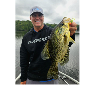
Duckett Fishing has unveiled an updated Crappie Slayer rod featuring a carbon-reinforced handle system, low-profile cork grip, and Sensi-Touch™ multi-modulus blank platform. The new 7'5" and 7'6" models deliver tournament-level performance for modern crappie fishing techniques with enhanced sensitivity and backbone.
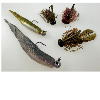
Missile Baits introduces the Micro HD Football Jig for downsized finesse fishing and the Eye Roll Jig Head paired with the Freedom Flyer Minnow for targeting baitfish-feeding bass during fall's cooling water temperatures and seasonal transitions.
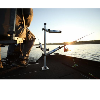
Millennium Marine introduces the Spyderlok R400 Rod Tree, R401 Rod Pod, and R402 Fixed Position Rod Tree featuring patented Spyderlok technology that securely locks rods at precise angles for fall walleye trolling. These anodized aluminum holders offer 360-degree swivel capability and tool-free installation for efficient multi-rod spreads.
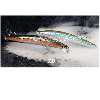
Daiwa introduces nine new trout-pattern colorways for the TD Minnow 95SP suspending jerkbait, featuring ultra-fine scale patterns and advanced multilayer finishes. The 3.75-inch lure utilizes Daiwa's proprietary Silent Gravity Oscillation System (S-GOS) for enhanced casting distance and precision tracking in high-visibility tailwater conditions.
Shakespeare has introduced the Micro series, featuring light and ultralight rods, reels, and combos designed for panfish, trout, and crappie. Micro Spincast and Spinning Reels retail for $24.99, with rods ranging from $24.99 to $34.99, and combos from $44.99 to $59.99. All products are available now.
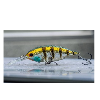
Berkley introduces the Unlock, a versatile sinking crankbait that allows anglers to control depth through countdown adjustment and trigger various actions including hunting, darting, and hover-and-flare motions. Available in three sizes and 20 colors at $14.99 MSRP.
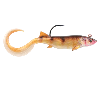
Berkley launches the PowerBait Minnotator Grub, a pre-rigged minnow-profile soft plastic with grub-tail action infused with PowerBait formula that increases bite retention by 18x. Available in 12 colors across four sizes ranging from 2 to 3.5 inches, priced at $7.99-$8.99.
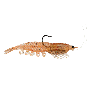
Berkley has launched the PowerBait Saltwater Shrimperor, a line-through shrimp lure featuring realistic shrimp profile, pulsing legs, patented Honey Comb technology, and PowerBait-infused flavor for inshore saltwater fishing. Available in three sizes with retail prices from $7.99 to $13.99.
PENN introduces the Battalion III rod family with application-specific designs for inshore, surf, jigging, offshore, trolling, electric and slow pitch fishing. The new lineup features purpose-driven blanks, premium Sea-Guide components, and handle designs tailored to each fishing application, with MSRPs ranging from $129.95 to $399.95.
Duckett Fishing launched its Crappie Slayer bait line featuring three swimbaits—Baby on Board (BOB), Chubby, and Subtle Tail—plus the Subtle Head jighead. These offerings provide finesse to aggressive presentations for crappie and panfish in various water conditions.
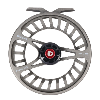
Greys has launched the Pace fly reel, featuring a die-cast aluminum frame, multi-pad disc drag system, and large-arbour design at an accessible price point of $119.95-$149.95. The Cassette model offers versatility with fast spool changes and includes two spare spools, priced at $149.95-$159.95.
The Alabama Mountain Lakes Tourist Association (AMLA) announced the conclusion of its role administering the Alabama Bass Trail (ABT) after the ABT Board of Directors voted to assume full independent governance and operational responsibility. AMLA President/CEO Tami Reist and ABT Chairman Jack Tibbs praised the partnership and Kay Donaldson's leadership since the trail's 2012 launch.
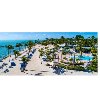
Bass Pro Shops and Schulte Hospitality Group announced a partnership to unite the historic Cheeca Lodge and Islander Resort in Islamorada, Florida, creating a landmark destination with nearly 400 accommodations and world-class fishing opportunities. The partnership includes a $500,000 commitment to the Florida Keys History & Discovery Center.
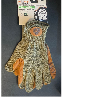
Ferguson-Keller Associates, Inc. expanded its partnership with Fish Monkey Gloves to the Northeast and Southeast regions, extending coverage to 34 states. The expansion follows Ferguson-Keller's successful Midwest representation since 2017 and the September merger with Rogers Sports Marketing, creating one of the largest independent outdoor sales representation networks.
Major League Fishing announced an expanded sponsorship agreement with Rapala extending through 2028, featuring increased integrations for 13 Fishing and Crush City across MLF and MLF5 circuits. The partnership includes new Beat J.T. Kenney challenges, custom championship chains, and a 13 Fishing contingency program for the Phoenix Bass Fishing League.
Norsk Lithium launched a limited-time Power Recovery Program from October 1 through December 31, 2026, for qualifying Dakota Lithium owners seeking alternative battery solutions. The program provides Power Recovery Credits toward Norsk products and features an online matching process to identify compatible replacements. Professional anglers Dewey Hjelm, John Hoyer, Pat Schlapper, and Bobby Lane endorse Norsk's technology and support.
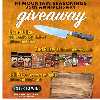
Hi Mountain Seasonings is celebrating its 35th anniversary with a giveaway featuring three prizes: a custom Damascus steel chef knife by Matt Peterson of Fire on the Mountain Custom Crafts, an anniversary product bundle, and a walnut cutting board. Entries are open through November 15.
Bass Pro Shops announced plans for a new 110,000-square-foot destination retail location in Irmo, South Carolina, near Lake Murray, expected to open in late 2027. This will be the company's fourth destination retail location in South Carolina, featuring immersive outdoor experiences and employing over 120 Outfitters.
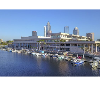
The International BoatBuilders' Exhibition and Conference (IBEX) 2026 welcomed over 7,700 industry professionals and 701 exhibitors at the Tampa Convention Center, featuring expanded technical education, the Marine Ideas Exchange presented by Soundings Trade Only, and 12 Innovation Award winners. The event will move to December 2027 to expand outdoor demonstrations and mitigate weather risks.
Ewing Minor of Tennessee won the 2026 Newport Bassmaster Kayak Series Championship presented by Native Watercraft with 292.75 inches, defeating Wyatt Hammond to claim the $20,000 prize and Pro-Guide Batteries Bassmaster Kayak Series Angler of the Year title.
The Alabama Bass Trail Tournament Series Championship, presented by Phoenix Boats, will award $50,000 to the winning team at its no entry fee event October 16-17, 2026, on Lake Eufaula at Lakepoint State Park. The two-day championship features over $100,000 in total payouts and will be hosted by the Eufaula-Barbour County Chamber of Commerce.
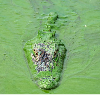
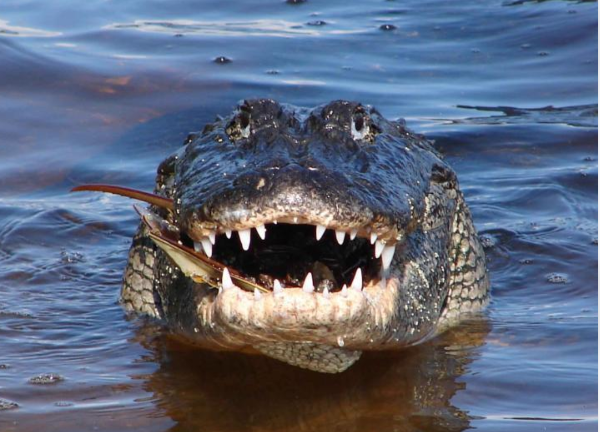
Large alligators are abundant across the southeast these days thanks to decades of conservation, and they can sometimes be dangerous to humans and pets. (National Park Service)
Seventy-one-year-old Steve Hamilton was fishing from shoreline of a pond connected to Lake Apopka, just west of Orlando, this past weekend when an alligator nearly 12 feet long attacked him and dragged him into the water. He did not survive.
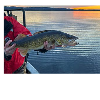
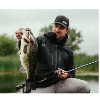
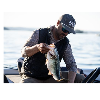
Hamilton had reportedly just caught a nice bass and was holding it up for photos when the gator lunged out of the water, caught him by the leg and dragged him in.
Authorities later captured and killed an 11-foot, 8-inch alligator believed responsible. Other alligators in the water complicated efforts to recover the body, according to observers. The attack was Florida's second fatal alligator incident of 2026.
In June, 31-year-old Brittany Clark died after being attacked by a 13-foot alligator while swimming in the Econlockhatchee River area near Oviedo. In August, a South Carolina triathlete survived an attack while swimming in the Savannah River near North Augusta. In 2025, a 61-year-old Florida woman died after an alligator encounter tipped her canoe into the water near Lake Kissimmee.
Alligator attacks remain uncommon, but the animals are far more numerous today than they were a half-century ago. The U.S. Fish and Wildlife Service estimates that nearly 5 million alligators now inhabit the Southeast, including about 1.25 million in Florida. Louisiana's wild population has climbed from fewer than 100,000 alligators to more than 3 million in roughly 50 years, per USFWS estimates.
That recovery is one of North America's major wildlife conservation success stories. Decades of unrestricted hunting and habitat loss had driven alligators to dangerously low numbers in parts of their range in the 1960’s.
When I first moved to Florida in the early 1970’s, gators were scarce and the ones you saw where usually doing their best to get out of rifle range—many good ol’ boys still shot them on sight, even though it was illegal. And we routinely waded up to our chest in canals, lake shores and marshes to bass fish and hunt ducks.
I’d be more than a little nervous doing that in many lakes, rivers and bayous in Florida or Louisiana today.
The huge increase in gator numbers—and the much larger average size of many due to decades of controlled harvest--means that it can be downright dangerous in some areas of the Southeast to get into fresh water rivers, ponds and lakes. Swimming or wade-fishing in waters where large alligators are around is very dangerous. And even a big gator can make a very stealthy approach under water. They can stay under water for over 30 minutes—the fact you don’t see them on the surface doesn’t mean they’re not there.
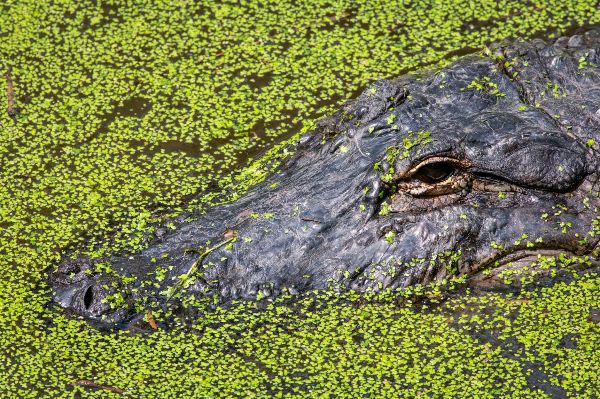
Even large alligators can be surprisingly stealthy, so it’s important to avoid situations where you or your pets might be targeted. (National Park Service)
Hunting is one tool wildlife agencies use to manage recovered populations, alongside targeted removal of alligators that pose a threat to people, pets or property. Florida's annual recreational harvest operates under permits and quotas, while Louisiana has a long-running commercial harvest program. These programs are designed to maintain sustainable populations while reducing conflicts with people. Gators that have been hunted are also much less likely to view humans as an easy target.
Gators that have not been hunted can be particularly aggressive—there are places in Everglades National Park where you can’t put a live bait in the water without a gator grabbing it before a snook or redfish can find it. They’ll come literally to the side of the boat to snatch a fat mullet off your hook.
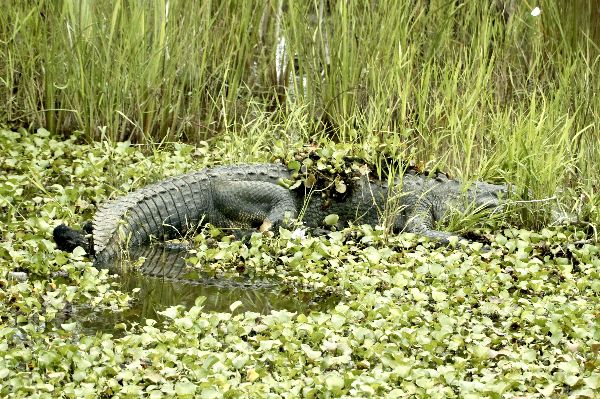
Alligators can rest entirely submerged beside a bank, under overhanging vegetation or in shallow water. It’s not safe to wade where visibility is poor, as it is in many southern waters due to tannin-stained “black water”. And of course wading out to grab a fish stuck on lily pads puts you in a precarious spot—a gator may be watching that fish, too.
Gators can cover a short distance with surprising speed, using their tails to sort of hit hyper-drive. Never approach an alligator for a photograph, attempt to feed it or assume it’s harmless because it appears accustomed to people—or asleep in the sun.
Particularly, keep dogs leashed and away from the water's edge; gators can spot a dog along the shoreline from hundreds of yards away, and they’ll come fast to try to surprise it. Even a big dog is defenseless—remember a large gator can readily take down a deer or a wild hog. A neighbor of mine in Ruskin lost a German shepherd to a Little Manatee River gator. (That gator, sad to report, wound up floating dead of unknown causes a few days later.)
Swimmers should choose carefully
Personally, I’m not much for swimming in fresh water anywhere in gator country—that’s why God made Pensacola Beach. Getting into the black water lakes and rivers of the southeast, especially at dawn, dusk or after dark, is asking for trouble these days. You might do it a hundred times with no problem—and you might do it once in the wrong spot.
If an alligator seems unusually interested in you, report it to the appropriate wildlife agency. In Florida, call the Nuisance Alligator Hotline at 866-392-4286. (Even though harvest is now legal for licensed hunters, you can’t capture, corner, harass or kill an alligator yourself without a permit.)
The Best Defense: Eat ‘Em
Nighttime gator hunts are exciting, fun and a bit dangerous, not something you want to try on your own. Permits are required. Lots of licensed gator guides can put you on them—most common technique now is to snatch hook them on shark tackle, pump them within bangstick range—no easy matter--and then turn them into gator steaks.
There are now more than enough alligators across the southeast to support hunting harvest, and many outdoorsmen enjoy permitted hunts available in multiple state. (National Park Service)
Alligator tail meat looks a lot like pork, though it’s definitely chewy. A meat hammer and a lot of spicy barbecue sauce makes it reasonably edible—and you get a great head and hide trophy from the hunt if you want it, plus you’re helping to keep the population within reasonable limits.
The return of the American alligator from the brink of regional extinction is a conservation achievement, and regulated hunting is part of keeping that success sustainable. But neither the animals' protected status nor their abundance should encourage complacency. Autumn fishing, duck hunting and boating offer some of the best days of the year, provided people remember that alligators remain part of the landscape—and that the water's edge is their habitat, too.